Showing posts with label commentary. Show all posts

Wednesday, May 15, 2013

Youth Movement (Part 1)

Nary a month goes by without a writer, critic, reviewer, venerable sage, etc. saying that "Jazz is Dead" or "Classical Music is strictly for old folks" or some tripe such as that.

Yet thousands of CDs and downloads are available every year and a good percentage feature music either composed by and/or performed by women and men under the age of 30.  Not all are good, few are great but, more and more, many of these recordings are quite impressive.

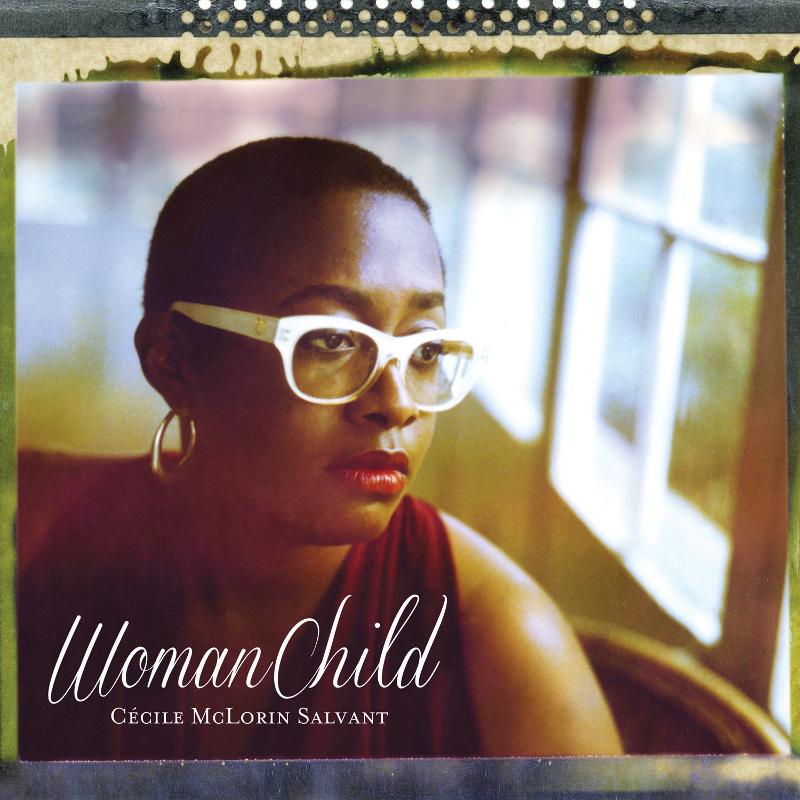
Vocalist Cecile McLorin Salvant, the daughter of a French mother and Haitian father, grew up in Miami, Florida.  In 2010, after spending several years in France studying law and music, Ms. Salvant won the Thelonious Monk Vocal Competition.  Even before her first official US release, she has received numerous accolades from critics such as Stephen Holden and Ben Ratliff.

With all that praise, one can only hope that this new CD, "WomanChild" (Mack Avenue), lives up to the hype.  Happy to report that this is a dazzling program, ranging from traditional blues to folk songs to standards to originals (some of the pieces date 100 years and more) and featuring a knock-out band composed of Rodney Whitaker (bass), Herlin Riley (drums), and Aaron Diehl (piano) with James Chirillo (guitar, banjo) on several tracks. One can hear the influence of Ella Fitzgerald, Billie Holiday, Betty Carter, and Cassandra Wilson yet this is an artist who takes those influences and injects her personality as well as talent into the songs.

One is tempted to go through every track - here are tracks that stand out on the first several listens.  "You Bring Out The Savage In Me", dating from 1935, romps in on the "jungle" drums of Riley.  Diehl's piano chords reverberate in the background, Whitaker's bass thumps and Ms. Salvant delivers the lyrics with playful exuberance.  She's has a splendid range, with a distinct personality for each register.  The Ella Fitzgerald "sound" shows up in "I Didn't Know What Time It Was"; after a pair of finely-articulated verses, the vocalist steps aside for Whitaker's pleasing solo and Diehl's dazzling spot. One is more than ready when Ms. Salvant returns, taking her cue from the final line of the piano solo.  An absolutely rocking version of "John Henry" is irresistible from beginning to end.  The first 2 versions are sung over the dancing bass lines and funky drums.  When the pianist enters, he dampens the strings with one hand, making the piano notes "pop", like a banjo.  The title track is an original tune, with McCoy Tyner-like piano chords, and has the feel of an Oscar Brown Jr. song. The interaction of the musicians is exciting and conversational, with Diehl's solo forthright and swinging. Chirillo's bluesy acoustic guitar - think Lonnie Johnson - ushers in a sweet reading of Clarence Williams's "Baby Have Pity on Me." When Riley enters, he plays sweet and simple and, golly he swings this tune, first recorded by Bessie Smith in 1930, oh-so -nicely.  Ms. Salvant's elastic vocal lines on "What A Little Moonlight Can Do" suggest the influence of Betty Carter; one hears it in the wordless lines that open the track and in her deliberate reading of the first lyrics and then, does she take off, oh my.

Cecile McLorin Salvant certainly has serious "chops" but, even better, she inhabits these songs in such a way that they sound fresh, exciting and appealing.  "WomanChild" may describe Ms. Salvant (23 at the time of the recording) but she is also a stunning vocalist, interpreter and, yes, an entertainer.  For more information, go to cecilemclorinsalvant.com.


Multi-reed player Steven Lugerner's debut recording was actually an impressive 2-CD set, one disk featuring pianist Myra Melford, trumpeter Darren Johnston and drummer Matt Wilson - the music Lugerner created for this chamber quartet was inspired by his study of the 5 Books of Moses, the Torah.  Lugerner creates his music using the system of gematria in which the composer assigned used the number assigned to each Hebrew letter to the chords or the time signature or the duration of each note.

"For Have We Heard" (Primary Records) uses the same system as the previous CD and the same ensemble but this time the pieces are shorter (10 songs in under 33 minutes). The title comes from the Book of Joshua, Chapter 2, Verse 10.  The avid listener probably does not need to know all that while the curious one will look for herself.  What is impressive is the conversational quality of the music and the excellent interaction.  Both Ms. Melford and Mr. Wilson can and do play anything in front of them while Mr Johnston's crisp tone is a fine foil for the different reeds the composer plays throughout.  Johnston has a touch of Lester Bowie in him which one hears in his short, clarion-blast, solo on "When a Long Blast Is Sounded", a piece that the drummer displays a forceful style.  Wilson leads the way on"Drove Out Before Us" - he has the "vocal" part on the first half of the piece.  Lugerner carries the low line on the bass clarinet, adding reed splashes as the song fades.  The driving rhythms push "Be Strong and Resolute" until Ms. Melford's rumbling piano slows down the song until Lugerner's soprano carries the melody. Utilizing numerous overdubs, Lugerner creates a woodwind choir on "Before Our Very Eyes" playing the melody in tandem with Wilson's splendid cymbal work.  The melody line on "All Those Kings" has elements of "Nobody Knows the Trouble I Have Seen" but soon the piece moves into a tenor saxophone solo over Wilson's marching drums. Johnston's counterpoint weaves in and around the saxophone.  When the piano enters (3 minutes into the performance, Ms. Melford starts playing the bass line before opening up for a just a short while.  The stately melody and drumming have the feel of a song from the Civil War.

Though the pieces are fairly short (2 of the 10 tracks barely break the 5 minute mark and 3 are under 1:45), the music is fully realized.  There are several occasions in which Steven Lugerner using studio effects on the reeds or trumpet to create a drone.  "For Have We Heard" has no allegiance to any one style of creative music but the program remains true to its composer's unique vision.  Take the time to wend your way through the songs - the reward is in the impressive architecture of the performances. For more information, go to stevenlugerner.com.  


In 2003, Kronos Quartet launched the Under 30 Project which the ensemble writes "is designed to help nurture the careers of young artists, while enabling Kronos to forge stronger connections with the next creative generation."  This new recording " Under 30 Project: 1-4" (self-released digital only), puts the spotlight on the first 4 composers to win the competition.  Alexandra du Bois (USA) won the 2003 competition with her piece "String Quartet: Oculus Pro Oculo Totum Orbem Terrae Caecat " - the music blends fractured single-note melodies, dissonance and deep bowed cello, building to a climax of long, keening lines from the violins and viola. Ms. du Bois has since composed a second string quartet for Kronos. In 2004, Felipe Perez Santiago (Mexico) contributed the mysterious "CampoSanto"; the shivering lines, recorded sounds and an insistent rhythm move the piece forward in a frenetic fashion.  Dan Visconti (USA) created "Love Bleeds Radiant" which opens with the crackling of what sounds as if it comes from an 78 rpm recording.  The piece builds slowly to a loud climax before taking a quieter journey to a second even noisier climax (as if the musicians were being tossed around on a boat in the midst of an hellacious storm.)  Aviya Kopelman (Russia/Israel) is the 4th composer honored;  her 3-part "Widows and Lovers" opens with crowd noises and the string quartet warming up which soon becomes the work itself.  "Part I: White Widow" also includes synthesized drums, spoken sentence fragments before moving onto the much more serene "Part II: Lovers" which opens with breathing that opens to plucked cello, voice, heartbeats, a triangle, percussive sounds and the occasional melody line.  "Part III: Black Widow" starts in dramatic fashion with a rhythmic pattern in the cello and violins that resemble a soundtrack from a Western movie.  The motor rhythm is carried throughout the movement, morphing into new patterns until dropping out altogether as the work winds down.  

To find out more about the Under 30 Project and to purchase the download, go to kronosquartet.org/projects/detail/under_30.  The site contains program notes and biographies of the composers as well as the winner #5.  Like most forms of creative music, contemporary classical is evolving, far from dead, far from gone.  

Monday, May 28, 2012

Freedom Stories

As I write these words, Memorial Day parades are winding down throughout the area (save for those few towns who still celebrate on the 31st, the date originally chosen for Decoration Day.) The holiday has been celebrated since several years after the cessation of the War Between the States or the Civil War. People gather on town greens to hear speeches, build statutes and/or monuments to the fallen and drape their houses in flags.

But, if we stop to think about the war that begat the holiday and the reasons why the North fought the South, one realizes that, for some portion of the society, that war did not end in 1865.  President Lincoln did free the slaves but his successor, President Andrew Johnson, did much more to ensure that Black people would not enjoy their freedom.  In fact, it was not until after the assassination of another President - John F. Kennedy - that the Civil Rights Act was passed.  Today, we have a President who is an African American (certain conservative commentators stress the African and deny the American) and it is true that racism, despite the tremendous advances of the past 100 years, is still part of the fabric of American society.

Trumpeter-composer Wadada Leo Smith (born 12/18/1941, Leland, Mississippi) has created a magnificent piece of music and imagery titled "10 Freedom Summers" and now Cuneiform Records has issued the "soundtrack." 4 CDs, nearly 4 and 1/2 hours of music, and 2 accomplished ensembles performing 19 compositions based on different events in the Civil Rights Movement.  Smith utilizes his Golden Quartet/Quintet featuring Anthony Davis (piano), John Lindberg (bass) plus drummers Susie Ibarra and Pheroan akLaff.  On 3 of the tracks, the group is augmented by Southwest Chamber Music, a nonet including Alison Bkorkedal (harp), Jim Foschia (clarinet), Lorenz Gamma (violin), Peter Jacobson (cello), Larry Kaplan (flute), Jan Karlin  (viola), Tom Peters (acoustic bass), Lynn Vartan (percussion) and Shalini Vijayan (violin), conducted by Jeff von der Schmidt.  The Chamber ensemble performs 4 of the pieces on their own.

Though instrumental music is usually considered to be abstract, the titles of the tracks gives the listener a good entry into Smith's creation.  The title of the project refers to the decade between Brown vs the Board of Education (1954) and the Civil Rights Act (1964) - Compositions include "Rosa Parks and the Montgomery Bus Boycott, 381 Days", "The Freedom Riders Ride", and "The Little Rock Nine: A Force for Desegregation in Education, 1957."  However, the composer takes his inspiration from events that occurred well before and after the decade so there are also pieces such as "Dred Scott; 1857" and "September 11, 2011: A Memorial." While the music has impressive gravitas, the titles are an important factor in telling the stories.  In live performance, Jesse Gilbert, founder of Dark Matter Media, LLC, creates "live visuals" on the screens behind the musicians.  His work is also integral in connecting the music to the events.

This music is not about flashy solos, not about technical wizardry; Wadada Leo Smith's trumpet serves as a clarion call.  He wants to wake the world up, shake the complacent among us who believe that, with the Emancipation Proclamation and the passage of the Civil Rights Act a century later, the wounds were healed.  This music deserves to be heard and seen; kudos to Cuneiform Records for releasing the entire work.  Now, concert presenters need to open their halls to allow so that this history does not disappear under the weight of revisionists.

Yes, there is a lot of music to digest; it makes great sense to spread out your listening so that you can begin to understand the shape of the music.  Don't ignore "10 Freedom Summers" because of the subject matter or the length of the tracks or the fact that this is really an ensemble piece and not a bunch of songs with solos.  For more information, go to adagio.calarts.edu/~wls/.

Like many CDs, this package is already showing up on "pirate" sites.  Considering the time and energy musicians put into their life's work, downloading from those sites is a true slap in the face (as well as the wallet.)  Yes, Wadada Leo Smith received funding from numerous charitable organizations to create the pieces that make up "10 Freedom Summers" but it takes a lot of money to hire musicians and copyists, rent rehearsal halls, pay agents, and do everything one has to do to bring the music to the attention of the public.  Stealing it stinks.

Thursday, June 16, 2011

Ensembles Large & Medium-sized + A Question

John Hollenbeck continues to move forward as a composer, arranger and drummer/percussionist. For the 10-member Orchestre National De Jazz, Daniel Yvinec artistic director, Hollenbeck has fashioned a suite of pieces (all but one dedicated to a member of the ONJ - the lone exception is "Up", the opening track that, at :29 seconds, serves as the overture.)  Titled "Shut Up and Dance" (BEE Jazz), the music on the 2-disc set will remind some listeners of the material Hollenbeck creates for the Claudia Quintet, with repetitive phrases, staccato rhythms, and dynamic variations that range from quite soft to overpowering.  Though drummer Yoann Serra is a powerful presence, electronic treatments are prevalent in the mix.  This version of the Paris, France-based ONJ, now in its 25th season, is composed of 4 reeds, 1 trumpet (saxophonist Matthieu Metzger also plays the trombophone, not really a brass instrument), 2 keyboards, guitar, bass and drums.

Much of this music has a hypnotic quality and it is easy to get lost in the "beats" and "floating" melodic phrases. There are exceptions, such as the highly percussive (and tuned percussion, at that) "Boom", one of several pieces that shows the influence of Steve Reich (especially "Drumming") and that leads into "Bob's Walk", a tribute to Bob Brookmeyer, Hollenbeck's teacher and mentor. Songs like "Praya Dance" and "Racing Heart, Heart Racing" are so intense that one wishes for some lighter pieces.  "Life Still", written for bassist Sylvain Daniel, gives some sonic relief as the bass is the lead thoughout the nearly 6-minute piece.  Following that song is "The Power of Water", the longest track (12:11) and the spotlight for Serra's driving yet melodic drum work. The melody sets a contemplative that never lets up even as the piece moves towards the climax. Here, one hears the influence of Mike Ratledge and the British "prog-rock" band, Soft Machine.

John Hollenbeck fans should find plenty to feast on with this recording from Orchestre National de Jazz.  Newcomers might be put off by the lack of "traditional" jazz forms but, stick with it and let the fine music enter your consciousness.  For more information, go to www.onj.org/en/.

Among the first sounds you hear on the self-titled and self-released debut recording of the Jordan Young Group is Mr. Young's crisp drum work.  Then, in comes the band - the smooth tenor saxophone of Joe Sucato, the burbling organ of Brian Charette and the clean guitar chords of Yotam Silberstein and you've got a classic sound.  The four-some rambles through "H and H", a tune by Pat Metheny, and doesn't seem to break a sweat.  That's pretty much the trend throughout the program which features tunes by all the participants (except Silberstein) and a slew of jazz standards ranging from Cole Porter's "Every Time We Say Goodbye" to "Jean de Fleur" (from Duke Pearson), Joe Henderson's "Afro-Centric" and "Angola" by Wayne Shorter. Add to that 4 short "PiNGS" from Charette, vignettes that sound like group improvs and feature tunes that move in unexpected directions.

There's nothing startling about the program nor is the music pedestrian.  Young pushes the band from the drum seat with an intensity  yet he never overplays. Even when he solos, there is an economy to his work that is refreshing.  Charette is classy throughout, Silberstein's sweet single-note runs are bluesy and playful, and Sucato is fairly mellow - the saxophonist also understands the art of the economical line, with solos that flow easily over the changes.

Young, a native of Detroit, Michigan, who now lives in Brooklyn, attended the University of Michigan and received his Master's Degree from the Manhattan School of Music. His music is anything but academic - in fact, it's a bit of throwback but not dated.  Pour a tall, cool, one or a glass of chilled pink wine and enjoy.  For more information, go to www.jordanyoung.net.

Pianist/composer Falkner Evans has issued 3 piano trio CDs, all of which featured the irrepressible Matt Wilson on drums.  Wilson is back on Evans' new CD as is bassist Belden Bullock (who appeared on the most recent trio release) for " Points of the Moon" (CAP Records) which also features Greg Tardy (tenor saxophone), Ron Horton (trumpet) and, on the last 2 of the 9 songs, Gary Versace (organ, accordion.)

This is a deceptive recording in that it feels so "cool": nothing is rushed, the pieces are, mostly, medium tempo and the playing fairly straight-forward. Horton is his usual classy self, nice crisp tone and a sense for just the right phrase. His solo on "Drawing In" does just that, draws the listener in for a sweet ride.  Tardy shows a fair amount of "heat" on "Cheer Up", egged on the by the ferocious drums of Wilson.  One of the more interesting aspects of the program is that solos are parsed out, not everyone solos on each cut and pieces are rarely expanded beyond  a comfortable length. On the opening track, "Altered Soul", Horton and Tardy play the theme through at the beginning and end but only Evans solos. Versace joins the band for the bluesy "Over the Top", adding his burbling sound to the hard-bop attack (and, staying true to the pattern of the CD, does not solo.)  He, then, adds accordion to the title track that closes the program.  Horton creates an articulate solo over the martial drums and swelling accordion chords.  The arrangement features a long reprise of the theme for the last 2+ minutes of the song.


"Deceptive"may seem a negative description for a recording as pleasing as this one.  Not a "blowing" session (save for maybe 1 or 2 tunes), "The Point of the Moon" is filled with strong melodies and solos that give the individuals their due without turning the program into one player following another into the spotlight ad infinitum.  Take your time to let this music work into your system - it may not excite you but it will be a balm for frayed sensibilities.  To find out more, go to www.falknerevans.com


**************************************************************************

Hard to argue with the Jazz Journalists Awards for 2011 (read the list by clicking here.)  I am not yet a member but I read the work of many of the people who voted in the poll and respect them all to a person.  One thing puzzles me - how did Blue Note Records win "Label of the Year"?  I don't receive most of that label's output but I purchase a fair amount (Jason Moran's Bandwagon, the new Ambrose Akinmusire, anything by Joe Lovano) - very good to excellent music all but you can't tell me that the music from independent labels such as Posi-Tone Records, BJU Records, Criss Cross and Sunnyside is not as good or as consistent (in some instances, just as forward-looking.) Just curious.