Showing posts with label Piano trios. Show all posts

Tuesday, February 9, 2021

Exciting and Inviting Piano Trios

Photo: Dave Stapleton
Pianist Fergus McCreadie, a native of Scotland and resident of Glasgow, is one of the bright young stars of the European jazz scene.  At 22, he's already garnered a slew of awards –– in 2019, his self-released debut album, "Turas", was named "Album of the Year" at the Parliamentary and Scottish Jazz Awards. In 2020,  was named "Best Instrumentalist" at the Scottish Jazz Awards.  In 2015, the pianist and composer recruited bassist David Bowden and drummer Stephen Henderson; they have developed into a delightful interactive trio (watch the video below). McCreadie is also a member of drummer Graham Costello's STRATA and has recorded a duo album with vocalist Luca Manning.   

In 2020, the pianist signed with Edition Records and just issued his first album for the label (second overall).  "Cairn", named for a mound of rough stones usually seen on hilltops (especially in Scotland), features nine new original pieces by the pianist. Opening with the trance-like "North", the music pulls the listener in on the strength of the melodies, the emotional richness, and the splendid musicianship.  The trio seems to breathe as one, no one musician hogs the solo space, and you can tell they listen closely to each.  Whereas the debut album came together in the studio, this time the ensemble had the luxury of playing this music on numerous gigs. The title track ups the tempo but yet it's the rich melody that really stands out.  McCreadie's delightful solo brings Bruce Hornsby to mind while the fire of the rhythm section adds considerable power to the mid-section of the song.    

Photo: Dave Stapleton
Pay close attention to the fine playing of both Bowden and Henderson.  The bassist, who leads the jazz-fusion sextet Meczla, is a strong, foundational, musician as well as a melodic soloist.  Henderson is a member of Bowden's other ensemble Square One and is a powerful drummer yet also has a subtle side.  Listen to his hand-drumming on the intro to "Across Flatlands" and again on "Tree Climbing". The latter tune has the feel of the music from "Riverdance" at the outset but as the bassist gets into his solo, the music builds on the piano chords –– McCreadie's solo starts quietly but builds to an energetic, powerful, climax, egged on by the drummer's percussive barrage.  Not surprising that "Jig" has a similar feel. This tune starts in high gear but listen to how the piece develops. Reminiscent of McCoy Tyner in his Blue Note period, the music swings, twists and turns, sparks flying among the musicians. Henderson gets a spotlight near the close of the piece that dances with glee in the manner that Eric Harland's solos often do.   

Photo: Dave Stapleton
There is also power in the lyricism of pieces such as "Tide" and "An Old Friend".  The former track should remind the listener of standing by the ocean on a days when are climbing up the sand.  One can feel the tidal pull in the flow of the pianist's left hand while the cymbal splashes suggest the crashing whitecaps.  There's a trace of Randy Newman in the opening moments "...Friend" in both the gentle chords that lead in the simple yet emotional melody. As the piece progresses forward on the piano chords and melody, the bassist and drummer enter quietly (soft brushes work) and Bowden creates a rich emotional and melodic solo.  The music does reach a powerful climax but goes out on the gentle feel of the opening.

"Cairn" closes on "Cliffside", the bassist joining with the piano chords to play the melody over the shimmering and insistent piano chords.  Those chords never let up even during the piano, pushing the rhythm section to build the intensity until McCreadie's right hand is flying over the keys.  Technically virtuosic? Yes.  Emotionally satisfying?  Absolutely!  Fergus McCreadie, David Bowden, and Stephen Henderson have created a striking and highly fascinating album that will resonate in your heart and mind long after the last notes fade.  

For more information and to purchase the album, go to https://fergusmccreadie.bandcamp.com/album/cairn.  To learn more about the pianist and his rhythm section, go to www.fergusmccreadie.co.uk

Here's the title track:


Pianist and composer Yoko Miwa moved to the United States from her native Japan in 1997 to attend Berklee College of Music.  Though she only intended to stay for one year, Ms. Miwa stayed and is an active member of the Boston jazz scene and on the faculty of her alma mater.  She has issued eight recordings as a leader either in a trio or quartet setting and all with her husband Scott Goulding on drums.  Bassist Will Slater makes his first appearance on 2012's "Act Naturally" album and remains with the Trio to this day, occasionally spelled by Brad Barrett.  


After the pandemic stopped the Trio last March, Ms. Miwa had to cancel her April 2020 recording session.  Not only that but also her father died of complications from Alzheimer's Disease. The studio reopened in July, the pianist set the dates with the Trio and results can be heard on her ninth album, "Songs of Joy" (Ubuntu Music).  Kicking off with a powerful version of Richie Havens' "Freedom", one can hear how much the musicians needed to be back in the studio as well as how much Ms. Miwa was celebrating life in the face of tragedy. The influence of McCoy Tyner can be heard in the thundering piano chords and how her solo rolls forward (her left hand is relentless) –– Goulding takes a short solo before the musicians return to the powerful reading of the melody.  The pianist learned the title track from vocalist Sheila Jordan.  Composed by Billy Preston, one can hear the influence of blues and gospel on the melody lines and Ms. Miwa's splendid solo. Her two-handed explorations throughout the performance raises the level of intensity.

Photo: Chris Lee
The 11-song program includes five originals and six covers. Among the former group is "The Lonely Hours"; dedicated to the pianist's father, it's her response to not being able to be there in his final days (in the early weeks of the pandemic, international travel was very limited as was access to the hospitals and hospices). One can hear Ms. Miwa's classical training in the composition yet the music blurs the lines between genres.  Check out her "Largo Desolato" below.  While the title refers to "a slow, solitary, grand phrase", this music rises from a blues-soaked bass line into a powerful performance (you might catch a "grand phrase" at the onset of the piano solo but, mostly, this song swings).  "Small Talk" really swings. The bounce in the piano playing has a strong hint of Harold Mabern and dig how Ms. Miwa plumbs the lower notes of the keyboard throughout. The lovely intro to "Inside a Dream" reflects the influence of Bill Evans as does the flow of the music (note how Slater plays in unison with the pianist plus his fine solo and counterpoint).

The final two tracks on the album are "Tony's Blues" and "Babe, I'm Gonna Leave You".  The former, composed by former Berklee colleague Tony Germain, is another display of the pianist's deep understanding of the blues/ r'n'b styles of Bobby Timmons and the afore-mentioned Mabern.  Most people recognize the latter track as a Led Zeppelin track (off their debut album).  Composed by American folk singer Anne Bredon and made famous in the early 1960s by Joan Baez, the Trio's version here (augmented by the bowed bass of Brad Barrett on his only appearance) captures the longing in the song. Ms. Miwa's insistent piano work really pushes the music forward.  

"Songs of Joy" is notable for many reasons.  The strong material, the powerful piano work, the solid yet fluid rhythm section, and the fact that the music is so positive. Yes, there are "blues" songs and the leader does create a musical response to the passing of her father but the overall emotion one gets while listening is joy.  The joy of performance, of camaraderie, and doing what you are meant to do –– bring pleasure to the listener.  Yoko Miwa does that and more, making one so glad to be in the presence of these fine musicians! 

For more information, go to www.yokomiwa.com.  Check out her interview with Jason Crane on "The Jazz Session" by going to the top right of this post. 

Hear "Largo Desolato":


Thursday, June 18, 2015

The Side Door Welcomes 2 Groups of 3

Yet another great weekend for piano trio lovers awaits at The Side Door Jazz Club in Old Lyme. On Friday evening June 17, the red-headed Benny Green brings his Trio - bassist David Wong and drummer Rodney Green (no relation) - to the stage to play 2 sets of fine contemporary jazz.  It's hard to believe looking at the ever-young looking Green that 1) - he is 52 years old and 2) - he's been on the scene touring and recording since the late 1980s. Over the years, he's worked with such jazz legends as Art Blakey, Betty Carter, Freddie Hubbard, and Ray Brown. Listening to him play, he has absorbed his influences, playing free and easy with a penchant for swinging mightily.

His latest  CD, "Live In Santa Cruz!" (Sunnyside Records) is his 14th as a leader or co-leader and features Wong plus drummer Kenny Washington. It's an exciting program (the pianist loves to play and play quickly) of all-originals, recorded live,  that shows the influences of Bud Powell, Marcus Miller, Phineas Newborn Jr. and others. That written, Green is his own man, committed to making his music in his own way. Pieces such as "Golden Flamingo" show a bluesy side whereas "Anna's Blues" is so joyful that the blues melt away. "Sonny Clark" is a tribute to an underusing hero of hard bop taken at a knuckle-busting tempo.  Another is the rapid-fire "Bish Bash", which sounds like a variation of "Flight of the Bumblebee." Washington's sprightly drumming leads the way into "Phoebe's Samba", a tune that dances outrageously out of the speakers (and has a melody line reminiscent of Steely Dan's "Don't Take Me Alive").  Green plays with such abandon on this and most of the other 8 tracks. For more information, go to bennygreenmusic.com.

One should expect the Benny Green Trio will play with the same fire when they hit the stage at 8:30 p.m. on Friday.  You should expect that they will!

Here's a taste of the Trio's new recording to whet your appetite:


On Saturday, pianist/composer Luis Perdomo, often seen and heard sitting in the piano chair of the Miguel Zenon Quartet and the Ravi Coltrane Quartet, leads a new trio into The Side Door, an ensemble he calls the Controlling Ear Unit.  Consisting of the dynamic and always exciting drummer Rudy Royston and bassist Mimi Jones (who played the club last Saturday with her own quartet, the trio creates music that has its roots in Perdomo's childhood in Venezuela plus the music and musicians he encountered upon arriving in New York City to study at the Manhattan School of Music. (AUTHOR'S NOTE - the inimitable Mr. Royston had to step down so his chair is being filled by the equally dynamic snd exciting Henry Cole, the drummer in the Zenon Quartet.)

Perdomo & the CEU are celebrating the release of their new CD, "Twenty-Two" (Hot Tone Music) - the title of his 7th CD as a leader relates to how many years the pianist has lived in New York and is also half his age (at the time of the recording in December 2014).  Perdomo plays electric piano on 5 of the 12 tracks and Ms. Jones contributes a wordless vocal that is unison with her bass and the piano on "Aaychdee" - if you've heard her 2014 Hot Tone release "Balance", you know that she has a lovely voice and formidable "chops" on her instrument. Throughout the recording, the piano and bass work together well (no surprise, they are husband and wife!), with the pianist's left hand often playing the same lines on the thematic material.  "Two Sides of A Goodbye", a "freer" piece, opens that way; with Royston quietly moving around his kit, Perdomo and Ms. Jones play in and around each other's phrases. On "Old City", the bassist opens the piece with her thick tone setting the pace, a tempo that the drummer expands upon, creating a thunderstorm of percussion beneath the rolling piano lines.  Royston solos later in the piece, his poly-rhythmical attack erupting out of the speakers.   The bass-drum intro to "Cota Mil" is incredibly funky, setting the stage for the electric piano's entrance.  The song has a "push-pull" tension between the rhythm section and pianist, getting more exciting as the solo unwinds. The trio build to a fiery climax, leading to a soft bass solo that calms her bandmates until the theme returns in a blazing coda.

The interaction of electric and acoustic piano on "Brand New Grays" is impressive (it's overdubbed but sounds fresh and alive). The piece romps along, the pianist trading lines with himself until he and Ms. Jones step aside for an incredible drum solo! Rudy Royston makes one sit up and take notice, rattling the speakers in the car or on the wall.

Of the 12 tracks, only "How Deep Is Your Love" (yes, the Bee Gees tune) is not a Perdomo original. Yet, he brings the same kind of multi-genre approach to that track as he does on most of the cuts, with changing tempos, flowing lines and touches of Latin and Classical styles in the arrangement.

"Twenty-Two" is a splendid album with its spotlight on 3 excellent musicians who give their all, a rhythm section that is responsive and creative, and a composer/pianist whose songs are a kaleidoscope of his musical influences and explorations.  Luis Perdomo & Controlling Ear Unit not only "controls" your mind but also makes you want to move, to dance and to smile.  For more information, go to www.luisperdomojazz.com.

If you're lucky enough to be in Connecticut this weekend, The Side Door Jazz Club in Old Lyme opens its doors at 7:30 p.m. with the first set at 8:30 on both nights.  For more information, go to thesidedoorjazz.com or call 860-434-0886.

Friday, February 20, 2015

Trios Music

If you have paid any attention to jazz over the past 6 decades, you'll know the Heath Brothers, Jimmy, Percy, and Albert.  Saxophonist composer Jimmy (born 1926) developed into one of the most consistent writers and performers, bassist Percy (1923-2005) is, perhaps, best-known for his long association with the Modern Jazz Quartet, and drummer Albert or "Tootie" (born 1935) has worked with so many great musicians including John Coltrane, Yusef Lateef, Dexter Gordon, and Herbie Hancock.  In the mid-1970s, the Brothers joined forces and created their own ensemble which continues to this day.

In 2009, Tootie played a gig with pianist Ethan Iverson and bassist Ben Street at Smalls Jazz Club in New York City. They played material that, like the musicians, crossed a number of decades and styles. The 3 had so much fun (if you have ever seen Tootie Heath in a live setting, you know that fun is a major component of his performance) that they became a Trio. In 2013, they recorded "Tootie's Tempo" for Sunnyside Records and, on March 3, the label releases "Philadelphia Beat."  Recorded in the drummer's home, it's the group's most eclectic outing with material that moves from Milt Jackson to Gloria Gaynor to Cal Massey to Dizzy Gillespie to Eubie Blake to Johann Sebastian Bach (!) From the finger cymbal opening of "Bag's Groove" to the funky back-beat of "I Will Survive" to the African rhythms of Massey's "Bakai", this program entertains and enlightens.  There is no sense of bombast but an emphasis on melody and rhythm and, yes, "swing."  The CD is full of little touches that create a wondrous aural landscape.  Mr. Heath opens Lewis's "Concorde" with the drum pattern Shelly Manne created for Sonny Rollins' "I'm An Old Cowhand" while his sparse accompaniment on "Memories of You" (what a touch with brushes!) gives Iverson plenty of space to investigate the melody. There's a delicate mix of Latin and Middle-Eastern rhythms that open "Con Alma" and push it forward.  Thelonious Monk's "Bye-Ya" sparkles and jumps while Kurt Weill's "Speak Low" is playful and has just a touch of New Orleans Second Line in the drummer's attack.   Bach's cantata "Wachet Auf, Ruft Uns Dis Stimme, BMV 140" is stately, with a touch of swing and splendid counterpoint from Street.  Lateef's "Pentatonic Etude" features Iverson on electric piano; he and Mr. Heath create a spare painting yet rich in colors (the floor tom and cymbal work stands out) and do so without wasting a note.

"Philadelphia Beat" pays tribute to the plethora of sounds and the great artists associated with the City of Brotherly Love. It's a joy to listen to how these 3 musicians interact, react and inhabit the material, how nothing is off-limits or overdone.  There are many moments that produce smiles or nods - this music is alive and very satisfying.  For more information about the Trio as well as a link to a fine interview, go to dothemath.typepad.com/dtm/tooties-tempo.html.

Here's a taste of the T. Monk tune:


Nick Sanders hails from New Orleans, a fertile ground for pianists. While attending the New England Conservatory of Music in Boston, MA, as a grad student, Sanders met freshmen Connor Baker (drums) and Henry Fraser (bass), beginning an association that now has lasted 5 years.  The Trio's 2013 debut, "Nameless Neighbors" (Sunnyside), not only displayed Sanders' maturity as a composer but also the intimacy of an ensemble. Produced by Fred Hersch, the recording showed musicians with great promise.

"You Are A Creature" (Sunnyside) builds on that promise.  In the 2 years since the debut CD, the Trio has developed an even closer bond and Sanders' writing has matured considerably.  There's a healthy streak of Thelonious Monk in his approach to melody and rhythm yet, like that great master, the music opens to include elements of the history of piano, from stride to blues to swing and beyond.  And. as on the debut disc, the rhythm section is so attuned to the movement of the music, to the pianist's playful asides or rollicking single-note runs, that there are multiple instances where the listener can believe these 3 breathe as one.

With Fred Hersch back as producer (he also worked with Sanders at NEC), "...Creature" is its own universe.  Ballads rub shoulders with quirky, up-beat, romps, melodies grow from rhythmic figures, and the line between composition and improvisation is nearly invisible.  "Let's Start" is the aptly-titled opening track and, before the first minute goes by, the listener knows this music will be worth investigating.  The best creative music sounds familiar and new at the same time, with phrases that remind you on something you've heard many times but on to someplace new before you can put your mental finger on where you have heard this before. "Wheelchair" has echoes of Chick Corea (acoustic Return to Forever) in the child-like melody yet the rhythm section decides to keep the piece grounded while Sanders floats above. There is a circular quality to the melody of "Round You Go" yet listen to how Baker creates his own world underneath (while Fraser provides the framework.)   The title track romps out of the gate and then stops abruptly for a quiet interlude, going back to romp into a piano solo and excellent drum spotlight before melting down to a soft landing.  One can her this is music that could only have developed in a live setting as well as a setting of complete trust. The CD closes with Ornette Coleman's "The Blessing", a gentle yet propulsive reading of one of his earlier pieces (you can really hear the influence of Monk and John Lewis on Coleman's composition.)

"You Are A Creature" is no monster but the musical interactions do, in some ways, reflect the contortionist in Leah Saulnier's cover painting.  Playful, adventurous, original, the music of the Nick Sanders Trio illustrates the continuing evolution of American music and the endless possibilities of the piano trio. One really would love to hear and see this Trio in a club setting. Kudos as well to engineer James Farber, who brilliantly captures the sounds of each musician, especially the impressive drumming of Connor Baker.  For more information, go to nicksandersmusic.com.

Pianist/composer Jeremy Siskind has a most interesting variation on the piano trio; instead of the "traditional" rhythm section, he creates music for voice (Nancy Harms) and reeds (Lucas Pino).  Their 2012 collaboration "Finger-Songwriter" (BJU Records) not only displayed Siskind's love for poetry (he earned a Master's Degree from Columbia University in English and Comparative Literature) but the influence of Norma Winstone and John Taylor on his original music and the ensemble's presentation.  After the release of the CD, Siskind and company started touring the US, specifically performing "house concerts" - that makes great sense as this music is often so intimate that the hush of a small room increases the emotional richness.

"Housewarming" (BJU) builds off the previous CD with a program of 9 originals and 4 "standards."  Also added to this mix are guest vocalists Kendra Shank, Peter Eldridge and Kurt Elling, all of whom bring unique voices to the project.  There are numerous transcendent moments.  On the opening "Whispering Grass" (composed by Fred Fisher and his daughter Doris, made popular by The Inkspots in 1940), Pino's bass clarinet sees as the rhythm section, his low notes bolstering the bottom an his breathy sound acting like brushes on a snare drums. (there are moments when the music is reminiscent of the mid-to-late 1950s work of Jimmy Giuffre.) The interaction of Ms. Harms and Mr Eldridge on Siskind's "New Old West Theme" over the rich piano melody stands out as well, the blend accentuating the love story in the lyrics. The lovely title track features Mr. Eldridge telling a love story with a bittersweet feel; the melody and arrangement may remind some of Randy Newman, the wonderful spare chords and lonely high notes, the poignant yet hopeful vocal. The influence of Billy Joel insinuates itself into the melody of Siskind's "Hymn of Thanks" and the stride feel of the piano beneath the tenor solo is a sweet change of direction.  Mr. Elling has always shown his ability to make poetry into music and his 2 contributions here are exemplary.  The impressionistic "Light" pairs his voice with Pino's tenor sax and a flowing melody line; the saxophonist builds on the melody, creating a solo that stands out.  "Arise" is a prayer for peace with the melodic counterpoint of piano lovingly interwoven with Mr. Elling's compelling vocal.  "Everything You Need" is a fascinating reworking of British songwriter Adem Ilhans tune from 2004. The juxtaposition of Ms. Harm's hushed vocal, the rich piano accompaniment and the clarinet draws one in and speaks to the arranger's ability to imbue the song with several emotional climates.

Siskin takes 2 very well-known standards and makes them sound fresh.  One easily recognizes the melody "Moonlight in Vermont" yet the arrangement adds several quiet dramatic flourishes plus the evocative clarinet backing and solo.  The program closes with Lerner & Loewe's "I Could Have Danced All Night"; the wonder and innocence in Ms. Harm's voice leads to a more assured yet impressionistic tenor solo that brings the album to a standstill, almost in mid-phrase.  It leaves the listener with the sense that there is more, making one go back to start again.

"Housewarming" is an album to savor, lyrics to sit and ponder, vocals that wash through your soul, and music that draws you in.  Give it a number of listens to get the full breadth of the presentation, to begin to understand the hopeful message in the songs, to admire the work of everyone involved.  You will be warmed by what Jeremy Siskind has presented here.  For more information, go to www.jeremysiskind.com.

Friday, January 16, 2015

Hearing Beauty & Seeing Red

The joy of discovering a new voice is how the power of what he or she does with his or her music can alter the listener's life.  On January 20th, Ashley Daneman releases "Beauty Indestructible", her second album (but first to spotlight her work as a composer, singer and arranger), a stunning personal statement filled with strong melodies, lovely harmonies and the promise of redemption.  Several years ago, the artist was diagnosed with PTSD and worked very hard to overcome the stresses that it put on her and family. This music is a celebration of life, of how music can heal and how one can begin to make a difference in the lives of others.

Ms. Daneman has written that she grew up listening to Joni Mitchell and Ella Fitzgerald; one can hear traces of both those artists on these tracks but much of this music reminds me of Laura Nyro.  The blend of pop, rhythm 'n' blues and jazz that permeates pieces such as "How You Got to Yes", "Think on Whatever Is Lovely" and the title track is dramatic yet intimate. The playfulness of "This is Somebody Else's Piano", with its poppy bouncing rhythms, overdubbed choir of trumpets and sprightly vocal is great fun.  Kudos to her band, especially the splendid percussion work of Michael W. Davis, the subtle keyboards of David Izard and the solid foundational work of bassist Sam Weber.   Add to those voices the contributions of cellist Amali Premawardhana, guitarist Matt Davis and the singer's husband Benje Daneman on trumpet and this music has plenty of color.

But, what truly makes this music stand out is Ms. Daneman's voice and presence. Her assured singing, the smart vocal overdubs and the soulful quality of her delivery fills the speakers, spreading through the room and pulls you in.  "Sing ('til You're Good and Live)" has the power of a Stephen Sondheim composition, the singer telling us how music helps one to conquer fears, sorrow and the pain life can bring.   Later in the program (the penultimate track), she sings "You say to the dark/ you are tired of these things you've had to bear/ and now you want to go/ where no one's ever lost", you hear how her life has been affected by her illness but you don't hear pity or remorse, no sadness.  The deep tones of the cello over the moaning guitar chords have more of a "country" feel than blues while the chorus of voices rising above the rhythm section has gospel overtones.

With "Beauty Indestructible", Ashley Daneman has created a profound work of art that is so alive, so positive, and so blessedly musical.  Go to www.ashleydaneman.com and see what else she is doing with this music, asking for stories of inspiration to help people who may have lost hope.  In a world which often seems to be growing harsher by the day, Ms. Daneman, through her music and her project, shows us there can also be brightness and optimism. Also, several of these songs can easily get stuck in the soundtrack of one's day and that is very good.

Enjoy "This is Somebody Else's Piano" and check out Ms. Daneman's Bandcamp page:


By the time pianist William "Red" Garland made the trip to San Francisco's Keystone Korner for the week of gigs with bassist Leroy Vinegar and drummer "Philly" Joe Jones in December of 1977, he was 2 decades removed from his fine work with Miles Davis and 12 years into a semi-retirement.  Garland had returned to his native Dallas.Texas, in 1965 to care for his ailing mother, rarely leaving the state to tour or even perform.  He has recorded sporadically and would again over the next few years after this week of gigs.  He passed away in April of 1984, 3 weeks shy of his 61st birthday.

"Swingin' on the Korner" (Elemental Records) is a wonderful addition to Red Garland's discography.  This 2-CD set, the only time this trio of musicians ever played together (Jones and Garland, along with bassist Paul Chambers, were the rhythm section for Davis from 1955-58), should serve to introduce Garland to a new audience while reminding long-time listeners what a classy and talented pianist he was.  Both discs are filled with strong ballads and several swinging surprises (I love the shuffle rhythms of Monk's "Straight No Chaser", emphasizing both the blues and swing inherent in the piece.)  Given the time of year when the recording was made, there is a lovely reading of Mel Torme's "The Christmas Song", so sweet and low (Jones's work is quite subtle here). The playfulness of "Autumn Leaves" (an uptempo reading with an irresistible walking bass line), the skipping rhythms of "On A Clear Day" (Jones take a long, ebullient, solo as befits his personality), the bounce of "Bag's Groove" (Garland really digs into his solo, delightfully interacting with the rhythm section), and the melodic sweep of "It's Impossible" makes for such enjoyable listening.  Garland is certainly energized by Vinnegar and Jones plus one can hear the audience enjoying every minute.

The music on this package is culled from the "board" tapes of the week saved by Keystone Korner owner Todd Barkan (he ran the club from 1972-83 and is co-producer of this set).  The sound quality is quite good (especially the sound of the drums) and the booklet features essays from the producers, from Nat Hentoff, pianist Benny Green, interviews with Don Schlitten, Ira Gitler and Kenny Washington plus a reprint of 1979 essay written by Doug Ramsey.  Even with all that and the photographs throughout the booklet, it's the music that will bring you back time and again. Red Garland was a pianist whose musical choices ranged from Broadway to pop tunes to jazz standards and more. He loved melody, the blues and rarely if ever overplayed. The way he moves from two-handed readings of the melody to exciting single-note runs not only demonstrates that his "chops" were in fine shape but also that his musical mind was as facile as ever.   Listening to these 16 tracks, it's also clear he enjoyed playing with Messrs. Vinnegar and Jones.  "Philly" Joe, in particular, sounds like he's having a blast.  If you like piano trio music, "Swinging' on the Korner" sounds fresh, lively and downright joyous.  For more information, go to elemental-music.com.

Wednesday, January 7, 2015

2 X 3s (January '15 edition)

Aaron Goldberg has matured into one of the finest pianist and composers on the contemporary scene.  His list of sideman credits is quite impressive, from Joshua Redman to Tom Harrell to Guillermo Klein to Kurt Rosenwinkel plus, since 1999, he's released 4 CDs as a leader and 6 as a co-leader.

"The Now" (Sunnyside Records) is his latest and 5th featuring the rhythm section of Reuben Rogers (bass) and Eric Harland (drums). 3 of the 10 tracks were recorded in January of 2009 with the remainder in April of 2014.  4 of the tracks are Goldberg originals, 3 are from Brazilian composers, 1 Haitian traditional and 1 each from Warne Marsh ("Background Music") and Charlie Parker ("Perhaps"). What stands out throughout the program is the rapport of the Trio, who never fail to support each other and spur each other forward.  Goldberg is one of those pianists who is very melodic, has a smart sense of rhythm and dynamics and, like Fred Hersch and Jean-Michel Pilc, never relies on pure technique to get his message across.  There are times, such as on the original ballads "The Wind In the Night" and "One Life" (featuring guitarist Rosenwinkel), that transcend the moment, hitting on emotions close to one's heart. The guitar work is ethereal, sounding at times like a bird on a distant branch, otherworldly as the phrases rise atop Harland's splendid drum work.

That's not to say this music doesn't have a touch of spice at times.  "Yoyo", based on a Haitian folk melody, bounces delightfully atop Rogers' plucky percussive bass and Harland's dancing drum work. Parker's "Perhaps" (first recorded in 1948 for Savoy) is a playful jaunt that sounds more like Ornette Coleman than "Yardbird" but swings with great abandon. As does Marsh's "Background Music", which flies along at the speed of Chick Corea (with great snare work from Harland).

"The Now" is yet another shining star in the discography of Aaron Goldberg. Even though it is a studio recording, the music feels quite alive; you can feel the sweat and hear the emotions.  Great music from start to finish!  For more information, go to www.aarongoldberg.com.

Release date is 1/20/15 but here's a taste of the program:


Pianist and composer Art Hirahara has worked and continues to work with a varied group of artists, from the late baritone saxophonist/activist Fred Ho to vocalist Bianca Wu to Travis Sullivan's Björkestra, bringing a fine sense of melody and rhythmic sophistication to each project. "Libations and Meditations" is his 2nd release as a leader for Posi-Tone Records and features his current working trio of bassist Linda Oh and drummer John Davis. In the 4 years since his previous release, the pianist has been extremely busy as a sideman yet his own music feels as if it has been matured like a good wine.  One should enjoy listening to the interactions of the trio, especially how Davis locks into the groove and drives the uptempo tracks (most effectively on tracks such as "D.A.Y.", "Be Bim Bop" and its partner "Bop Bim Be.") Besides leading her own group, Ms. Oh has become quite an in-demand "side person", working with Dave Douglas, Pascal LeBoueuf, and Kenny Barron.  Her playing here frames most of the pieces on the disc, from the insistent pulse that lies underneath "Father's Song" to the "get-up-and-go" walking lines on "D.A.Y." to the impressionistic bowed bass beneath the rippling piano lines and cymbal washes of "Dead Man Posed."

Upon repeated listenings, one can hear just how distinctive a pianist and composer Art Hirahara has become.  Many of his pieces have strong melodies, rich chords patterns (there are moments when "Big Country" sounds like a Lennon-McCartney compositions) and his playing favors a 2-handed approach. There are 2 handsome solo piano tracks; "The Looking Glass", which has the elegance of a George Gershwin song, and "Karatachi No Hana", a work from Japanese composer Kosaku Yamada (1886-1965) that is lovely, with a flowing melody line and sounds quite Western.  He can also swing quite delightfully - just listen to how the Trio navigates the variable rhythms of "Be Bim Bop" and you hear musicians who certainly have great "chops" but who are also having great fun.

"Libations and Meditations" is music that deserves to be heard, not only on "record" but in person. The program has everything a piano trio - actually any sized ensemble - should have, in the intelligent melodies, great interactions and strong solos.   This is music that is full of life and deserves to be part of yours.  For more information, go to arthirahara.com.

Tuesday, November 25, 2014

November (Pt 1)

Depending on which hemisphere one lives in, November can be an awfully cruel month. The hours of daylight lessen, the winds often howl, snow and/or ice can surprise you at any time, and the prospect of 4-5 months like this weighs on some heavily.  Yet, there is the holiday season, opening in the United States with Thanksgiving and moving through until and after the New Year arrives.  The CDs and DVD below are excellent companions for the darker times.

Jason Yeager is an articulate pianist, an impressive composer, and yet another splendid graduate of the music programs at the New England Conservatory of Music in Boston, MA.  He also graduated from Tufts University with a B.A. in International Relations.  While at NEC, he studied with Danilo Pérez, Fred Hersch, Jerry Bergonzi, Frank Carlberg, John McNeil, and Ran Blake. Since graduating, he has gone on to serve on the faculties of the Berklee School in Boston and the Varta Academy of Musical Arts in New York City. Yeager is also a busy sideman, working in numerous groups of all sizes.

"Affirmation" is the pianist's 2nd release on Inner Circle Music, the first being 2011's "Ruminations."  Recorded with his regular rhythm section of Danny Weller (bass) and Matt Rousseau (drums) - both NEC grads - the 12 tracks range from introspective ballads to playful uptempo romps.  Vocalist Aubrey Johnson (yes, an NEC grad as well) appears on 2 tracks including the lovely title track that closes the program, a piano/wordless vocal duet that contains shades of Norma Winstone's work with pianist John Taylor.  Ms. Johnson joins the Trio for a lovely take on John Lennon's "Julia", the only Beatle song that Lennon recorded all by himself. While this version hews closely to the original, the piano solo stretches out while Weller plays counterpoint and Rousseau quietly stays on the beat.  

Tenor saxophonist Noah Preminger (NEC grad, too) adds his lyrical playing to "Smiled First", his sometimes deliberate, other times sprightly phrases wrapping around the active bass and drums.  Yeager is an impressive accompanist throughout the program; here, his full chordal backing beneath the tenor sax really fills out the sound.  That 4-some stretches to 5 with the addition of trumpeter Jean Caze (a graduate of both the Manhattan School of Music and the graduate program at Florida State University) for the dancing "Keep The Fire."  Rousseau's driving percussion and Weller's melodic bass lines propel the piece forward.  Caze switches to flugelhorn for the handsome ballad "Aurora", a smartly constructed piece (dedicated to the victims and families of the tragic events in both Aurora, Colorado and Newtown, Connecticut), is a beautiful melody that is both impressionistic and elegiac without being treacly. 

The Trio tracks all stand out, from the Thelonious Monk-like "Blues for Billy P" to the gentle medium tempo "Achi" to the pianist's adaptation of Olivier Messiaen's "Dance of Fury, For the Seven Trumpets" (from the composer's prisoner-of-war composition "Quartet for the End of Time".)  That last track includes more impressive interplay and a great sense of urgency.  "Twelve Etude" is a dedication to percussion master Jerry Leake, with all 3 musician sharing percussive lines and melodic phrases.  

"Affirmation" sparkles with intelligence and impressive musicianship; the Jason Yeager Trio plus guests never substitute technique for talent and these 12 tracks  This music gives off a warmth that can transcend any dark day or night.  For more information, go to www.jasonyeager.com

"Post No Bills" is the 4th recording pianist and composer Greg Reitan has recorded for the Sunnyside label as well as the 4th to feature his Trio of bassist Jack Daro and drummer Dean Koba.  From their initial collaboration, 2009's "Some Other Time", it's been clear that these 3 musicians interact on an intuitive level and have built a strong union.

This new recording features 10 tracks, 3 Reitan originals and the rest a fascinating blend of standards and pieces by fellow pianists (but nothing by Bill Evans - perhaps that's what the name of the CD refers to?)  The program opens with Keith Jarrett's "The Mourning of  Star"  (from the pianist's 1971 Lp of the same name). Reitan and company speed up the piece a bit  yet do a fine job interpreting the melody, a blend funky phrases and long flowing lines.  There's a pleasing rendition of Joe Sample's soulful "One Day I'll Fly Away", a emotionally rich "Lonely Woman" (the Horace Silver composition) and whisper-soft yet forceful take on Denny Zeitlin's "After The War" (from that composer's 1965 "Carnival" Lp).  Chick Corea's "Windows" rounds the pieces by composer/musicians who are influences in Reitans approach to Trio playing as wells his compositional style. The Corea piece gives the Trio the opportunity to stretch out and swing which they do quite nicely.

The oft-recorded "Stella By Starlight" opens with a blues-drenched unaccompanied bass solo then bursts into an energetic take on the piece (including a lively spot for drummer Koba). The Trio then delivers a soft and emotional take of "I Loves You, Porgy", a track that contains, arguably, the pianist's most melodic solo on this disk.

The 3 Reitan originals range from the inspired 2-sectioned title track (an impressionistic piano solo opening followed by a jaunty Trio romp) to the bluesy "Spring" (excellent bass solo after an animated piano solo) to the handsome "Solitude" that closes the program. Again, bassist Daro delivers a strong solo before Reitan's lively solo belies the song's title and thematic material.

"Post No Bills" may actually remind listeners of the Bill Evans Trio with Scott LaFaro and Paul Motian, especially in the way Greg Reitan utilizes the melodic strengths of Jack Daro and steady support of Dean Koba.  This is a recording where melody reigns supreme and where the Greg Reitan asks nothing more than you sit and enjoy their play.  For more information, go to www.gregreitan.com.

Here's the Trios take on the Keith Jarrett song:


I treated myself to a copy of "Arrows Into Infinity", the new ECM DVD that serves as a musical biography of saxophonist, composer and spiritual seeker Charles Lloyd. The film, created by Lloyd's long-time partner Dorothy Darr and producer/co-editor Jeffery Morse, is an overview of Lloyd's life, starting from his youth in Memphis, Tennessee, to his musical adventures with Chico Hamilton and the Adderley Brothers and them onto his long and varied solo career. Interviews with Jack DeJohnette, Michael Cuscuna, Robbie Robertson, John Densmore (of The Doors) and Staney Crouch help shed light on his Atlantic years while Blue Note-head Don Was joins to talk about the albums before Lloyd went into seclusion.  There are great videos from the earlier days as well as Lloyd's honest assessment of why he stepped away.  It was at the prodding of the late pianist Michel Petrucciani that Lloyd began to move back into the world of performance in 1981 and played/recorded in a quartet with Buster Williams, Cedar Walton and Billy Higgins in 1983.  

In 1989, Lloyd joined forces with pianist Bobo Stenson and began his tenure with ECM Records that now includes 16 CDs.  With the help of Indian philosophy and meditation as well as the love and support of Ms. Darr), the saxophonist continues to play with great creativity, serving as a mentor to younger musicians such as Jason Moran, Reuben Rogers and Eric Harland (all members of his current Quartet).  There are long stretches of performances with that group (and earlier ones) plus the Sangam trio with tabla master Zakir Hussain and Harland.  There is a lovely tribute to master Billy Higgins and a meeting with Ornette Coleman.  Surprising to me, there is no mention of his near-contemporaries of the tenor saxophone, Wayne Shorter and Sonny Rollins (although one can read articles of his great respect and admiration for both men.)

One moment of the film stands out for me and that is Alicia Hall Moran's stunning rendition of "Go Down Moses", recorded live in concert at Wesleyan University in Middletown, CT, (where I live). I was lucky enough to be in attendance that night and have always felt that Ms. Moran's vocal was the emotional highpoint of a great performance.  I'm happy to see it here and relive that moment again.

Charles Lloyd does not rest on his laurels, continuing to play and grow, to mentor musicians around the world and to keep on bringing light to an increasingly darker world.  "Arrows Into Infinity" will please his fans and help newer converts understand why those of us who first discovered his music in the 1960s are still listening intently and with great joy.  For more information, go to www.ecmrecords.com/Catalogue/ECM_Cinema/5052_DVD.php.

Friday, July 25, 2014

Piano Trio, Substantive Sounds

Dr. Denny Zeitlin has 2 careers, one as a practicing psychiatrist and medical school teacher plus a parallel life as a working musician.  His interest in music came at an early age and he began classical training at the age of 7. His teacher introduced him to Ravel and Bartok but it was George Shearing and, subsequently Art Tatum, who really caught his ears and mind.  During his high school years, he became attracted to the mid-1950s (pre-Columbia Records) Miles Davis groups, especially the bass & drums work of Paul Chambers and Philly Jo Jones.  He moved on to look into the work of John Coltrane and Ornette Coleman.  During his medical school time at Johns Hopkins, he gigged with musicians such as saxophonist Gary Bartz and drummer Billy Hart. During his Fellowship at Columbia in New York City, he met and informally studied with composer/theorist George Russell. At around the same time, his friend reed-player Paul Winter introduced Zeitlin to producer John Hammond at CBS Records who signed him. Among his recordings for that label is 1965's "Live At The Trident", a Trio date featuring bassist Charlie Haden and drummer Jerry Granelli. (Much of the above biographical information came from an excellent April 2014 blog post from Ted Panken's "Today Is The Question" - read the entire article here).

"Stairway To The Stars" (Sunnyside Records) features Zeitlin's 21st Century Trio of Buster Williams (bass) and Matt Wilson (drums).  Although this is the ensemble's 3rd recording (2nd on Sunnyside with 2004's "Slick Rock" on MaxJazz), this November 2001 recording does from the first time they played together (either on-stage or in rehearsal.)   If you are one who believes in serendipity, Messrs. Zeitlin, Williams and Wilson sound as if they were made to play together (and had been doing so for years.)  The majority of the material comes from the "Great American Songbook" plus a smashing reading of Wayne Shorter's "Deluge" and Zeitlin's "Out for a Stroll", a medium-tempo blues that closes the recording. From the opening seconds of the first track, "There Will Never Be Another You", one can sense Dr. Zeitlin's comfort and pleasure with musical partners (he had recorded with Williams in the past), so, after he states the theme. the pianist goes on an extended romp.  Playing with thematic fragments, extended single-note runs, full-throated chords and more, the solo has "real" swing. The pianist's interactions with the bassist are wonderfully melodic throughout the program but none mores than on "You Don't Know What Love Is."  Wilson never intrudes on their dialogues; instead, he offers them a soft percussion cushion and steady tempo. That doesn't mean he's the third wheel. He locks into an exciting groove with Williams on the fiery reading  of Sonny Rollins' "Oleo" while his brushes work on the title track (taken from Billy Wilder's 1959 movie "Some Like It Hot") has the sound of a spring rain.

As for the pianist, he plays with such "freedom", not so much "out" as just allowing his mind and fingers to ramble where they may.  Because he has extra-wide melodic streak, the resulting music never seems forced or phony.  And, because he is so comfortable with the rhythm section and the material, one can close his or her eyes and luxuriate in these sounds. Therefore, "Stairway To The Stars" is an apropos name for this highly enjoyable recording.

Still active in his various professions, Dr. Denny Zeitlin creates music that is timeless yet of his time.  Chances are very good his music will resonate for decades to come.  For more information, go to www.dennyzeitlin.com.

Here's a good dollop of "Oleo":

Denny Zeitlin and I are scheduled to conduct an interview in the next week and I will post a link when it is complete.  In the meantime, Marc Myers has a 4-part interview with the Doctor on his website, JazzWax.  The link to Part 1 is here.

Pianist/composer J.J. Wright, while much younger than Denny Zeitlin (at least, 40 years), has varied interests, especially in music. He studied jazz improvisation at The New School for Jazz in New York City and is currently Director of Sacred Music at Sacred Heart  Parish at the University of Notre Dame. He has performed with the US Naval Academy Band and with vibraphonist David Samuels.  Wright also composed and performed with the quartet Turn Around Normaninitially based in the Baltimore, MD-area.

For his debut as a leader "Inward Looking Outward" (Ropeadope Records), Wright works and plays with Nate Wood (drums) and Ike Sturm (bass) on a 9-song program consisting of 6 originals and 1 tune each by Sufjan Stevens ("Little Person"), Jon Brion ("The Tranfigurations") and Phil Collins ("Take Me Home"). The first impression this listener had is just how upfront Wood's drums are in the mix.  One might make a connection to the sonic quality of The Bad Plus (Wood is as active a drummer as TBP's Dave King) but Wright has a different touch and attack than Ethan Iverson. Still, there are moments such as on the Brion tune where, in the piano-bass duet part of the song, the pianist's left hand work has the flavor of EI's.  Wright brings in one tune from his "..Norman" days, the funky "Consolations."  Sturm's thick tone and buoyant bass lines mesh well with Wood's active and dancing drums.  The pianist rides with and atop the beat, creating a hypnotic feel.

The 5-section "JTC", separate compositions spread through the program, ranges from the hard-edged "II" that opens the CD to the classically flavored "I" that follows. The latter track takes its time to develop, going through different tempos and melodic ideas before Wright's solo hits its stride. "III" is a soulful gospel-tinged, ballad (not unlike a Randy Newman ballad); un-rushed, the piece takes its time but is a highly satisfying journey. There's more than a hint of Bud Powell and Chick Corea in the rhythm and melodic movement on "IV" (Wood flat-out "swings" while Sturm "walks" or offers strong counterpoint.  "V" also is a gospel-infused ballad , this time leaning more to sound and feel of Richard Manuel of The Band.

Wood sets the pace on the Phil Collins song, a beat that neither wavers nor flags.  Wright presents the melody without flash or false sentiments.  The Trio does an admirable job of raising the intensity as they move to the final choruses and emotional climax, leaving the drummer to take the song "home."

J.J. Wright makes a powerful, musical, debut on "Inward Looking Outward" (also an apropos title for a recording) - his interactions with Nate Wood and Ike Sturm seem natural not forced and one can tell he felt comfortable to be himself (letting the rhythm section do what they do best.) For more information, go to jjwrightmusic.com.


Saturday, June 23, 2012

3 Piano Trios + 1 Quartet

More often than not, musical bagatelles are considered short, light, compositions, a pretty melody or melodic fragment.  Influenced by Bartok's "Fourteen Bagatelles" (written early in the Hungarian composer's career while shedding the influence of 19th Century European classical composers), pianist Jesse Stacken has created 13 "Bagatelles for Trio" (Fresh Sound New Talent Records).  Working with the rhythm section he first organized in 2005 (bassist Eivind Opsvik and drummer Jeff Davis), Stacken creates music that has more heft and exploration than one might expect.  "No. 3" begins mysteriously, a short melodic line underscored by Opsvik bowed drone - once the drums enter, the piece skitters atop Davis's forceful playing. Other pieces, such as "No. 5", are filled with long tones and silences while "No. 10" features the bassist solo for the first 80 seconds before quiet piano chords and intermittent drums move the piece in a different direction. Stacken composed several pieces to begin with one of his accompanists setting the tone, as Davis does so handsomely and forcefully on "No. 7." The presence of the piano on the longest track, "No. 12" (6:40), is, at times, gentle then forceful, sounding near the close of the work like a choir of church bell.  The rapid circular piano figures that introduce "No 13" go through a number of permutations as the piece rumbles forward, Davis's energetic drumming and Opsvik rumbling/rambling bass feeding of off the energy of the leader.

The more you listen to "Bagatelles for Trio", the more is revealed. One begins to discern the patterns of each piece and the various ways the rhythm section colors the music. Jesse Stacken is a fine pianist, a smart composer and a deft arranger - this CD, his 3rd with the Trio, illustrates his continuing growth.  For more information, go to www.jessestacken.com.

Canadian-born pianist Jamie Reynolds has studied with a number of fine pianists including David Braid in Canada and, since moving to the United States, with Fred Hersch as well as Craig Taborn.  On his debut recording, "Time With People" (Fresh Sound New Talent), one can hear he has already begun to absorb his influences and create...well, create a fresh sound. With the elastic bass lines of Gary Wang and compelling drum work of Eric Doob, Reynolds explore myriad melodic ideas.  This is often contemplative music, songs that breathe, that rarely rush but slow down to explore sounds that resonate in the soul.  Songs such as "Miel-Coeur" moves as if a gentle breeze was at the musicians' backs.  Yet, "Cold Spring" rocks with a purpose, Doob's driving drum work pushing the brisk pace. Several pieces seem ripe for lyrics, such as the sprightly paced "Singing School" and the title track, the latter taken at a medium but picking up in intensity as the trio moves forward.  Doob's drum work is somewhat surprising, seemingly working against the beat with his expressive snare work.

There are 5 tracks under 2:33 seconds, ranging from stately "Locks (Part Two)" to the Eric Satie-like "Improvisation (We're All Here)" to the disk closer, "The Feeling of Jazz", a solo piano piece whose rich melodic lines sound influenced by Randy Newman. Reynolds is married to the fine vocalist Melissa Stylianou; in fact, he's an important factor in the success of her latest CD, the splendid "Silent Movie" (my review is here.)  Though "Time With People is Jamie Reynold's first recording as a leader, the music reveals both a zest for melody and, as a soloist, a maturity tempered by countless experiences.  The program brings great pleasure - for more information, go to www.jamiereynoldsmusic.com.


Pianist-composer Tyson Naylor, a resident of Vancouver, has a multi-faceted career.  He works with Canadian folk-rocker Dan Mangan, a fascinating folk-oriented vocal group known as The Abramson Singers and the fine clarinettist Francois Houle.   One might expect his music to be a bit eclectic and I'm pleased to report that his debut CD, "Kosmonauten" (Songlines) is just that.   The recording, credited to the Tyson Naylor Trio, features bassist Russell Sholberg and drummer Skye Brooks as well as the aforementioned Monsieur Houle on 2 of the 9 cuts.  The opening "Paolo Conte" (named for the Italian singer-songwriter) moves in various directions going in and out of strict time before dropping into a delightful rhythm played out of both drums and piano. They follow that with the raucous boogie-woogie of "Book It" that, for a few moments in the middle, gets a bit "out" but Sholberg's fine bass solo sets the piece right. 

As one move through the music, you can't help but notice that no 2 cuts have the same feel or tempo. There's the hearty opening of "PKP" with its "European" flair that soon moves into a feisty romp, led by Sholberg's active bass lines, pushed along by Brooks' strong drumming and illustrated by Naylor's 2-handed chordal work.  Naylor's prepared piano and Brooks conversational drums lead in the somewhat rudder-less "Adrift" that is, for the middle 2 minutes of its 6:36 length, pulled back to the musical shoreline when the pianist switches to melodica ( a reed instrument with a keyboard that one picks up to blow - it has a 2-3 octave range. 

Houle's soft lines at the opening of "See It Through" have a Middle Eastern feel that turns more towards the classical side when the piano enters. After Naylor's richly etched solo, the clarinettist delivers his own impassioned statement.  He also appears on the longest track (11:20) "Beelitz";  again opening on the softer side, here, Houle weaves his birdsong-like phrases around the circular piano lines.  When the rhythm section enters, the music moves at a slower pace, the melodic interplay
giving away to each person moving at different intensities until they reach a mutual climax. In the final 90 seconds, the band restates the theme bringing the piece to its gentle close.

"Kosmonauten" is an excellent debut for pianist Tyson Naylor, bringing together the disparate elements of his Vancouver upbringing, his 3 years in Germany and return to his home city with an understanding of his creative powers. The rhythm section plays this music with great creativity and panache.  Houle's contributions are quite enjoyable. Enjoyable and engaging, the Tyson Naylor Trio deserves your ears and mind.  For more information, go to www.tysonnaylor.com.

Here's a shot of "Book It", courtesy of Tyson Naylor's Band Camp page:


Pianist Bruce Barth seems to be one of the busiest players on the planet with over 100 recordings on his resume. "Three Shades of Beauty" is his 13th as a leader and first for Savant Records. While his last 4 CDs have either trio or duo recordings, this time out Barth adds the melodic voice of vibraphonist Steve Nelson to the rhythm section of Ben Street (bass) and Dana Hall (drums). The results are an hour + of fine music.  The rhythm section is impressive with 9 of the 10 tracks built on the foundation of Street's melodic bass and Hall's active drum work.  Nelson, who's is never less than stellar, is a fine front line partner; he oozes melody, never overplaying. Barth creates a easy going atmosphere on "Wise Charlie's Blues", taking the first solo with panache. Nelson steps up and immediately "gets down" and sweetly funky.  But, he can also swing hard when called to as he demonstrates on "Final Push" when he rides atop the rhythm section. matching Hall's dynamic drive.  Nelson and Barth negotiate the tricky time signatures (at times in a Latin vein then switching to a blues vamp) of "The Rushing Hour" with aplomb as the rhythm section propels them forward.  John Coltrane's "Big Nick" skips along merrily with Nelson's solo rising off Barth's chords.  When the pianist steps out, he produces a bluesy dance, often moving ahead of the beat. 

Barth chooses to cover pianist Eri Yamamoto's evocative "Night Shadows", Hall's subtle brush work gently nudging the piece along.  Street plays a masterful solo while Barth and Nelson both expose the tender heart of the piece.  The CD closes with the pianist and vibraphonist dancing their way through Hammerstein/Kern's "The Song Is You", a wonderfully upbeat tune to close a delightful program.  If you want to hear an example of musicians at play (dig the way they finish each other's lines), this tracks would be one of the finer examples.

"Three Things of Beauty" is Bruce Barth doing what he does best, playing melodies and swinging with flair.  Teamed with the tasteful vibes of Steve Nelson, the strong bass of Ben Street and dancing drum work of Dana Hall, he touches both the heart and the feet with this well-balanced program.  Need to know more about the man and his music - go to brucebarth.com.

Wednesday, April 25, 2012

Piano Trios Con Brio (Part 1)

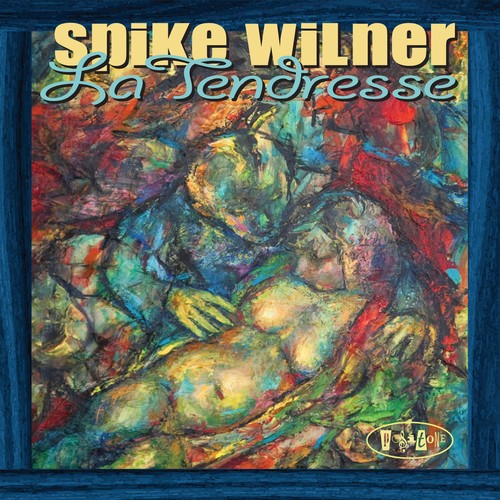
As the great critic Whitney Balliett once posited, jazz is the "sound of surprise" - in the case of "La Tendresse" the new CD from pianist Spike Wilner (PosiTone), the sense of surprise comes from Wilner's approach to the standards that comprise 2/3rds of the program.  Aided and abetted by Hartford native Dezron Douglas (bass) and Joey Saylor (drums), the pianist creates a delightful program.  After listening to his solo take on Harold Arlen's "If I Only Had a Brain", I jotted down the name of Jaki Byard on my pad.  Wilner's lively left hand and delicate phrasing as well as his trilling manner is ever-so-fine. Scott Joplin's "Solace" does not stray far from its New Orleans roots, quite reminiscent of bravado piano work of "Jelly Roll" Morton.  The rhythm section sounds a touch formal until you pay closer attention to Douglas's melodic lines and Saylor's light and, yes, lilting drum work.  Wilner's piano lines shimmer on the Trio's reading of Duke Ellington's "Le Sucrier Velours" (from "The Queen's Suite.") He displays an active left hand throughout the program and that frees up the bassist to play counter melodies.  His take on Thelonious Monk's "Crepuscule With Nellie"commences as a solo piano piece with Wilner concentrating on the melody, then drops into a slow blues shuffle after the rhythm section enters (Saylor is a real spark-plug on this track), coming back to the original melody for a playful close. 

Besides "If I Only Had A Brain", there are several other solo piano pieces and each is as impressive as the other.  The Wilner original "Lullaby of the Leaves" is a blues worthy of James P. Johnson, melodic not strident. Wilner's take on "I'm So Glad We Had This Time Together" (composed by Joe Hamilton for his wife Carol Burnett's television show) shows a wistful side, staying close to the melody and not forcing a steady rhythm on top of the sweet melody.

The title track that opened the program on a hard-driving, mainstream, romp (actually going a bit "outside" for a few moments), is a somewhat misleading introduction  to the CD.  It;s the most "modern" sounding music the band plays (that's not a criticism; it's an intense piece, at times, played at a level the rest of the songs do not approach.)  Yet, by the time you reach the last track, appropriately titled "Happy Ending", a rip-roaring finish with solos by all 3 musicians, one should be be quite pleased with this musical journey. Spike Wilner's music goes in multiple directions and it really is a fun journey, one worth repeating many times.  To find out more about Spike Wilner, click here - it will take you to his page on the Smalls Jazz Club website.

Here is a taste of this delightful CD, courtesy of PosiTone and IODA Promonet:
Happy Ending (mp3)

Listening to Rudresh Mahanthappa talking with Josh Jackson on the April 17th edition of "The Checkout" ( do listen here), a lightbulb went off in the (fairly) dim recesses of my brain.  The alto saxophonist talked about the influence of "prog-rock" in the jazz of the 21st Century.

Moving on to "The Calling" (Palmetto Records), the fine new release (his second as a leader) from pianist/composer Romain Collin, I hear the influence of groups such as Radiohead, Rush, and other progressive bands on the rhythms created by drummer Kendrick Scott and certain chordal patterns of the pianist.  Long melodic passages, shorter tracks without solos, the interaction of Collin with Scott and bassist Luques Curtis (like Dezron Douglas, a native of Hartford, CT) is more comparable to the model of The Bad Plus and the Brad Mehldau Trio than to the music of Bill Evans or, for that fact, McCoy Tyner. Collin has a melodic streak a mile wide and his use of "programmed" sounds feels natural, not forced.  The sonic textures behind the rippling piano solo on "Greyshot" (created by guest Adrian Daurov, cello) are haunting and cinematic. Not that this music is all "sturm und drang" -  try the tricky rhythms of "Pennywise The Clown".  Yes, this is danceable, playful, music and the interaction of Collin and Scott is priceless (don't forget to pay attention to Curtis's solid contributions beneath his cohorts.) For me, Kendrick Scott is the perfect drummer for this music because he never settles for the tried-and-true.  His percussive playfulness on the opening of "Airborne" gives the music its wings while his actions during the varying dynamic settings the pianist creates illustrate that he is a drummer who listens yet is proactive (not reactive.) Listen to him drive "Runner's High", pushing the pianist and bassist without cluttering the sound, creating billows of cymbal splashes - the intensity in this music is incredible, especially since, much of the time, it's not played at a high volume.

The CD closes with "One Last Try", a solo piece with the air of nocturne composed by Claude Debussy.  Collin concentrates on the melody, never relying on excessive technical garnishes or overplaying. The music is emotionally satisfying and honest.  There are other tracks that display a classical influence, an influence that is not heavy-handed or artificial. 

Romain Collin, a native of France and graduate of the Berklee School of Music as well as the Thelonious Monk Institute, has created quite a fine program with "The Calling." Thanks to Kendrick Scott and Luques Curtis for helping to give his music wings, for pushing the pianist forward and framing his melodies in a manner that feels fresh and without cliche.  Kudos also go to producer Matt Pierson who provided Collin with the freedom and guidance to cultivate his music.  To learn more about the pianist, go to romaincollin.com. Also, check him out in conversation with Jason Crane - click on the link at the top right of this post or go to thejazzsession.com.   Finally, to hear the CD, go to palmetto-records.com/album.php?album=183.


Monday, February 20, 2012

3 Piano Trios

One of the joys of listening to pianist/composer Matthew Shipp is that one really does not know what to expect.  "Elastic Aspects" (Thirsty Ear) is the 4th recording by his Trio that features the fine bassist Michael Bisio and creative percussionist Whit Dickey.  Opening with bowed bass and what sounds like percussion and electronics, the piece, titled "Alternative Aspects", sounds like the overture - however, it is followed by "Aspects", a 27 second long piano statement.  The first actual Trio piece, "Psychic Counterpoint", has the feel of a Herbie Nichols composition with its jagged melody, tempo changes, and boppish bass line.  That is followed by "Frame Focus", a piano solo that is contemplative yet exploratory.  Furiously bowed bass and fiery percussion is dubbed "Flow Chart" while the aptly-titled "Mute Voice" is a rambling piano solo over the barely-heard rhythm section. Shipp moves inside the piano and manipulates the pedals for "Stage 10" while Dickey plays a modified shuffle beat and Bisio plays a nimble "walking" bass line.

"Elastic Aspects" is a good description of Matthew Shipp's approach to creating music.  First and second time through the program, there is a continuous sense of discovery (the duo tracks, the piano solos, the dynamic variations.)  As one returns again, it's easier to hear the musicians "conversing", easier to concentrate on Shipp's fascinating melodic and rhythmic playing, and it makes one wish he was in the audience watching this creative Trio makes this music come "alive."  For more information, go to www.thirstyear.com


The Venezuelan-born pianist Luis Perdomo spent a good part of the first decade of the 21st Century as an integral member of the bands led by tenor saxophonist Ravi Coltrane and alto saxophonist Miguel Zenon.  His work on the latter composer's 6 CDs has been exemplary, making the music sound fresh and exciting.  Perdomo has also issued 3 CDs as a leader, his most recent being 2008's "Focus Point" released on CrissCross.  This new recording, "Universal Mind" (RKM), came about at the suggestion of label head and bandleader Coltrane.  In the liner notes, Perdomo writes "A few years ago, Ravi Coltrane mentioned the idea of me playing with Jack (DeJohnette) and I said 'Hell yeah'".  It took a while for the pianist to work up the courage to write to the great drummer and 2012 Jazz Master but once they got together, DeJohnette was happy to be part of the project.  Drew Gress is the bassist and the results, recorded in August of 2009, are quite a treat. 

The program opens with a rousing reading of Joe Henderson's "Tetragon" - for those who think Perdomo only has Latin "chops", one can hear the influence of his mentor Sir Roland Hanna in the blues-soaked hard bop approach.  The rhythm section dances below as the pianist goes on joyful romp.  "Langnau" is an medium-tempo original with a handsome melody line that features fine solos by Gress and Perdomo while DeJohnette provides fine work beneath them.

Perdomo and DeJohnette create 2 spontaneous pieces, "Unified Path I and II", separated by another Trio romp.   The duo pieces allow the musicians the opportunity to explore different sounds, taking their time to allow the music to evolve.  "..Path I" has the feel of John Coltrane's "A Love Supreme" with the pianist creating a hypnotic feel with the full piano chords and repetitive lines while "..Path II" is "freer" and faster, both musicians pushing each other.

Among the other highlights is the joyful journey through DeJohnette's "Tin Can Alley", with its various twists-and-turns.  The composer really dances on this piece, his ecstatic "drum-dance" providing propulsion and also engaging in a fanciful 3-way conversation that brings the piece to an energetic close.  "Dance of the Elephants" is a lovely ballad from the pen of bassist Miriam Sullivan (also Perdomo's wife), a song that the Trio allows to emerge slowly. Again, the interaction of the 3 musicians alows the emotion of the song to be fully realized. The program comes to a close with the exciting Perdomo original, "Doppio", which flies forward on the thunderous drums and flying fingers of Gress.

"Universal Mind" is a bit long (73:25) but filled with great playing, several strong melodies and wonderful interplay.  This is music that feels so "alive" and deserves to be heard live.  As I write, Perdomo is about to perform a "CD Release" tour with bassist Hans Glawischnig and drummer Jhonathan Blake starting at New York City's Jazz Standard (2/23) before heading to Europe for a week.  For more information, go to www.luisperdomojazz.com.

 Adam Kromelow, a graduate of the Manhattan School of Music, studies with Jason Moran and Vijay Iyer.  His debut CD, rightly titled "Youngblood" (ZOHO), features his Trio of Jason Burger (drums) and Raviv Markovitz (bass) and is produced by Arturo O'Farrill (someone who knows a thing or two about the piano.) Kromelow is a powerful pianist, with impressive facility, and he likes to push hard on the faster pieces.  The CD opens with the first of 6 originals, "Black Mamba", and it's a "burner" from the get-go, save for the 2 short classical interludes and a quick bass solo.  The rhythmic attack abates a bit on "Mojo", with its quirky, Thelonious Monk-like, intro, that opens up into an impressionistic piano foray closing on a jaunty piano figure. The funky, playful, "Mr. Pokey" shows that they can do "dynamics" in an intelligent manner and Kromelow's playful piano work sets the mood for the slip-and-slide rhythms that Markovitz and Burger create.

The prettiest track is the straight-forward take of John Lennon's "Across The Universe";  Kromelow presents the melody without much embellishment while the shuffle-like rhythm reminds me of Fleetwood Mac instrumental "Albatross" from 1969.  The Trio brings up the intensity for the final pass through the chorus but fades out quietly.

They have fun with Monk's "Brilliant Corners", with a out-of-time introduction that finally breaks into a gallop and the pianist plays fragments of the melody line. Right before the end, they drop into the familiar in a medium-blues tempo then double-time the piece out.  Another inspired cover is Peter Gabriel's "Mercy Street" - the song starts slowly and quietly but, as the Trio moves through the verses, the intensity picks up until it reaches a fever pitch.  The bass and drums drop out as the piano plays a short coda.  The approach works so well, the Trio repeats it on, at least, half the cuts. For instance, they go in and out of "intense" mode on "Bushido", really ratcheting it up for the closing 90 seconds.  They really slam their way through the last 2 minutes of the final track,  "Upgrade." Chalk it up to youthful enthusiasm.

What does stand out is the lyrical quality of Adam Kromelow on the slower pieces as well as his rhythmic left hand work on most of the pieces.  As a composer, his tendency is to change tempos several times during the songs.  With the forceful work of the rhythm section, there are several instances where one hears the influence of The Bad Plus.  The 9 tracks come in at just under 44 minutes so there's no excess in this program.  Markovitz and Burger rarely solo; instead, the rhythm section concentrates on its interplay and supporting the pianist.

As a debut, "Youngblood" is full of enthusiasm and promise. There's much to enjoy as one digs into the program.  Casual jazz listeners will like the hard-rock drive of the bass and drums while piano trio fans will enjoy Adam Kromelow's way around the keyboard. Find out more by going to www.adamkromelow.com.