The National Endowment for the Arts has announced its selection for the 2014 Jazz Masters. 4 men who have contributed much to creative music over the last 5 decades have been chosen; included are Jamey Aebersold (saxophonist, pianist, educator), Richard Davis (bassist, educator), Keith Jarrett (pianist, composer) and Anthony Braxton (composer, reed player, educator, author). Unless you have totally ignored American creative music since the 1960s, these names should be familiar (save for the first person). Since 1967, Jamey Aebersold has produced over 130 "Play-A-Long With..." records and books. The recordings allow musicians of all stripes to work alongside great rhythm sections performing standards and jazz compositions (without the leader), a DIY educational experience. He has taught Summer Workshops for decades and tours with his own Quartet.
Richard Davis, a native of Chicago, has been a working musician for the better part of 6 decades. The 83-year old bassist has appeared on a number of classic Lps, including Eric Dolphy's "Out To Lunch", Booker Ervin's "The Song Book", Joe Henderson's "In 'n' Out" and on 8 recordings with the pianist/ composer Andrew Hill. His work on these and other classic recordings displayed his understanding of counterpoint and revealed a desire to more than just a timekeeper. Davis has also had a career in classical music where he has worked with many major orchestras.
Keith Jarrett...hmmm..what can one write that has not already been written. He has received numerous accolades, has led several classic ensembles, worked with Miles Davis and Charles Lloyd before moving out on his own, and, thanks to his 40+ year relationship with ECM Records and Manfred Eicher, has ventured into classical music and more.
Ahh...Professor Anthony Braxton...he has lived in my hometown of Middletown, CT, since coming over 20 years ago to teach at Wesleyan University. I have seen and heard him plays with many different-sized ensembles and we have chatted on countless occasions about many different topics (sometimes even music). His influence on musicians such as Kevin Norton, Taylor Ho Bynum, Mary Halvorson, Carl Testa, Andrew Bauder and countless others is immense; his work and ideas inform much of today's creative music. He must get a quite a charge about being named a "Jazz Master", considering all the negative reviews early in his career and audiences walking out of concerts. Mr. Braxton has persevered for any number of reasons but, I think what is most significant about his music is that he has always acknowledged the influence of those musicians who moved Black music forward, those who "made it" and those who struggled to be heard. Although he is retiring from formal teaching in the coming year, Anthony Braxton will continue to blaze new trials in creative musicians.
To find out more about the NEA Jazz Masters program and what it entails, go to www.nea.gov/honors/jazz/. The Induction Ceremony takes place on Monday January 13, 2014 at Jazz at Lincoln Center and will be webcast - more information to follow.
That's trumpeter Josh Evans on the left and he'll be performing this Thursday evening (7/11) as part of the 2013 UMOJA Music Series. He's appearing with his Trumpet Ensemble that includes fellow brass men Brian Lynch and Darren Barrett. Opening the show at 6 p.m. will drummer Jonathan Barber and his Group. Weather permitting, the show (which sounds really exciting) will take place at the Pump House Gallery in Bushnell Park but, if it rains, the proceedings move to the Charter Oak Cultural Center, 21 Charter Oak Avenue in Hartford. For more information, go to www.umojamusic.com. (By the way, the website lists a different "opening" act, the Steven King Porter Trio with saxophonist Abraham Burton - either way, it's a fine evening of music and it's free!)
The Uncertainty Music Series, curated by bassist/composer Carl Testa, will present 4 concerts over the next 6 weeks beginning this Saturday July 13. On that day, the UMS presents a double bill starting at 8 p.m. with a solo bass clarinet performance by Chicago-based musician/performance artist Alejandro Arcieto followed by the duo known as Blister performing a work titled "Just Who Are the Banksters - a meditation on the greatest transfer of wealth ever concocted" Blister is Lucio Monegon (guitar, stuff) and David Grollman (snare drum, things), both of whom manipulate sound and words to get their message across. The play with sound, fury, delicacy and noise. To find out more, go to kingtone.com/blister/. The performances take place at Never Ending Books, 810 State Street in New Haven. To find out more about the series, go to uncertaintymusic.com/.
Carl Testa has a new CD, "IRIS"(Lock Step Records) and will be presenting a CD Release concert Friday July 12 at 8 p.m. in the Douglass Street Music Collective, 295 Douglass St, in Brooklyn. The following Friday (7/19), Testa will hold a CD Release concert at 8:30 p.m. in the performance space at Firehouse 12, 45 Crown Street in New Haven. To find out more about those shows and more, go to carltesta.net/performances.htm. Finally, Carl and I had a pleasant chat about his music and more that I will be posting on the WLIS/WMRD website in the next day - I'll keep you notified.
Andy Bey, pianist and vocalist, has been performing since he was 8 years old (in a group with saxophonist Hank Mobley, no less!). His first recording was issued when the Newark, New Jersey, native was 13 and, at the age of 17, he formed a group with his sisters. After that group disbanded in 1967, Bey went on to work with Horace Silver, Max Roach, Duke Pearson and others. After one solo date on Atlantic Records in 1970, Bey recorded infrequently until "Blues, Ballads and Bey" appeared in 1996. His stunning baritone had gotten deeper and his range expanded (4+ octaves) - he's released several CDs since then and just keeps getting better.
"The World According to Andy Bey" (HighNote Records) is his new CD. 11 songs, 4 originals, 7 standards (including 3 by George Gershwin, and just voice and piano. But, what a performance! Bey has stated in interviews that he is greatly influenced by the blues, gospel and jazz singers (especially Billy Eckstine and Nat "King" Cole.) Those influences have all been absorbed into a style built around clear vocals and piano accompaniment that is more melodic than ornamental. Bey is a dramatic singer yet not overtly so - when you listen to his bittersweet reading of the Gershwin's "But Not For Me" (with the original opening intro), it's amazing how deeply soulful this song is. He can certainly be playful, as he shows on Fats Waller's "The Joint is Jumpin'" with a minimalist approach to the piano that, at times, sounds like Randy Newman. His piano playing is more expansive on "S Wonderful" but he rarely lets his left hand fall into a "swing" rhythm. Ira Gershwin supplied the lyrics to Harold Arlen's handsome melody for "Dissertation on the State of Bliss" (penned for the 1954 Bing Crosby movie, "The Country Girl."). This bluesy sermon is sad yet worldly-wise and one truly feels Bey is singing directly to him.
As for the originals, they include the scatting bop fun of "Dedicated to Miles" and a soulful "The Demons Are After You", a piece with a riff that could have come from a Gil Scott-Heron song and a message of personal and artistic freedom. A sweet groove leads one into "There's So Many Ways to Approach the Blues" (a good alternative title for this program) - the singer describes all the different "blues" a person might encounter in his life and does so with his most spirited vocal. The combination of the "blues" vocal and abstract piano lines makes for fascinating counterpoint. Listen to the variations on the line "There is really only one way/One way/There's really one way/Tell the truth/Tell the truth" that takes the song to its finish - it's breathtaking. "Being Part of What's Happening Now" also has a socially-conscious message about a "positive change", about exploitation of people and natural resources, and this world has "a price most of us have to pay for success."
"The World According to Andy Bey" is a world where songs, performer and piano create stories that touch on the human condition, that aim for the soul and the heart. There's wisdom being imparted but no finger-pointing, no "told-you-so"; this is mature music, timeless and true. Mr. Bey does not have a internet presence but here's a link to a recent interview posted on Sachal Vasandini's website:
www.sachalvasandani.com/latest/article/happy_bday_full_andy_bey_interview/. There is also a link to the CD (plus song samples) at www.jazzdepot.com.
Showing posts with label NEA Jazz Masters. Show all posts
Wednesday, July 10, 2013
Wednesday, February 1, 2012
Ms. Jazz Master, Sam He Is, BG Speaks + Hello Bill Lowe
Her latest CD, "Yesterdays" (HighNote), features Ms. Jordan alongside bassist Harvie S. Recorded live in concert circa 1990, the tapes turned up one day and we are so lucky they did. The duo recorded 3 Lps/CDs in their decade+ association but none with the warmth, the experimentation and the musicality that this program. All of their recordings are worth hearing but this one is a necessity. Bassist S manages to be an "orchestra" behind the voice, his thick tones and fleet lines serving as both support and equal partner. They "rock" out on "It Don't Mean A Thing" then make "Mood Indigo" a very deep hue of the blues. Their playful take of "The Very Thought Of You" moves beyond the lyrics into a personal story of the singer being told by critic Leonard Feather taking her task for not singing the melody.
There is so much to like here, from the title track that opens the CD as a longing paean to "olden days, golden days" (Harvie S's bass chords are wonderful) to the "Fred Astaire Medley" that closes the program. The duo blaze through "Let's Face The Music and Dance" before their playful take of "Cheek to Cheek" ending with an absolutely jovial (and operatic!) version of "I Could Have Danced All Night"; Ms. Jordan collapses in laughter at the end, a splendid exclamation point to an excellent set.
If you don't own a Sheila Jordan recording and claim to be a fan of jazz vocalists, you should be ashamed. "Yesterdays" is one of her best and a good place to start. To find out more, go to www.sheilajordanjazz.com.
"From Sun to Sun" (Origin Records) is the second CD pianist/organist Sam Yahel has recorded with bassist Matt Penman and drummer Jochen Rueckert - PosiTone Records released the first, "Hometown", in 2009. Yahel, who many listeners first encountered as an organist on numerous CDs, has worked with Joshua Redman, Norah Jones, Bill Frisell and Peter Bernstein (among others), surprised many people with the excellence of his piano playing on the previous CD and this new one (recorded in May of 2010) is equally as pleasing. The 3 musicians are quite comfortable with each other and don't play it safe. Their work on "A Beautiful Friendship" sounds effortless yet is filled with emotional and melodic richness. The shifting tempos of "2 Pilgrims" allows for shimmering cymbal sounds, pleasing counterpoint from the bass and piano figures that move from swinging jazz to mellifluous classical phrases (check out Yahel's left hand..very nice.)
One hears traces of Americana in the melody of the title track (Rueckert's drumming is pleasingly interactive) while the trio's version of Cole Porter's "So In Love" is a musical celebration of a fiery romance. Here, Penman's bass pushes the piece forward, spurring the pianist on to one of his more "high-energy" solos. There is plenty of playfulness in this music, whether it's the bluesy, Ornette Coleman-like, melody of "By Hook or By Crook" to the funky sprint through "Git It" (again, Rueckert's drumming is quite a joy to listen to.)
The sounds emanating from the minds, hands and feet of Sam Yahel, Matt Penman and Jochen Rueckert is a true pleasure. "From Sun to Sun" is bright and joyous music, well worth exploring. To find out more, go to www.origin-records.com. FYI, Sam Yahel sits with Josh Jackson on the 1/31 edition of "The Checkout" and plays the "iPod Shuffle" - check it out at by clicking here.
The same show features a long, very enjoyable, conversation with saxophonist/composer Benny Golson. Golson, composer of "Whisper Not" and "Killer Joe" (and lots more), turned 83 on January 25 and continues to compose, perform and record. A 1996 NEA Jazz Master, the stories he tells to host Jackson are filled with humor, wisdom and joy. There are moments when Golson drops into a whisper, effectively drawing the listener into his world. Check it out at www.wbgo.org/thecheckout/benny-golson-creativity-never-retires/.
Bass trombonist and tuba player Bill Lowe has performed with a slew of fine musicians over his 4+ decades as a musician. He's also spent many years as an educator at Wesleyan University, Northeastern, Columbia and, most recently, at Brown University. Professor Lowe has recorded and toured with Henry Threadgill, Bill Dixon, James "Jabbo" Ware's Me, We & Them Orchestra, and currently is a member of Taylor Ho Bynum's Sextet. Along the way, he's worked with Dizzy Gillespie, Eartha Kitt, Mercer Ellington and Bill Barron (that's only 4 out of many.) He's composed work for small ensembles, orchestras and for theater productions.
Bynum, his former student and long-time friend, has assembled recordings and radio broadcasts for the fine music blog, "Destination Out." Part 1 is up now - it's a well-deserved (and long overdue) look at the man, his music and fascinating journey. Give a look and listen at destination-out.com.
Monday, January 16, 2012
Winter Listening (Part 1)
Vocalist Tierney Sutton, Wesleyan University Class of 1986, has often explored the "Great American Songbook" to great effect. "American Road" (BFM Jazz) moves away from Tin Pan Alley and Hollywood for a mesmerizing blend of traditional music, gospel, and popular music with a fascinating side trip to "Porgy and Bess" and "West Side Story." The CD is credited to the Tierney Sutton Band, a quartet that has been her "main men" for nearly 2 decades. In the studio, Kevin Axt and Trey Henry share the bass duties (Axt is the one who goes "on the road" and he designed the CD cover ). Pianist Christian Jacobs has developed into a major voice (he often tours with Henry and TSB drummer Ray Brinker) as important to Ms. Sutton's music as Laurence Hobgood is to Kurt Elling.
Sutton is famous for her "cooperative" approach to the band's repertoire; the arrangements on "American Road" are credited to the entire band and there's nary a false note on the CD. Opening with a highly rhythmic version of "Wayfaring Stranger" which leads into a reverential take of "Oh Shenandoah" that is paired with the Scottish folk song "The Water is Wide." Up next is a highly charged reading of the Mann/Weill/Lieber/Stoller classic "On Broadway." Built off of Brinker's
powerful percussion and throbbing electric bass, Ms. Sutton really digs into the lyrics, standing aside for Jacobs' wonderfully angular solo. The group's intelligent reworking of "Amazing Grace" shows reverence for the original at the onset then a subtle and sweet move into a blend of gospel, jazz and blues.
Purists might object to the heavy backbeat on "It Ain't Necessarily So" but it's a solid lead-in to the trio of songs from "Porgy & Bess" - here, "Summertime" is slow, sultry and impressionistic while "My Man's Gone Now" has a sweet, funky, feel.
Before Ms. Sutton moves to "West Side Story", she and Jacobs take a Debussy meets Teddy Wilson approach to "Tenderly"; then, she and the bassists do a short, bouncy, version of Yip Harburg-Harold Arlen's "The Eagle and Me." Bernstein-Sondheim's "Somewhere" is often approached in a overly emotional fashion. Here, it is a lovely ballad, filled with feeling yes but neither cloying nor overblown. The band's approach to "Something's Coming/Cool" puts the excitement in the vocal and not in an incessant rhythm - the second tune gets the energy, especially in the "running" bass line.
The program closes with "America The Beautiful", another song that can be too dramatic. Ms. Sutton avoids melismatic swoops or any other vocal acrobatics. Instead, she caresses the melody, opting to begin with a verse of wordless vocals before moving into the lyrics. As opposed to many who sing this song (including a politician currently campaigning for the presidential nomination) as a patriotic screed, Ms. Sutton understands the message of acceptance and brotherhood in the lyrics. Just her voice and Jacobs' fine piano accompaniment, a fitting close to an adventurous program.
"American Road" is a journey that takes the listener deep into songs that, for the most part, have had had an emotional impact on Americans, doing so without being jingoistic or snide. Instead, the Tierney Sutton Band celebrates the breadth of this country's music, making the listener pay attention to the words and feelings in each song. For more information, go to www.tierneysutton.com.
Late last year, saxophonist Dan Blake (Kenny Werner Group, Anthony Braxton's "Trillium Project", Julian Lage) joined forces with BJU Records to issue "The Aquarian Suite", a fascinating project that combines the influence of Ornette Coleman (in the instrumental choices) with the melodies that open up in various directions. Alongside Blake is Jason Palmer (trumpet), Jorge Roeder (bass) and the fine young Hartford, CT, native Richie Barshay (drums.) The music Blake created for this group has fire, swing, and breathes in such a way that the listener relaxes into the distinct moods of each track. "The Whistler" opens the program - it has a loping rhythm (somewhat like the feel of Sonny Rollins "Freedom Suite") and the front line dances over the active drums and bass. Roeder's chordal bass leads in "How It's Done", a multi-sectioned piece that blends a hard-bop feel with Middle-Eastern influences - listen to how Blake rises above the driving rhythm section setting the table for Palmer's excellent solo turn.
Other highlights include the bluesy ballad "The Road That Reminds", where the tenor saxophone and muted trumpet move together in wonderful dialogue before Blake moves out for a heartfelt (and pleasingly long) solo. Late in the piece, the bass and drums drop out, leaving Blake and Palmer locked in a musical conversation that comes to a satisfying conclusion. "You Cry So Pretty" is a lovely ballad, not cloying or sentimental but gentle with a sweetness that brings the listener back to dwell in its warmth.
Honestly, there is not a weak track on "The Aquarian Suite" plus the interaction of the musicians is a joy to behold. Yes, there are moments when the music "swings" with a vengeance and it makes one wish to see and hear this music in a performance space. Go to www.bjurecords.com/DBlake.html and find out more about this excellent recording and the man behind its creation.
Here's the effervescent "How It's Done", courtesy of BJU Records and IODA Promonet - click on the link and enjoy!
How It's Done (mp3)
2012 NEA Jazz Master Jimmy Owens (trumpet, flugelhorn) does not go into the studio very often so, when he does, he makes certain the music shines. "The Monk Project" (IPO Records), Owens has taken a selection of Thelonious Monk songs (plus a Monkian take on "It Don't Mean A Thing If It Ain't Got That Swing"), assembled a crackerjack septet of musicians younger and older, and created a sweet bouquet of a tribute. The front line includes Owens, Marcus Strickland (tenor saxophone), Wycliffe Gordon (trombone), Howard Johnson (tuba, baritone saxophone) - the rhythm section is also quite fine, including Kenny Barron (piano), Kenny Davis (bass) and the electrifying drumming of Winard Harper. They do not treat this music as religious artifacts, to be approached with reverence. Instead, they engage in making the music comes alive. "Well You Needn't" gets a modal feel (with the occasional 8 bars of swing) with a sound not unlike the "Acknowledgement" section of John Coltrane's "A Love Supreme".) "Blue Monk" leans more towards the blues, with a ripping solo from the leader, a raucous turn from Gordon, and a "gutbucket" turn from Strickland (who sounds as if he is having the time of his life.) Barron shows his "Southside Chicago" moves to lead the piece back to its rousing finish. Johnson's tuba dances around the unison trumpet-tenor lines on "It Don't Mean A Thing..." exhibiting how he swings with the best of them. This version is based on a transcription from a Monk Trio recording on Riverside Records. Owens switches to flugelhorn for a a lovely reading of "Reflection" - here, he trades lines with Gordon while Barron plays the role of rhythm section (the rest of the group sits this piece out.)
There are scores of recordings dedicated to the music of Thelonious Monk, some with very fancy rearrangements and odd choices for instrumentation. Here, Jimmy Owens and company do it right. They play this music with joy, love and great spirit (Gordon, in particular, sounds like he's having the time of his life while Harper plays his butt off.) This music is timeless and worth your time. To find out more, go to jimmyowensjazz.com.
The Wee Trio - Dan Loomis (bass), James Westfall (vibraphone), and Jared Schonig (drums) - creates modern music that makes one think while tapping your feet. For its 3rd CD, TWT take a short (under 32 minutes) but lively tour on "Ashes to Ashes: A David Bowie Intraspective" (Bionic Records). No matter how one feels about Mr. Bowie's music, he knows how to write melodies and the Wee threesome have fun with these songs. The ensemble mixes more familiar tunes ("The Man Who Sold The World", "Queen Bitch", the title track) with obscure ones ("The Battle For Britain", "Sunday"), putting their unique spin on each track. The program opens with the punk-ish sounds of "The Battle.." yet the Trio finds the handsome melody lurking within. Schonig's hard-edged drumming revs up the middle of the piece. For "The Man...", they give the song a Caribbean feel, with hand drums and a marimba-like tone from the vibes. The Trio stays true to the disco-feel of "1984" yet give it a vibrant swing that one does not miss the fantastical lyrics. The martial beat of "Sunday" opens up to reveal the melody played first on the vibes then moves to bassist Loomis whose introspective lines give way to a rollicking finish. Throughout the program, Westfall's vibes have a rich sound and his playing is thoughtful and, at times, animated. The rhythm section fully inhabits each track; this music must really "fly" in person.
Even if you are not a fan of David Bowie's music, The Wee Trio's exuberance and intelligent arrangements should please fans of creative music. Plus, the group really knows how to "rock out!" To find out more, go to www.theweetrio.com.
Sutton is famous for her "cooperative" approach to the band's repertoire; the arrangements on "American Road" are credited to the entire band and there's nary a false note on the CD. Opening with a highly rhythmic version of "Wayfaring Stranger" which leads into a reverential take of "Oh Shenandoah" that is paired with the Scottish folk song "The Water is Wide." Up next is a highly charged reading of the Mann/Weill/Lieber/Stoller classic "On Broadway." Built off of Brinker's
powerful percussion and throbbing electric bass, Ms. Sutton really digs into the lyrics, standing aside for Jacobs' wonderfully angular solo. The group's intelligent reworking of "Amazing Grace" shows reverence for the original at the onset then a subtle and sweet move into a blend of gospel, jazz and blues.
Purists might object to the heavy backbeat on "It Ain't Necessarily So" but it's a solid lead-in to the trio of songs from "Porgy & Bess" - here, "Summertime" is slow, sultry and impressionistic while "My Man's Gone Now" has a sweet, funky, feel.
Before Ms. Sutton moves to "West Side Story", she and Jacobs take a Debussy meets Teddy Wilson approach to "Tenderly"; then, she and the bassists do a short, bouncy, version of Yip Harburg-Harold Arlen's "The Eagle and Me." Bernstein-Sondheim's "Somewhere" is often approached in a overly emotional fashion. Here, it is a lovely ballad, filled with feeling yes but neither cloying nor overblown. The band's approach to "Something's Coming/Cool" puts the excitement in the vocal and not in an incessant rhythm - the second tune gets the energy, especially in the "running" bass line.
The program closes with "America The Beautiful", another song that can be too dramatic. Ms. Sutton avoids melismatic swoops or any other vocal acrobatics. Instead, she caresses the melody, opting to begin with a verse of wordless vocals before moving into the lyrics. As opposed to many who sing this song (including a politician currently campaigning for the presidential nomination) as a patriotic screed, Ms. Sutton understands the message of acceptance and brotherhood in the lyrics. Just her voice and Jacobs' fine piano accompaniment, a fitting close to an adventurous program.
"American Road" is a journey that takes the listener deep into songs that, for the most part, have had had an emotional impact on Americans, doing so without being jingoistic or snide. Instead, the Tierney Sutton Band celebrates the breadth of this country's music, making the listener pay attention to the words and feelings in each song. For more information, go to www.tierneysutton.com.
Late last year, saxophonist Dan Blake (Kenny Werner Group, Anthony Braxton's "Trillium Project", Julian Lage) joined forces with BJU Records to issue "The Aquarian Suite", a fascinating project that combines the influence of Ornette Coleman (in the instrumental choices) with the melodies that open up in various directions. Alongside Blake is Jason Palmer (trumpet), Jorge Roeder (bass) and the fine young Hartford, CT, native Richie Barshay (drums.) The music Blake created for this group has fire, swing, and breathes in such a way that the listener relaxes into the distinct moods of each track. "The Whistler" opens the program - it has a loping rhythm (somewhat like the feel of Sonny Rollins "Freedom Suite") and the front line dances over the active drums and bass. Roeder's chordal bass leads in "How It's Done", a multi-sectioned piece that blends a hard-bop feel with Middle-Eastern influences - listen to how Blake rises above the driving rhythm section setting the table for Palmer's excellent solo turn.
Other highlights include the bluesy ballad "The Road That Reminds", where the tenor saxophone and muted trumpet move together in wonderful dialogue before Blake moves out for a heartfelt (and pleasingly long) solo. Late in the piece, the bass and drums drop out, leaving Blake and Palmer locked in a musical conversation that comes to a satisfying conclusion. "You Cry So Pretty" is a lovely ballad, not cloying or sentimental but gentle with a sweetness that brings the listener back to dwell in its warmth.
Honestly, there is not a weak track on "The Aquarian Suite" plus the interaction of the musicians is a joy to behold. Yes, there are moments when the music "swings" with a vengeance and it makes one wish to see and hear this music in a performance space. Go to www.bjurecords.com/DBlake.html and find out more about this excellent recording and the man behind its creation.
Here's the effervescent "How It's Done", courtesy of BJU Records and IODA Promonet - click on the link and enjoy!
How It's Done (mp3)
2012 NEA Jazz Master Jimmy Owens (trumpet, flugelhorn) does not go into the studio very often so, when he does, he makes certain the music shines. "The Monk Project" (IPO Records), Owens has taken a selection of Thelonious Monk songs (plus a Monkian take on "It Don't Mean A Thing If It Ain't Got That Swing"), assembled a crackerjack septet of musicians younger and older, and created a sweet bouquet of a tribute. The front line includes Owens, Marcus Strickland (tenor saxophone), Wycliffe Gordon (trombone), Howard Johnson (tuba, baritone saxophone) - the rhythm section is also quite fine, including Kenny Barron (piano), Kenny Davis (bass) and the electrifying drumming of Winard Harper. They do not treat this music as religious artifacts, to be approached with reverence. Instead, they engage in making the music comes alive. "Well You Needn't" gets a modal feel (with the occasional 8 bars of swing) with a sound not unlike the "Acknowledgement" section of John Coltrane's "A Love Supreme".) "Blue Monk" leans more towards the blues, with a ripping solo from the leader, a raucous turn from Gordon, and a "gutbucket" turn from Strickland (who sounds as if he is having the time of his life.) Barron shows his "Southside Chicago" moves to lead the piece back to its rousing finish. Johnson's tuba dances around the unison trumpet-tenor lines on "It Don't Mean A Thing..." exhibiting how he swings with the best of them. This version is based on a transcription from a Monk Trio recording on Riverside Records. Owens switches to flugelhorn for a a lovely reading of "Reflection" - here, he trades lines with Gordon while Barron plays the role of rhythm section (the rest of the group sits this piece out.)
There are scores of recordings dedicated to the music of Thelonious Monk, some with very fancy rearrangements and odd choices for instrumentation. Here, Jimmy Owens and company do it right. They play this music with joy, love and great spirit (Gordon, in particular, sounds like he's having the time of his life while Harper plays his butt off.) This music is timeless and worth your time. To find out more, go to jimmyowensjazz.com.
The Wee Trio - Dan Loomis (bass), James Westfall (vibraphone), and Jared Schonig (drums) - creates modern music that makes one think while tapping your feet. For its 3rd CD, TWT take a short (under 32 minutes) but lively tour on "Ashes to Ashes: A David Bowie Intraspective" (Bionic Records). No matter how one feels about Mr. Bowie's music, he knows how to write melodies and the Wee threesome have fun with these songs. The ensemble mixes more familiar tunes ("The Man Who Sold The World", "Queen Bitch", the title track) with obscure ones ("The Battle For Britain", "Sunday"), putting their unique spin on each track. The program opens with the punk-ish sounds of "The Battle.." yet the Trio finds the handsome melody lurking within. Schonig's hard-edged drumming revs up the middle of the piece. For "The Man...", they give the song a Caribbean feel, with hand drums and a marimba-like tone from the vibes. The Trio stays true to the disco-feel of "1984" yet give it a vibrant swing that one does not miss the fantastical lyrics. The martial beat of "Sunday" opens up to reveal the melody played first on the vibes then moves to bassist Loomis whose introspective lines give way to a rollicking finish. Throughout the program, Westfall's vibes have a rich sound and his playing is thoughtful and, at times, animated. The rhythm section fully inhabits each track; this music must really "fly" in person.
Even if you are not a fan of David Bowie's music, The Wee Trio's exuberance and intelligent arrangements should please fans of creative music. Plus, the group really knows how to "rock out!" To find out more, go to www.theweetrio.com.
Tuesday, January 10, 2012
NEA Honors Jazz Masters 2012
The National Endowment of the Arts presents its annual Jazz Masters Fellowship tonight at Lincoln Center in New York City (January 10, 2012), a presentation that can be viewed, via webcast, at www.jalc.org/neajazzmasters/.
The NEA originated this program in 1982 to pay tribute to those artists who have enhanced this American art form with originality, spirit and the desire to educate. This year's honorees are no exception.
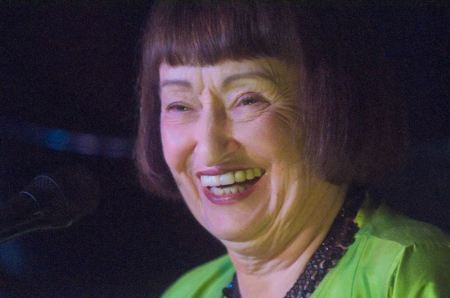
Sheila Jordan (pictured above), born in Detroit, Michigan and raised by her grandparents in Pennsylvania, became exposed to jazz when she returned to the Motor City during the early years of World War II. She met numerous jazz musicians and, by the end of the decade, was singing in a vocal trio. Moving to New York City in 1952, it was 10 years before she made her recording debut on composer/arranger George Russell's "The Outer View." Within in few months, she released her first Lp under her own name on the Blue Note label, "Portrait of Sheila." Over the next decade-and-a-half, she spent much of her time raising her daughter yet found time to perform in clubs and churches as well as working with trombonist Roswell Rudd. In the late 1970s, she began working, recording and touring with pianist Steve Kuhn - their 2 recordings for ECM helped to bring Ms. Jordan to a wider audience. She also displayed an affinity for performing in duos with bassists. She's recorded with Arild Andersen, Steve Swallow, Cameron Brown (a collaboration that continues to the present day) and Harvie S. Later this month, HighNote Records will issue "Yesterdays", a recording of a 1990 concert with Harvie S. Sheila Jordan still tours and teaches workshops around the world. Find out more by going to www.sheilajordanjazz.com/.
For many music fans, tenor saxophonist Von Freeman, born in October 1923, is Chicago jazz personified (truly, he shares that title with the late Fred Anderson.) Freeman made the Windy City his base of operations for a career that spans over 7 decades! After spending World War II in the US Navy band, he returned to Chicago and began performing in clubs with his brothers George and "Bruz", often backing touring jazz artists. In the 1950s, he played with Sun Ra, pianist Andrew Hill, blues man Jimmy Witherspoon and others. Freeman made his national recording debut in 1972, "Doin' It Right Now", an Lp produced by Rahsaan Roland Kirk. Later recordings paired with his son Chico (1982) and another fine Chicago saxophonist Frank Catalano (1999) - the series of CDs on Premonition Records (recorded and released between 2001 and 2006) are among his strongest work. In June 2010, Von Freeman received the Jesse L. Rosenberger Medal from the University of Chicago "in recognition of achievement through research, in authorship, in invention, for discovery, for unusual public service or for anything deemed of great benefit to humanity."
New York City born and raised (December 9, 1943), trumpeter Jimmy Owens began his studies at the age of 14 with Donald Byrd. He would go on to study with composer Henry Brant and get his Masters Degree in Education from the University of Massachusetts. Owens also has been a very busy musician, performing alongside Dizzy Gillespie, Kenny Burrell, Kenny Barron, Gerald Wilson, Max Roach and Billy Taylor. He was a charter member of the Thad Jones-Mel Lewis Jazz Orchestra and musical director of musical director of the New York Jazz Repertory Company. Owens has been an educator on campuses and on the streets (working with Billy Taylor's Jazzmobile Program) and an advocate for the rights of performing artists, helping in the foundation of the Jazz Musician's Emergency Fund, a program to help individual musicians with medical, financial, and housing assistance. Jimmy Owens is the recipient of the 2012 A.B. Spellman NEA Jazz Masters Award for Jazz Advocacy. This month, IPO Records issues Owens' newest CD, "The Monk Project", dedicated to the music of Thelonious Monk and featuring, among others, Kenny Barron, trombonist Wycliffe Gordon and saxophonist Marcus Strickland. To find out more and check out his extensive discography, go to jimmyowensjazz.com.
If you are not aware of bassist Charlie Haden's impressive body of work as well as his commitment to social and political justice, you've missed a lot. Moving to Los Angeles, California, in 1957 from Missouri, the bassist came in contact with legendary musicians such as saxophonist Dexter Gordon, pianists Hampton Hawes and Paul Bley. Still, it was his meeting with saxophonist Ornette Coleman that set his career in motion. The series of recordings Coleman made for Atlantic Records from 1959-61 turned the jazz world on its ears. Haden went on to work with pianist Keith Jarrett, first in a trio setting with drummer Paul Motian - with the addition of saxophonist Dewey Redman, the pianist's "American Quartet" made an impressive group of recordings for Impulse and ECM. In 1969, Haden paired with pianist/composer/arranger Carla Bley to create the Liberation Music Orchestra, a big band that combined jazz and politics to shed light on causes the bassist felt were quite important (most especially, American "Imperialism.") He's recorded in so many settings, from duos (with Hank Jones, Keith Jarrett, and Pat Metheny) to trios (with Geri Allen and Paul Motian as well as Jan Garbarek and Egberto Gismonti plus Don Cherry and Ed Blackwell) to leading his Quartet West (displaying his love of standards and Hollywood movie music). This week sees the release of "Come Sunday", a duo CD with Hank Jones. To find out more, go to www.charliehadenmusic.com.
Another musician who should need no introduction to jazz fans is drummer/pianist/composer Jack DeJohnette. The Chicago native first came to critical notice in 1966 as a member of saxophonist Charles Lloyd's Quartet (also featuring Keith Jarrett) and, within a few years, recorded with pianist Bill Evans, saxophonist Joe Henderson, trumpeter Freddie Hubbard, Herbie Hancock and Chick Corea. He joined Miles Davis "electric" band and appeared "Bitches Brew" and other recordings from that era. DeJohnette is featured on many ECM recordings, including 10 as a leader. He started his own label, Golden Beams, with releases ranging from "New Age" to piano trio jazz. To celebrate his 70th birthday, DeJohnette will bring 3 groups to this summer's Newport Jazz Festival and, next week, E1 Records will issue "Sound Travels", a project that finds the drummer playing many different styles of music with guests Bruce Hornsby, Bobby McFerrin, guitarist Lionel Loueke, trumpeter Ambrose Akinmusire, Jason Moran and Esperanza Spalding (DeJohnette appears on 3 tracks on her upcoming release.) To find out more about his amazing career, go to www.jackdejohnette.com. For an excellent interview, go to thejazzsession.com/2012/01/09/the-jazz-session-336-jack-dejohnette/ and listen to his chat with Jason Crane.
If you want more information about the NEA, its Jazz Initiatives and the Jazz Masters Program, go to arts.gov/national/jazz/index.html.
The NEA originated this program in 1982 to pay tribute to those artists who have enhanced this American art form with originality, spirit and the desire to educate. This year's honorees are no exception.
Sheila Jordan (pictured above), born in Detroit, Michigan and raised by her grandparents in Pennsylvania, became exposed to jazz when she returned to the Motor City during the early years of World War II. She met numerous jazz musicians and, by the end of the decade, was singing in a vocal trio. Moving to New York City in 1952, it was 10 years before she made her recording debut on composer/arranger George Russell's "The Outer View." Within in few months, she released her first Lp under her own name on the Blue Note label, "Portrait of Sheila." Over the next decade-and-a-half, she spent much of her time raising her daughter yet found time to perform in clubs and churches as well as working with trombonist Roswell Rudd. In the late 1970s, she began working, recording and touring with pianist Steve Kuhn - their 2 recordings for ECM helped to bring Ms. Jordan to a wider audience. She also displayed an affinity for performing in duos with bassists. She's recorded with Arild Andersen, Steve Swallow, Cameron Brown (a collaboration that continues to the present day) and Harvie S. Later this month, HighNote Records will issue "Yesterdays", a recording of a 1990 concert with Harvie S. Sheila Jordan still tours and teaches workshops around the world. Find out more by going to www.sheilajordanjazz.com/.
For many music fans, tenor saxophonist Von Freeman, born in October 1923, is Chicago jazz personified (truly, he shares that title with the late Fred Anderson.) Freeman made the Windy City his base of operations for a career that spans over 7 decades! After spending World War II in the US Navy band, he returned to Chicago and began performing in clubs with his brothers George and "Bruz", often backing touring jazz artists. In the 1950s, he played with Sun Ra, pianist Andrew Hill, blues man Jimmy Witherspoon and others. Freeman made his national recording debut in 1972, "Doin' It Right Now", an Lp produced by Rahsaan Roland Kirk. Later recordings paired with his son Chico (1982) and another fine Chicago saxophonist Frank Catalano (1999) - the series of CDs on Premonition Records (recorded and released between 2001 and 2006) are among his strongest work. In June 2010, Von Freeman received the Jesse L. Rosenberger Medal from the University of Chicago "in recognition of achievement through research, in authorship, in invention, for discovery, for unusual public service or for anything deemed of great benefit to humanity."
New York City born and raised (December 9, 1943), trumpeter Jimmy Owens began his studies at the age of 14 with Donald Byrd. He would go on to study with composer Henry Brant and get his Masters Degree in Education from the University of Massachusetts. Owens also has been a very busy musician, performing alongside Dizzy Gillespie, Kenny Burrell, Kenny Barron, Gerald Wilson, Max Roach and Billy Taylor. He was a charter member of the Thad Jones-Mel Lewis Jazz Orchestra and musical director of musical director of the New York Jazz Repertory Company. Owens has been an educator on campuses and on the streets (working with Billy Taylor's Jazzmobile Program) and an advocate for the rights of performing artists, helping in the foundation of the Jazz Musician's Emergency Fund, a program to help individual musicians with medical, financial, and housing assistance. Jimmy Owens is the recipient of the 2012 A.B. Spellman NEA Jazz Masters Award for Jazz Advocacy. This month, IPO Records issues Owens' newest CD, "The Monk Project", dedicated to the music of Thelonious Monk and featuring, among others, Kenny Barron, trombonist Wycliffe Gordon and saxophonist Marcus Strickland. To find out more and check out his extensive discography, go to jimmyowensjazz.com.
If you are not aware of bassist Charlie Haden's impressive body of work as well as his commitment to social and political justice, you've missed a lot. Moving to Los Angeles, California, in 1957 from Missouri, the bassist came in contact with legendary musicians such as saxophonist Dexter Gordon, pianists Hampton Hawes and Paul Bley. Still, it was his meeting with saxophonist Ornette Coleman that set his career in motion. The series of recordings Coleman made for Atlantic Records from 1959-61 turned the jazz world on its ears. Haden went on to work with pianist Keith Jarrett, first in a trio setting with drummer Paul Motian - with the addition of saxophonist Dewey Redman, the pianist's "American Quartet" made an impressive group of recordings for Impulse and ECM. In 1969, Haden paired with pianist/composer/arranger Carla Bley to create the Liberation Music Orchestra, a big band that combined jazz and politics to shed light on causes the bassist felt were quite important (most especially, American "Imperialism.") He's recorded in so many settings, from duos (with Hank Jones, Keith Jarrett, and Pat Metheny) to trios (with Geri Allen and Paul Motian as well as Jan Garbarek and Egberto Gismonti plus Don Cherry and Ed Blackwell) to leading his Quartet West (displaying his love of standards and Hollywood movie music). This week sees the release of "Come Sunday", a duo CD with Hank Jones. To find out more, go to www.charliehadenmusic.com.
Another musician who should need no introduction to jazz fans is drummer/pianist/composer Jack DeJohnette. The Chicago native first came to critical notice in 1966 as a member of saxophonist Charles Lloyd's Quartet (also featuring Keith Jarrett) and, within a few years, recorded with pianist Bill Evans, saxophonist Joe Henderson, trumpeter Freddie Hubbard, Herbie Hancock and Chick Corea. He joined Miles Davis "electric" band and appeared "Bitches Brew" and other recordings from that era. DeJohnette is featured on many ECM recordings, including 10 as a leader. He started his own label, Golden Beams, with releases ranging from "New Age" to piano trio jazz. To celebrate his 70th birthday, DeJohnette will bring 3 groups to this summer's Newport Jazz Festival and, next week, E1 Records will issue "Sound Travels", a project that finds the drummer playing many different styles of music with guests Bruce Hornsby, Bobby McFerrin, guitarist Lionel Loueke, trumpeter Ambrose Akinmusire, Jason Moran and Esperanza Spalding (DeJohnette appears on 3 tracks on her upcoming release.) To find out more about his amazing career, go to www.jackdejohnette.com. For an excellent interview, go to thejazzsession.com/2012/01/09/the-jazz-session-336-jack-dejohnette/ and listen to his chat with Jason Crane.
If you want more information about the NEA, its Jazz Initiatives and the Jazz Masters Program, go to arts.gov/national/jazz/index.html.
Subscribe to:
Posts (Atom)