Chuck Owen has had a long career as a jazz educator, composer, and arranger. In 1981, Owen left California where he had been attending school and free-lancing as a film composer: he and his family moved to Tampa, Florida, when he became the first full-time faculty of the Jazz Studies program at the University of South Florida. Over the decades, Owen helped to build a program that is one of the best in the United States –– he's also been involved in numerous educational events and workshops around the country and, in 2015, helped to create the International Association for Jazz Education. On top of that, in 1995, Owen organized the Jazz Surge, a 19-member ensemble, to be his primary creative outlet.
To celebrate the group's 25th Anniversary, Owen created "Within Us" (MAMA Records/Summit Records), a eight-song program that features six originals plus one composition each by Chick Corea and Miles Davis. The album opens with Corea's "Chelsea Shuffle", a piece that the late pianist created for his 2001 New Trio. Originally the pianist was scheduled to record with Owen's band but passed before he could join the Jazz Surge in the studio. The solos in the bluesy piece belong to soprano saxophonist Steve Wilson (who was part of Corea's Origin band), vibraphonist Warren Wolf, and bassist Mark Neuenschwander but do pay attention to the sections move in and around the soloists. Violinist Sara Caswell soars over the acoustic strumming on "Trails of the Ancients" –– when the band drops out and you hear guitarist Corey Christiansen's rhythm guitar, there's a strong hint of The Who's "Pinball Wizard" in that moment. But, the remainder of the piece includes splendid direction from drummer Danny Gottlieb and a powerful electric guitar spot for Larue Nickelson.
Pick a track, any track, and you will hear excellent writing, splendid musicianship, and memorable solos. The rhythm section creates a funky foundation for the band on Miles Davis's "Milestones": the herky-jerky conversation between Gottlieb and the sections right before his short solo is a treat as is how the ensemble moves out of that into a delightfully impressionistic reading of the melody. Meanwhile, soloists Jack Wilkins (tenor sax) and Clay Jenkins (trumpet) weave their lines around each other. Be sure to dig the fun and heroic bari sax work of Matt Vance! That's Vance's bass clarinet beneath the handsome melody of "Apalachicola", a ballad that puts Ms. Caswell's violin, Christiansen's bluesy (and roaring) guitar, and Tom Brantley's moaning, gutbucket trombone in the solo spotlight. Vibraphonist Wolf and trumpeter Jenkins lead the ensemble in on "The Better Claim", a piece that Owen created for his 2011 "River Runs: A Concerto for Jazz Guitar, Saxophone, & Orchestra". While Ms. Caswell's violin is prominent in the mix, the reeds and brass dance around the fine solos. Note how Owen blends a single sax with the trumpets, the trombones swirling underneath, all the while Gottlieb is piloting the musicians through the "rapids".
The final piece in the program, "Within Us (An Invincible Summer)", a lovely ballad inspired by Albert Camus's essay "Return to Tipasa". The beauty of the melody, the sparkling piano of Per Danielsson, the light tenor phrases of Rex Wertz, and the occasional violin phrases, are clear, harmonious, and, in the final analysis, soothing to the listener's soul.
25 years is a long time for any group to stay together much less a large ensemble. But the intelligence and musicality in the material that Chuck Owens composes and/ or arranges for the Jazz Surge keeps the ensemble on the edge of its creative seats. "Within Us" is a gem, well worth examining numerous times so that you can see its myriad facets.
For more information, go to www.chuckowen.com. The album is set to be released on September 17, 2021.
Check out this short video to see the Jazz Surge going to work:
Personnel:
GUEST SOLOIST
Warren Wolf (Vibes/Marimba)
WOODWINDS
Tami Danielsson
Steve Wilson
Jack Wilkins
Rex Wertz
Matt Vance
TRUMPETS
Frank Greene
Jay Coble
Mike Iapichino
Clay Jenkins
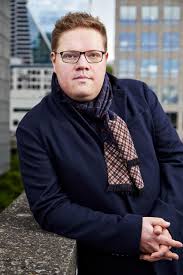
Composer, arranger, and Pittsburgh, PA, native David Sanford (pictured left) often blurs the lines between classical and jazz as well as composition and improvisation. Started his musical life young as an aspiring trombonist, loving r'n'b and "Soul" music, he discovered Charles Mingus and that helped turn his life towards composing. He did his undergraduate work at the University of Northern Colorado, went on to get a Masters of Music at the New England Conservatory and his M.F.A. and Ph. D at Princeton University. Dr. Sanford has won a slew of awards and fellowships plus became the conductor of the Pittsburgh Collective, a 20-member orchestra that also straddles genres. He currently is the Elizabeth T. Kennan Professor of Music at Mount Holyoke College in South Hadley, MA.
Greenleaf Music will release "A Prayer for Lester Bowie" by the David Sanford Big Band featuring Hugh Ragin on September 24, 2021. The eight-song program, composed and arranged by Dr. Sanford save for the title track which is the work of Dr. Ragin plus a rollicking reading of Dizzy Gillespie's "Dizzy Atmosphere". The band is composed of members of the Pittsburgh Collective and others (such as saxophonist Anna Webber and trumpeters Brad Goode plus Tony Kadleck). The music on the album is brash, brassy, bold, at times hard-rocking (guitarist Dave Fabris really wails on several tracks), and full of aural surprises. My initial reaction was that the music reminded me of the Muhal Richard Abrams Orchestra and that composer-arranger's ability get all sorts of sounds and moods out of the musicians.
The album opens with "Full Immersion" – the band, led in by conga player Theo Moore, drops into a funky beat piano, chunky guitar, funky bass line, and drummer Mark Raynes playing side of his snare. You can hear the influence of soul riffs on the sectional writing as the piece moves forward. It's fun to hear the lower brass (bass trombone and tuba) dueling over the Raynes thundering drum between the strong tenor sax solos from Ms. Webber and Geoff Vidal (the pair then trade phrases as the band thunders on before coming together to raise the roof).
Dr. Ragin takes center stage for the title track. Opening the piece with a plaintive solo trumpet spotlight, the Big Band enters playing loud chords with a touch of dissonance. The musicians then enter a "free" period as if they were all trying to get the listener's attention at the same time. After several minutes of various instruments carrying on the conversation, the brass and reed sections play powerful melodic passages –– suddenly, the music falls into a rapid-fire beat with Ragin leading the charge. Saxophonists Ted Levine (alto), Vidal (tenor), and Mark Phaneuf (tenor) join the solo fray until the rhythmic charge slows down. The entire trombone solo around each other until the music slows down to a crawl, the sections again play powerful phrases going from the trumpets to the reeds to the trombones. The spirit of experimentation and merriment that were two of the hallmarks of the musical experience of Lester Bowie (1941- 1999) shines through Dr. Ragin's composition and arrangement.
Photo: Joanna Chattman
Highlights abound throughout the program. The lovely ballad "Women in Shadows" suggests the photography of Roy DeCarava (1919-2009) and features a delightful alto sax solo from Levine while "Soldier and the CEO" enters on the rich tones of Kelly Hart-Jenkins's alto saxophone. After a powerful declarative statement from two trumpets, the drums kick in and guitarist Fabris roars forward to a thunderous climax. The quiet coda belongs to pianist Geoff Burleson and baritone saxophonist Brad Hubbard. The Band's take on Mr. Gillespie's "Dizzy Atmosphere" is reminiscent of the dance band music of the 1940s. Short and sweet solos statements from trumpeters Wayne J. du Maine and Brad Goode sets the stage for a dancing solo by tenor saxophonist Phaneuf and a happy-go-lucky bowed bass solo from Dave Phillips accompanied by the brass, Freddie Green-like comping (Fabris), and immaculate time-keeping.
The album closes on a muscular note with the high-energy "V-Reel." Pianist Burleson dances up and down the keyboard before the trumpets take on the melody. Levine rises, squalling, out of the musical commotion propelled forward by the rhythm section and the fiery section playing. Trombonist Ben Herrington enters next with his high-energy solo. The last two minutes of the track features a tumultuous conversation between the brass, reeds, and the rhythm section.
Although "A Prayer for Lester Bowie" was recorded over five years ago (June 2016), the music is fresh, relevant, and worth exploring. David Sanford has had his works played throughout the United States and Europe by both classical and jazz ensembles. Here's hoping that this album plus his 2019 "Black Noise" recording with the Boston Modern Orchestra Project (check it out here) brings him a much wider audience.
SAXOPHONES Ted Levine and Kelley Hart-Jenkins - alto saxophones Anna Webber (tracks 1, 2, 7, 8), Marc Phaneuf (tracks 3-6) and Geoff Vidal - tenor saxophones Brad Hubbard - baritone saxophone
BRASS Brad Goode (tracks 1-7), Tony Kadleck (track 8), Tim Leopold, Wayne J. du Maine, Thomas Bergeron and Hugh Ragin - trumpets Mike Christianson, Jim Messbauer, Ben Herrington (tracks 1, 2, 4, 6-8) and Mike Seltzer (tracks 3, 5) - tenor trombones Steven Gehring - bass trombone Raymond Stewart - tuba
RHYTHM SECTION Dave Fabris - electric guitar Geoff Burleson - piano Dave Phillips - electric and acoustic bass Mark Raynes - drums Theo Moore - percussion
CONDUCTORS David Sanford (tracks 1-4 and 6-8) Hugh Ragin (track 5)
Saxophonist, composer, arranger, conductor, and educator Bob Mintzer has had a long and varied career. He's been a member of the Yellowjackets for 30 years, has been the chief conductor for the WDR Big Band Cologne for six years, leads his own Big Band, and is currentlyBarbara and Buzz McCoy endowed chair at the Thornton School of Music at the University of Southern California. Mintzer has over 30 albums released as a leader or co-leader plus another 20 as a member of Yellowjackets. He's also recorded with Jaco Pastorious, Bobby McFerrin, New York Voices, Kurt Elling, and others. His sax work was featured in large ensembles like the Thad Jones-Mel Lewis Orchestra, the Buddy Rich Band, and bassist Sam Jones Big Band
As the Chief Conductor of the WDR Big Band, Mintzer has organized programs for the band that features guest artists from around the globe. Because of his position, he is allowed to create a program of his own music. The result is "Soundscapes" (MCG Jazz/WDR), an album that features 10 original pieces arranged for the 17 musicians that Mintzer has come to know well over the past half-decade. He even solos on seven of the tracks, four on tenor sax and three on EWI. To his credit, the composer has created pieces that build from the rhythm section up, featuring snappy writing for the brass and reeds and plenty of room for the soloists to dig. The spirit of Joe Zawinul inhabits the opening "A Reprieve", especially in the work of drummer Hans Decker and percussionist Marcio Doctor. The popping electric bass work of Stefan Rey percolates underneath giving the soloists Mintzer (EWI) and Paul Heller (tenor sax) a thick cushion to dance upon.
WDR's American connection –– tenor saxophonist Mintzer, trombonist Andy Hunter, and pianist Billy Test –– are the featured soloists on "The Conversation" but dig the excellent rhythm guitar of Paul Shigihara and his interactions with rhythm section. Alto saxophonist Karolina Strassmeyer shines on "Montuno" as she reaches the heights of his solo, the brass and reeds push her forward). The gentle Brazilian feel in the rhythm section permeates "New Look" plus the blend of the flutes with the trombones is ear catching as is the delightful piano solo from Test.
The final two tracks, "One Music" and "VM", take out the program in grand style. The former cut is an older Mintzer tune, one that he recorded with the Yellowjackets for a DMP release under his own name. The straight-ahead steams along on the power of the rhythm section, featuring a powerful tenor solo from the leader and yet another delightful turn from pianist Test. He jumps atop the rhythm section and pushes them forward with his dazzling lines. Listen closely to hear the playful guitar lines of Shigihara. The album closes with a sweet tribute to composer-arranger Vince Mendoza. Excellent blend of reeds and brass over the pulsating rhythm section brings the listener to a pleasing alto solo from Ms. Strassmeyer and, later on, introduce the trumpet spot from Ruud Breuls.
"Soundscapes" is such an enjoyable listening experience. Sound quality is excellent, each solo stands out, and the arrangements are really smart. Bob Mintzer and the WDR Big Band have created a very entertaining recording well worth exploring.
Honestly, I have been returning to listen to the latest album from singer and songwriter Jeff Baker since it arrived at the beginning of 2018. "Phrases" (Oa2 Records) is a 76-minute program that, on initial listens, struck me as a series of vignettes on love and loss as if Baker was working his way through a dark time. On a personal note, throughout the year, the writer has dealt with deaths and/or illnesses of friends and relatives as well as health issues that affected the closest of compatriots. The solace received from certain recordings and live performances was great but how does one write about the unspeakable. I am not such a fool as to drown my sorrows in drink or drugs but crave the nearness of people. Heaven forbid, I read about contemporary politics - much of the good happening in the world, in this country, and the state is covered by screaming headlines of divisions and inequalities (proving that not much has changed over the years only that we hear about faster and from all corners of the globe. Easier to curl up with a book with music welling and cooing in the background.
Back to "Phrases." From Baker's adaptation of Pablo Neruda's poem "Tonight I can write the saddest lines" to the singer's quiet take of "Don't Worry 'Bout Me" (from the pens of Rube Bloom and Fred Koehler), the songs deal with issues of the heart. He's got quite a sparkling band, one that includes Darrell Grant (piano), Clark Sommers (bass), and Brian Blade (drums) as well as the smart reeds of Steve Wilson (alto saxophone) and Geof Bradfield (tenor saxophone) and the powerfully rich trumpet of Marquis Hill. One also hears the electric guitar of Gregory Uhlmann plus contributions from the Avalon String Quartet (Blaise Magniere and Marie Wang on violin, Anthony Devrove on viola, and Cheng-Hou Lee on cello).
Listen to how Baker folds his tenor voice around the horns on "Lost" with Blade really driving the ensemble, Uhlmann's ringing guitar phrases (good solo as well) and Grant's flowing lines in support. This is one of the songs that pulled me back into the album, lyrics that spoke of possibilities, mostly positive. Note how Wilson's expressive soprano sax dances with the guitarist in the solo section of "Salinger" - based on a short story by the late J.D. Salinger as well as novel by Stephen Chbosky, this song also shows the influence of the music of Sting. The slow ballad "Harbor" (composed by bassist Sommers and Baker) is a true love song, no premonitions of breaking hearts.
Still, it's hard to stay away from the heartbreak. Baker's sweet take of Bonnie Raitt's "Not 'Cause I Wanted To" (which opens with a fine bass solo) is emotionally rich without being saccharine. "People of Paper", based on the 2005 debut novel of Mexican-born author Salvador Plascencia, is a story of love unrequited and lost. The horns float above the vocals until Hill steps out with a most reserved yet heartfelt solo - don't miss the short but stunning soprano sax phrase as the piece fades away. .
Several of the reviews have said that the songs on "Phrases" go on too long and no one song stands out. I beg to differ; to my ears, each piece is part of a longer story, a tale in which love and loss are at the center. Pay attention to the musicians Jeff Baker surrounds himself with, how they serve the music, how the arrangements have a strong sense of drama, and how Sommers and Blade offer such great support. And, I can't through "A Hundred Less One" without tearing up knowing it speaks for the many people I know who have been married for decades. Some music blazes trails, some music makes you dance, and some music takes so far inside yourself you feel as if your life is exposed to the world. "That's "Phrases" in a sentence!
Twenty-two years ago, New York Voices shared the bill on an album alongside the Count Basie Orchestra. Five years ago, the quartet - founded in 1998 by original members Kim Nazarian, Darmon Marer, and Peter Eldridge plus Lauren Kinhan (who joined in 1992) - recorded with the WDR Big Band. 2018 finds them joining the Bob Mintzer Big Band for "Meeting of Minds" (MCG Jazz). It's a treat from track one, a bluesy take on "Autumn Leaves" to the hard-driving samba of "I'll Remember April."
The album title certainly refers to the splendid band arrangements written by Mintzer as well as the wonderful vocal arrangements by Marder. Yet, it's Eldridge and Marder who arranged both the band and vocal arrangements on Hoagy Carmichael's "I Get Along Without You Very Well" and Meader who does the dual honors on the Big Band (without NY Voices) on "I Want To Be Happy." The former has a more "modern" sound with an arrangement perhaps influenced by Maria Schneider (especially how the high reeds frame the voice). The latter tune bounces along on the powerful drum work of John Riley and solid bass of Jay Anderson. Arranger Marder shines the spotlight on Scott Wendholdt's trumpet and the delightful piano of Phil Markowitz (both in support and when he takes his solo.)
The 17-member Mintzer Big Band has been in existence over 35 years, recording 21 Lps and CDs for labels such as DMP and MCG. Since 2004, the BMBB has issued seven CDs for the Pittsburgh, PA-based label. Composed of musicians who are busy in large ensembles action both coasts, they can play just about everything. Listen to the funky take of "Old Devil Moon" - with its raucous vocal from Ms. Kinhan and "down-and-dirty" drums, one feels the need to dance. Check out the way Mintzer supports the voices of Ms. Nazarian and Mr. Eldridge on "The Way You Look Tonight" plus the smashing center section of wordless vocals and section voices. The long tenor sax solo from Mintzer is also a treat.
Even though the vast majority of the music on "Meeting of Minds" comes from the 1930s-40s Golden Era of the Great American Songbook (save for Mintzer's original "Weird Blues" yet that would sound out of place played by the Count Basie Orchestra in the late 1950s), this album is no throwback. Kudos to the Bob Mintzer Big and and New York Voices and all involved bringing this project to light! This album will brighten your day and do so perceptibly.
Personnel of Bob Mintzer Big Band: Bob Mintzer – Tenor Saxophone, Flute Bob Sheppard – Alto Saxophone, Flute Lawrence Feldman – Alto Saxophone, Flute Bob Malach – Tenor Saxophone Roger Rosenberg – Baritone Saxophone, Clarinet Bob – Millikan – Trumpet Frank Greene – Trumpet Scott Wendholt – Trumpet James Moore – Trumpet Keith O’Quinn – Trombone Jeff Bush – Trombone Jay Ashby – Trombone, Percussion David Taylor – Bass Trombone Phil Markowitz – Piano Marty Ashby – Guitar Jay Anderson – Bass John Riley – Drums

 Posts
Posts