Monday, January 30, 2012

Amy Sings Blossom + Soul Ballads + Cafe Music

Blossom Dearie (1924-2009) first arrived in New York City in the 1940s but really began her career in the early 1950s.  After several years in France as a member of singing groups, she began her solo career recording in a small group setting where she played piano and sang.  As opposed to blues belters or melismatic scat singers, Ms. Dearie has a soft, girlish, voice - she drew the listener in by telling "stories" in her songs.  A whole generation of kids in the 1970s grew up on her voice when she sang Bob Dorough's songs "Figure Eight" and "Unpack Your Adjectives" for ABC-Television's "Schoolhouse Rock."

"Digging Me, Digging You" (Anzic Records) is Amy Cervini's 3rd CD and is dedicated to the music of Ms. Dearie.  Ms. Cervini opened her previous release "Lovefool" with "Bye Bye Country Boy", a song Ms. Dearie recorded on her final studio Lp in 2000.  The title of Ms Cervini's recording comes from a song Ms. Dearie wrote after meeting John Lennon - that track, "Hey John", is a lilting, medium-tempo piece featuring the sensitive percussion of Matt Wilson, the bluesy piano of Bruce Barth and fleet bass lines of Matt Aronoff, the trio who supply the heartbeat of the CD. Arranger Oded Lev-Ari adds a horn section of a number of cuts and it's quite a lineup.  Anat Cohen (clarinet), her brother Avishai (trumpet), Jeremy Udden (alto saxophone), Josh Sinton (baritone sax), and Jennifer Wharton (bass trombone) create a handsome orchestra on "Once Upon A Summertime" and swing like mad on "Everything I've Got" (Anat really digs in  right after guitarist Jesse Lewis - who appears on 5 tracks - gets a "hot" chorus.) Avishai's muted trumpet shines on "Down With Love" as he picks up on the Art Tatum-esque spot from Barth.  Lewis's gentle guitar flows sweetly (sans accompaniment) behind Ms. Cervini on the opening verse of "Tea For Two", which is given a lovely ballad setting and has a handsome alto saxophone solo from Udden. Lev-Ari (Ms. Cervini's husband) replaces the rhythm section with a cello choir for "Figure Eight", creating a lovely backing that gives the mathematics lesson the feel of a love song.

I had never heard Cole Porter's "The Physician", a comic love song he composed for Gertrude Lawrence's 1933 "Nymph Errant" but it's a hoot (loving a woman for her interior as opposed to "outer" attributes  makes for a fascinating twist.)  "Rhode Island Is Famous For You" comes from the pens of Howard Dietz and Arthur Schwartz and was written for the 1948 Broadway show, "Inside USA" - the puns in the second half of the song always raise a smile as well as a groan.  "My Attorney Bernie" is a portrait of a hip lawyer from the pen of Dave Frishberg.  For this version, Wilson's dancing drums and Barth's swirling piano lines enliven the piece.

To her credit, Amy Cervini does not try to imitate Blossom Dearie nor does she (or arranger Lev-Ari) rein in the musicians. The majority of the solos are short and quite sweet - considering the program was recorded in 1 day, nothing sounds rushed or incomplete. From beginning to end, "Digging Me, Digging You" will make you smile - if this recording does not brighten your day, seek outside help.  For more information, go to www.amycervini.com.

I spoke with Amy Cervini for my Sunday radio show and you can hear it here (sans music) - www.archive.org/details/Nshoma-AmyCerviniInterview.

Trumpeter-composer Jeremy Pelt continues his impressive run of CD releases with "Soul" (HighNote Records).  It's his 4th recording with the group of J.D. Allen (tenor saxophone), Danny Grissett (piano), Dwayne Burno (bass) and Gerald Cleaver (drums), all leaders on their own yet they have forged a group sound that rivals any working unit on the scene today. The majority of the pieces are ballads with 6 of the 8 cuts Pelt originals.  What makes this music so successful is that the front line is so strong and the rhythm section equally so.  Burno and Cleaver know how to support as well as incite the soloists; the percussive storm on "The Tempest" opens the door for the soloists to dig in while the active "walking" bass on "What's Wrong Is Right" sets a pace that pushes Pelt and Allen to react in kind. Grissett's spare yet dramatic piano opens "The Ballad of Ichabod Crane", with handsome unison work from Allen and Pelt.  The latter's muted solo creates a pensive mood, one that carries over (after the harder-edged "The Tempest")  to "The Story", with its languid melody leading to a ruminative tenor statement. No one rushes yet the piece never drags.  Joanna Pascale adds her highly expressive voice to "Moondrift" ( from the team of Sammy Cahn and Bela Malcsiner) - the piece is fairly short (3:45) but the interaction of the voice with the trumpet and tenor sax is excellent.

A recording that is mostly ballads by a group that is known for its highly charged work may put off some fans but "Soul" more than lives up to its name. Jeremy Pelt and company create strong moods throughout and the attentive listener has much to dig into. This music does not overstay its welcome; in fact, one can hit the "repeat" button and savor these sounds all night long.  For more information, go to www.jeremypelt.net. 

The Cornelia Street Cafe, 29 Cornelia Street in New York City, continues its impressive lineup of poetry and jazz with events most nights every week.  Go to corneliastreetcafe.com to check out the offerings - the music listings are especially impressive. Now, the Cafe has a podcast that features songs from recent performances.  Right now, you can find music from Tim Berne's Los Totopos, drummer Tom Rainey's Trio (with guitarist Mary Halvorson), bassist Michael Bates' Outside Sources, legendary saxophonist George Garzone & the Australian Connection and others (12 separate performances "up" at the moment.) The site is corneliastreetcafe.com/downstairs/podcasts.html - if you like contemporary creative music, a visit to this page will whet your appetite.     
                                       

Sunday, January 29, 2012

Percussion Masters + New Music from Underground

Drummer Andrew Cyrille has had a long and impressive career.  A Brooklyn, NY, native (his parents came from Haiti), he made his first recordings in 1961 with Coleman Hawkins and vibraphonist Walt Dickerson.  Since then, he has worked with pianist Cecil Taylor, clarinet master John Carter, saxophonist Oliver Lake as well as making numerous recordings as a leader or co-leader. Cyrille has been involved in education for nearly 4 decades.

His latest CD, "Andrew Cyrille & Haitian Fascination: Route de Freres" (TUM Records), was recorded in December of 2005 with a group featuring bassist Lisle Atkinson, acoustic guitarist Alix "Tit" Pascal, percussionist Frisner Augustin and baritone saxophonist Hamiett Bluiett. The presence of Pascal and Augustin, both natives of Haiti, gives the music a softer edge while Bluiett's expressive baritone adds depth.  Atkinson is the "glue" while Cyrille lights the fire under the songs. On several of the pieces ("Route de Freres, Part 1 - Hills of Anjubeau" and "Isaura"), his floor tom work reminds this listener of Ed Blackwell's later work.  It's fun to heard him play so "in the pocket" on "Route de Freres, Part 3 - Manhattan Swing", adding pithy fills beneath Pascal's guitar solo.  The interplay of Pascal's guitar, Atkinson's bowed bass and Bluiett's squalling baritone on "Sankofa" contains the "freest" playing on the program. Pascal, who recorded with Cyrille in the 1990s, blends Caribbean and South American influences into his playing, especially his wonderful background work (many times, his playing is as rhythmic as the drummers) and his solo lines are quite articulate. 

"Route de Freres" may surprise listeners who are used to the more high-energy work of Andrew Cyrille.  Much of this music "sings" with the joy of creative freedom, contains the genuine warmth one feels when encountering a native of Haiti, an island nation that has suffered many indignities (both natural and man-made) since winning its freedom from France in 1804.  For more information about Andrew Cyrille and this group, go to www.tumrecords.com.

Jack DeJohnette, a newly minted NEA Jazz Master, has been a mainstay on the creative music for nearly 5 decades.  He's played on numerous ECM recordings, ranging from duets and trio settings with Keith Jarrett to the Gateway Trio with John Abercrombie and Dave Holland to his own projects.  DeJohnette has also recorded for Milestone, Impulse and on his own Golden Beam Productions.  Not only is he a master drummer but also a fine pianist and his latest recording, "Sound Travels" (E1 Records) turns the spotlight on those aspects on his talents as well as his compositional skills. 
DeJohnette and producer Robert Sadin have assembled a fine (and fairly youthful) band including bassist/vocalist Esperanza Spalding, trumpeter Ambrose Akinmusire, percussionist Luisito Quintero, guitarist Lionel Loueke and veteran (relatively speaking) saxophonist Tim Ries.  Guests include Bruce Hornsby, Bobby McFerrin and Jason Moran, each appearing on one track apiece.

On the surface, this is not the "high energy" DeJohnette one has heard on countless recordings; instead, it's a joyous and joy-filled smorgasbord of sounds that literally dances out of the speakers.  The program opens on a meditative note with "Enter Here", a quiet tune featuring just gentle piano figures and resonating bells.  Then, it's right into "Salsa for Luisito", with percussive guitar lines, Spalding's sensuous wordless vocals, and Quintero's responsive drum work.  Hornsby, who employed DeJohnette and bassist Christian McBride for his 2007 "Camp Meeting" piano trio CD, adds his expressive vocals to the soul-drenched "Dirty Ground", replete with the funkiest guitar one has ever heard from Loueke. Many of the pieces have a distinct Latin feel (Quintero is on all but 3 of the 9 tracks) - Moran joins the band on "Indigo Dreamscapes" which features a long and passionate tenor
solo from Ries.  McFerrin appears alongside DeJohnette (piano) and Quintero on "Oneness", a lovely
song with rich piano melodies and a charming expressive wordless vocal. The program closes with "Home", a work with well-defined gospel roots and a sweet, soft, fade.

As Jack DeJohnette enters his 8th decade (he turns 70 in August of this year), his music continues to deepen, exposing more of his soulful expressions and lilting rhythms. Yes, there are other projects on which he drives relentlessly but "Sound Travels" delights at every turn with pure melodic intent (and gently stoked "fire" from the rhythm section.)  To find out more, go to www.jackdejohnette.com.

March 13 sees a new recording from the Chicago Underground Duo.  CUD - Chad Taylor (drums, percussion, electronics) and Rob Mazurek (cornet, electronics, voice) - has been a unit since 1997, sometimes a trio or a quartet but always with Taylor and Mazurek.  Their music ranges from free improvisation to drones to forays into electronic soundscapes to soft ballads with a creative interplay that defies categorization.
Here's a track from the upcoming Chicago Underground Duo CD, courtesy of Northern Spy and Soundcloud:

Monday, January 23, 2012

Winter Listening (Part 2) + Matt Chats

What a treat is in store for fans of Uri Caine.  This new Trio disk - "Siren" (Winter & Winter) - finds Caine in the studio with bassist John Hebert and drummer Ben Perowsky. The program hits the ground running with the funky opener "Tarshish" and drives right through to the Latin/Caribbean/"free" jump of "Manual Defile."  The rhythm section really spurs Caine on "Calibrated Thickness" and he is up to the task, his active phrases spilling out of the speakers.  The 3 slow down a notch on the bluesy "Hazy Lazy Crazy", Hebert's thick bass lines living up to the title - his solo is a bluesy treat, egging Caine on to respond with some "raggy" lines of his own. Pay attention to how Perowsky interjects his sweet brush work on the choruses.  "Free Lunch" is a tasty if out-of-kilter piece that hits its stride in the middle when the rhythm section really fires up Caine by varying the dynamics and shifting gears on the tempo.  The title track is slow, quiet, with more fine bass work and phrases from the pianist that smartly blends blues and classical lines.  The jagged edges and raucous rhythmic feel of "Crossbow" is such a pleasing 3-way conversation that it seems too short at 4:17 - one just wants this kind of this kind of fun to go on a lot longer.  Several other pieces have a similar feel, like the propulsive "Succubus" and the jaunty "Interloper."

With the exception of "Green Dolphin Street", Caine contributed all the pieces on the CD.  Messrs. Caine, Hebert and Perowsky know each other well and that familiarity breeds musical success.  They constantly challenge each other to play harder, smarter, funkier, and melodically.  As I wrote above, what a treat! Dig in and dig it! For more information, go to www.uricaine.com.

Krzysztof Komea (1931-1968) is best known to the Western audiences as the Polish composer who wrote scores for the early movies of Roman Polanski ("Knife In The Water" and "Rosemary's Baby") but, before he turned his attention to cinema, he led a series of jazz ensembles that played throughout Europe.  Trumpeter Tomasz Stanko, who played in Komeda's quintet from 1963-65, has recorded a number of Komeda's compositions and, in the last several years, there have been several CDs that celebrate his music. Those include 2009's "Requiem" by the Komeda Project (WM Records) and 2010's "Komeda - The Innocent Sorcerer" by saxophonist Adam Pieronczyk (Jazzwerkstatt).

Pianist Leszek Możdżer pays homage to the composer on "Komeda" (ACT Records), a solo record that is, at turns, quite lovely and magical.  The 8 pieces on this CD have a grace and elegance, not surprising considering Możdżer's classical training - one can hear the influence of Keith Jarrett in the slower works but the pianist is really interested in the rich melodies and often exquisite harmonies.  The 2 long pieces in the middle of the program - the stately "The Law and the Fist" (10:52) and the multi-faceted "Nighttime, Daytime Requiem" (13:36) - cover much musical territory and engrossing, fascinating compositions.  There is a sense in the dancing left hand on "Cherry" while Możdżer displays a Bill Evans-touch on the medium-tempo "Moja Ballada" that closes the CD.

Krzysztof Komeda's music, in the creative mind and hands of Leszek Możdżer, is music to be savored many times.  On each listen, the music reveals a bit more of the impressive depth in Komeda's works. Excellent from start to finish - to find out more, go to www.mozdzer.com.


There are those who believe that a big city needs a river to make it great.  Jazz, in its infancy, used the Mississippi River to spread its influence up to Memphis and St. Louis then up the Chicago River to the Windy City.  For his 3rd CD on Challenge Records, tenor saxophonist Harry Allen (born 1966), along with producer Chris Ellis, selected 13 songs for "Rhythm On The River." Joining Allen on this musical journey is his regular crew of Joel Forbes (bass), Chuck Riggs (drums) and the classy Italian-born pianist Rossano Sportiello - Warren Vache brings his cornet along for 4 of the cuts.  The vast majority of the compositions come from the 1920s and 30s with "Cry Me A River" being the "newest" piece (1955). 

Allen's blend of Coleman Hawkins' "heft" and Ben Webster's "breathy" sound is perfect for this music.  He rarely, if ever, overplays and his ballad work is quite pleasing.  "Cry Me A River" is a slow blues, ruminative not mournful. Sportiello, who is an impressive "stride" player, shows his tender side on the slower piece. He can swing nicely - the pianist's short solo on "River, Stay 'Way From My Door" has a sprightly bounce especially beneath Vache's New Orleans-influenced solo.  Vache is an excellent addition.  When he rises out of Allen's soft tenor lines on "Swanee River", the song shimmers.  He adds just the right spice to "Lazy River", a dash of cayenne pepper to Allen's buttery roux.  That "mellow" tone serves the tenor player well on the Rodgers-Hart ballad "Down By The River", a pleasing ballad with more fine work from the pianist.  The rhythm section deserves praise as well;  Riggs keeps the beat percolating without being showy (sounding much like Mel Lewis when he played in small group settings) while Forbes shows both a lyrical side as well as being in step with his section partner's ride cymbal.

It's snowing lightly while I'm writing but this music has warmed our house nicely.  The songs have a sweet feel without coming off as "fluffy" or even dated.  Harry Allen, along with his cohorts, make music to relax the tired soul.  For more information, go to www.harryallenjazz.com.

Yes, I write about Jason Crane and "The Jazz Session" a lot but his insightful interviews are a pleasure to listen to. Now you can link to those interviews on the top of this blog. This week, Mr. Crane spends some quality time with drummer/composer/teacher/all around "swell fella" Matt Wilson.  Not only can you listen to them chat but, thanks to jazzdiy.com, you can watch Matt in a separate but equally fascinating conversation (although the questions are written on the screen and you do not hear Jason Crane's voice.)  If you have ever seen Matt Wilson play, you know he can be quite funny (even silly) but he is quite the consummate musician.  Thanks to Scott Menhinick for organizing the fascinating website, a source for all creative musicians and the people who help move the music forward. Go to jazzdiy.com/2012/01/23/interview-wilson/ to watch and enjoy.

Monday, January 16, 2012

Winter Listening (Part 1)

Vocalist Tierney Sutton, Wesleyan University Class of 1986, has often explored the "Great American Songbook" to great effect.  "American Road" (BFM Jazz) moves away from Tin Pan Alley and Hollywood for a mesmerizing blend of traditional music, gospel, and popular music with a fascinating side trip to "Porgy and Bess" and "West Side Story."  The CD is credited to the Tierney Sutton Band, a quartet that has been her "main men" for nearly 2 decades.  In the studio, Kevin Axt and Trey Henry share the bass duties (Axt is the one who goes "on the road" and he designed the CD cover ). Pianist Christian Jacobs has developed into a major voice (he often tours with Henry and TSB drummer Ray Brinker) as important to Ms. Sutton's music as Laurence Hobgood is to Kurt Elling. 

Sutton is famous for her "cooperative" approach to the band's repertoire; the arrangements on "American Road" are credited to the entire band and there's nary a false note on the CD.  Opening with a highly rhythmic version of "Wayfaring Stranger" which leads into a reverential take of "Oh Shenandoah" that is paired with the Scottish folk song "The Water is Wide." Up next is a highly charged reading of the Mann/Weill/Lieber/Stoller classic "On Broadway." Built off of Brinker's
powerful percussion and throbbing electric bass, Ms. Sutton really digs into the lyrics, standing aside for Jacobs' wonderfully angular solo.  The group's intelligent reworking of "Amazing Grace" shows reverence for the original at the onset then a subtle and sweet move into a blend of gospel, jazz and blues.

Purists might object to the heavy backbeat on "It Ain't Necessarily So" but it's a solid lead-in to the trio of songs from "Porgy & Bess" - here, "Summertime" is slow, sultry and impressionistic while "My Man's Gone Now" has a sweet, funky, feel.

Before Ms. Sutton moves to "West Side Story", she and Jacobs take a Debussy meets Teddy Wilson approach to "Tenderly"; then, she and the bassists do a short, bouncy, version of Yip Harburg-Harold Arlen's "The Eagle and Me." Bernstein-Sondheim's "Somewhere" is often approached in a overly emotional fashion.  Here, it is a lovely ballad, filled with feeling yes but neither cloying nor overblown. The band's approach to "Something's Coming/Cool" puts the excitement in the vocal and not in an incessant rhythm - the second tune gets the energy, especially in the "running" bass line.

The program closes with "America The Beautiful", another song that can be too dramatic.  Ms. Sutton avoids melismatic swoops or any other vocal acrobatics.  Instead, she caresses the melody, opting to begin with a verse of wordless vocals before moving into the lyrics.  As opposed to many who sing this song (including a politician currently campaigning for the presidential nomination) as a patriotic screed, Ms. Sutton understands the message of acceptance and brotherhood in the lyrics.  Just her voice and Jacobs' fine piano accompaniment, a fitting close to an adventurous program.

"American Road" is a journey that takes the listener deep into songs that, for the most part, have had had an emotional impact on Americans, doing so without being jingoistic or snide.  Instead, the Tierney Sutton Band celebrates the breadth of this country's music, making the listener pay attention to the words and feelings in each song.  For more information, go to www.tierneysutton.com. 

Late last year, saxophonist Dan Blake (Kenny Werner Group, Anthony Braxton's "Trillium Project", Julian Lage) joined forces with BJU Records to issue "The Aquarian Suite", a fascinating project that combines the influence of Ornette Coleman (in the instrumental choices) with the melodies that open up in various directions.  Alongside Blake is Jason Palmer (trumpet), Jorge Roeder (bass) and the fine young Hartford, CT, native Richie Barshay (drums.)   The music Blake created for this group has fire, swing, and breathes in such a way that the listener relaxes into the distinct moods of each track.  "The Whistler" opens the program - it has a loping rhythm (somewhat like the feel of Sonny Rollins "Freedom Suite") and the front line dances over the active drums and bass.  Roeder's chordal bass leads in "How It's Done", a multi-sectioned piece that blends a hard-bop feel with Middle-Eastern influences - listen to how Blake rises above the driving rhythm section setting the table for Palmer's excellent solo turn.

Other highlights include the bluesy ballad "The Road That Reminds", where the tenor saxophone and muted trumpet move together in wonderful dialogue before Blake moves out for a heartfelt (and pleasingly long) solo.  Late in the piece, the bass and drums drop out, leaving Blake and Palmer locked in a musical conversation that comes to a satisfying conclusion.  "You Cry So Pretty" is a lovely ballad, not cloying or sentimental but gentle with a sweetness that brings the listener back to dwell in its warmth. 

Honestly, there is not a weak track on "The Aquarian Suite" plus the interaction of the musicians is a joy to behold.  Yes, there are moments when the music "swings" with a vengeance and it makes one wish to see and hear this music in a performance space.  Go to www.bjurecords.com/DBlake.html and find out more about this excellent recording and the man behind its creation. 

Here's the effervescent "How It's Done", courtesy of BJU Records and IODA Promonet - click on the link and enjoy!
How It's Done (mp3)


2012 NEA Jazz Master Jimmy Owens (trumpet, flugelhorn) does not go into the studio very often so, when he does, he makes certain the music shines.  "The Monk Project" (IPO Records), Owens has taken a selection of Thelonious Monk songs (plus a Monkian take on "It Don't Mean A Thing If It Ain't Got That Swing"), assembled a crackerjack septet of musicians younger and older, and created a sweet bouquet of a tribute.  The front line includes Owens, Marcus Strickland (tenor saxophone), Wycliffe Gordon (trombone), Howard Johnson (tuba, baritone saxophone) - the rhythm section is also quite fine, including Kenny Barron (piano), Kenny Davis (bass) and the electrifying drumming of Winard Harper. They do not treat this music as religious artifacts, to be approached with reverence. Instead, they engage in making the music comes alive.  "Well You Needn't" gets a modal feel (with the occasional 8 bars of swing) with a sound not unlike the "Acknowledgement" section of John Coltrane's "A Love Supreme".) "Blue Monk" leans more towards the blues, with a ripping solo from the leader, a raucous turn from Gordon, and a "gutbucket" turn from Strickland (who sounds as if he is having the time of his life.) Barron shows his "Southside Chicago" moves to lead the piece back to its rousing finish.  Johnson's tuba dances around the unison trumpet-tenor lines on "It Don't Mean A Thing..." exhibiting how he swings with the best of them. This version is based on a transcription from a Monk Trio recording on Riverside Records. Owens switches to flugelhorn for a a lovely reading of "Reflection" - here, he trades lines with Gordon while Barron plays the role of rhythm section (the rest of the group sits this piece out.)

There are scores of recordings dedicated to the music of Thelonious Monk, some with very fancy rearrangements and odd choices for instrumentation.  Here, Jimmy Owens and company do it right.  They play this music with joy, love and great spirit (Gordon, in particular, sounds like he's having the time of his life while Harper plays his butt off.)  This music is timeless and worth your time. To find out more, go to jimmyowensjazz.com. 

The Wee Trio - Dan Loomis (bass), James Westfall (vibraphone), and Jared Schonig (drums) - creates modern music that makes one think while tapping your feet.  For its 3rd CD, TWT take a short (under 32 minutes) but lively tour on "Ashes to Ashes: A David Bowie Intraspective" (Bionic Records).  No matter how one feels about Mr. Bowie's music, he knows how to write melodies and the Wee threesome have fun with these songs.  The ensemble mixes more familiar tunes ("The Man Who Sold The World", "Queen Bitch", the title track) with obscure ones ("The Battle For Britain", "Sunday"), putting their unique spin on each track. The program opens with the punk-ish sounds of "The Battle.." yet the Trio finds the handsome melody lurking within.  Schonig's hard-edged drumming revs up the middle of the piece.   For "The Man...", they give the song a Caribbean feel, with hand drums and a marimba-like tone from the vibes.  The Trio stays true to the disco-feel of "1984" yet give it a vibrant swing that one does not miss the fantastical lyrics.  The martial beat of "Sunday" opens up to reveal the melody played first on the vibes then moves to bassist Loomis whose introspective lines give way to a rollicking finish. Throughout the program, Westfall's vibes have a rich sound and his playing is thoughtful and, at times, animated. The rhythm section fully inhabits each track; this music must really "fly" in person. 

Even if you are not a fan of David Bowie's music, The Wee Trio's exuberance and intelligent arrangements should please fans of creative music.  Plus, the group really knows how to "rock out!"  To find out more, go to www.theweetrio.com.

Thursday, January 12, 2012

2011 Critics Poll + An Addition

Cue the fireworks - the Rhapsody Jazz Poll 2011, based on ballots from 122 critics and reviewers, is now online for you to view.  You can do so by going to www.rhapsody.com/blog/2012/01/jazzpoll.  Formerly hosted by the Village Voice, the new home gives readers the opportunity to sample the winners in the various categories. 

On a personal note, this was the first time I took part in the voting. For those of you who read this blog's Top CDs, you know it's tough to get to 10 never mind keeping the list under 30.  It's fun (for me) to see how my colleagues voted and, as it turned out, 6 of my selections made the Top 60 (my entire list is below.)  2011 really was a banner year for jazz, creative music, Black American Music....what have you - some of the disks others rated highly showed up in my complete list.  Take your time to wander through the voters' lists.

Here's mine:
Marcus Shelby Orchestra - Soul of the Movement (Porto Franco Records)
Ernesto Cervini Quartet - There (Anzic Records)
Dan Tepfer - Goldberg Variations/Variations (Sunnyside Records)
Alexis Cuadrado - Noneto Iberico (BJU)
Miguel Zenon - Alma Aldentro (Marsalis Music)
David Binney - Barefooted Town (Criss Cross)
Fred Hersch - Alone at the Vanguard (Palmetto Records)
Ben Kono - Crossing (1918 Records)
Captain Black Big Band - self-titled (Posi-Tone Records)
Noah Preminger - Before the Rain (Palmetto Records)


Best New Artist:
Ben Kono - Crossing (1918 Records)

Best Vocal CD:
Sara Serpa - Mobile (Inner Circle Music)

Best Latin Jazz:
Arturo O'Farrill & the Afro-Latin Jazz Orchestra - 40 Acres and a Burro (ZOHO)

Reissues:
Julius Hemphill - Dogon A.D. (International Phonograph)
Charles Tolliver - Mosaic Select: Charles Tolliver Big Band (Mosaic Records)
Gerry Mulligan - The Complete Verve Concert Jazz Band Sessions (Verve)

 In an effort to "class up the joint", I have added a link to "The Jazz Session", Jason Crane's excellent podcasts featuring his interviews with many of the finest musicians form around the world (who just happen to be in New York City so he can talk with them.)  In the right hand corner of the blog, you'll see links to the most recent 3 shows.  Just click and listen!  One of these days, I'll post links to my interviews but you should hear how a "pro" does it.  Enjoy!

Wednesday, January 11, 2012

Live Music in Hartford and New Haven January 2012

Cornetist (and "foodie") Stephen Haynes along with guitarist/bassist Joe Morris, is presenting a series at Real Art Ways, 56 Arbor Street in Hartford, called "Improvisations." The 4th installment is Thursday January 12 and features the duo with special guest Sara Schoenbeck (bassoon) and Michael Evans (drums, percussion). Ms. Schoenbeck is a member of several different ensembles ranging from Anthony Braxton's 12 (+1)tet to Wadada Leo Smith's Silver Orchestra to Wayne Horvitz's Gravitas Quartet.  She's also performed with the Mancini Orchestra and recorded in a trio setting with Morris and Taylor Ho Bynum.  Evans has worked with numerous creative musicians and ensembles including Evan Parker, bassist William Parker, EasSide Percussion and Psychotic Quartet.

The program starts at 7 p.m.  For more information, call 860-232-1006 or go to www.realartways.org.  For a look into the world and work of Stephen Haynes, go to stephenhaynes.blogspot.com/.  To learn more about all the many facets of Joe Morris's music, go to www.joe-morris.com/.

The Uncertainty Music Series, the New Haven-based creative music series curated by composer/bassist Carl Testa, presents Ca Caw in concert Saturday January 14 at 8 p.m. in Never Ending Books, 810 State Street in the Elm City.  Ca Caw (pictured left)is a trio composed of Landon Knoblock (keyboards, synthesizer), Jeff Davis (drums) and Oscar Noriega (alto saxophone) - for the New Haven gig, Loren Stillman replaces Noriega. The group makes music that blends fiery improvisations with sonic explorations that move in many directions.  For more information about the band, go to www.landonknoblock.com/ca-caw.  For ticket information and directions, go to uncertaintymusic.com.

Next Wednesday (January 18), the Uncertainty Music Series presents the duo Pygmy Jerboa and cellist Nathan Bontrager in concert at 9 p.m. in Elm Bar, 372 Elm Street in New Haven. Pygmy Jerboa, featuring Iván Naranjo (electronics) and Maria Stankova (electronics, voice), creates music they describe as "free and rule-based improvisation."  You can a sense of their experimental sounds by going to www.pygmyjerboa.info.  Bontrager, based in New Haven, is a member of Dr. Caterwauls Cadre of Clairvoyant Claptraps, a quartet that plays a fascinating blend of musics from all over the world.  He, also, performs with the "early music" trio Entwyned.  To learn more about the creative cellist, go to nathanbontrager.com. 

Tuesday, January 10, 2012

NEA Honors Jazz Masters 2012

The National Endowment of the Arts presents its annual Jazz Masters Fellowship tonight at Lincoln Center in New York City (January 10, 2012), a presentation that can be viewed, via webcast, at www.jalc.org/neajazzmasters/.

The NEA originated this program in 1982 to pay tribute to those artists who have enhanced this American art form with originality, spirit and the desire to educate.  This year's honorees are no exception.

Sheila Jordan (pictured above), born in Detroit, Michigan and raised by her grandparents in Pennsylvania, became exposed to jazz when she returned to the Motor City during the early years of World War II.  She met numerous jazz musicians and, by the end of the decade, was singing in a vocal trio.  Moving to New York City in 1952, it was 10 years before she made her recording debut on composer/arranger George Russell's "The Outer View." Within in few months, she released her first Lp under her own name on the Blue Note label, "Portrait of Sheila." Over the next decade-and-a-half, she spent much of her time raising her daughter yet found time to perform in clubs and churches as well as working with trombonist Roswell Rudd.  In the late 1970s, she began working, recording and touring with pianist Steve Kuhn - their 2 recordings for ECM helped to bring Ms. Jordan to a wider audience. She also displayed an affinity for performing in duos with bassists.  She's recorded with Arild Andersen, Steve Swallow, Cameron Brown (a collaboration that continues to the present day) and Harvie S.  Later this month, HighNote Records will issue "Yesterdays", a recording of a 1990 concert with Harvie S. Sheila Jordan still tours and teaches workshops around the world. Find out more by going to www.sheilajordanjazz.com/.

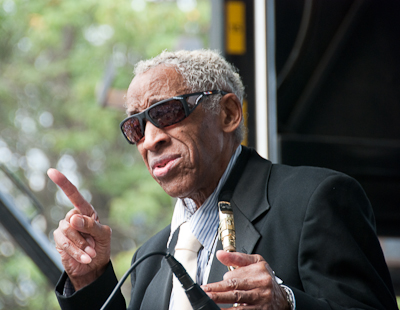
For many music fans, tenor saxophonist Von Freeman, born in October 1923, is Chicago jazz personified (truly, he shares that title with the late Fred Anderson.)  Freeman made the Windy City his base of operations for a career that spans over 7 decades!  After spending World War II in the US Navy band, he returned to Chicago and began performing in clubs with his brothers George and "Bruz", often backing touring jazz artists. In the 1950s, he played with Sun Ra, pianist Andrew Hill, blues man Jimmy Witherspoon and others.  Freeman made his national recording debut in 1972, "Doin' It Right Now", an Lp produced by Rahsaan Roland Kirk.  Later recordings paired with his son Chico (1982) and another fine Chicago saxophonist Frank Catalano (1999) - the series of CDs on Premonition Records (recorded and released between 2001 and 2006) are among his strongest work. In June 2010, Von Freeman received the Jesse L. Rosenberger Medal from the University of Chicago "in recognition of achievement through research, in authorship, in invention, for discovery, for unusual public service or for anything deemed of great benefit to humanity."

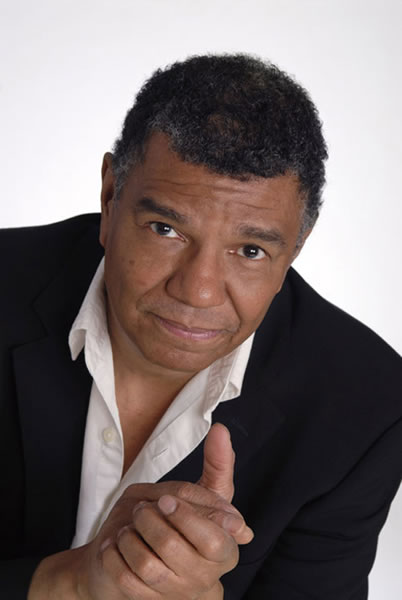
New York City born and raised (December 9, 1943), trumpeter Jimmy Owens began his studies at the age of 14 with Donald Byrd.  He would go on to study with composer Henry Brant and get his Masters Degree in Education from the University of Massachusetts.  Owens also has been a very busy musician, performing alongside Dizzy Gillespie, Kenny Burrell, Kenny Barron, Gerald Wilson, Max Roach and Billy Taylor.  He was a charter member of the Thad Jones-Mel Lewis Jazz Orchestra and musical director of musical director of the New York Jazz Repertory Company. Owens has been an educator on campuses and on the streets (working with Billy Taylor's Jazzmobile Program) and an advocate for the rights of performing artists, helping in the foundation of the Jazz Musician's Emergency Fund, a program to help individual musicians with medical, financial, and housing assistance. Jimmy Owens is the recipient of the 2012 A.B. Spellman NEA Jazz Masters Award for Jazz Advocacy. This month, IPO Records issues Owens' newest CD, "The Monk Project", dedicated to the music of Thelonious Monk and featuring, among others, Kenny Barron, trombonist Wycliffe Gordon and saxophonist Marcus Strickland. To find out more and check out his extensive discography, go to jimmyowensjazz.com.

 If you are not aware of bassist Charlie Haden's impressive body of work as well as his commitment to social and political justice, you've missed a lot. Moving to Los Angeles, California, in 1957 from Missouri, the bassist came in contact with legendary musicians such as saxophonist Dexter Gordon, pianists Hampton Hawes and Paul Bley.  Still, it was his meeting with saxophonist Ornette Coleman that set his career in motion.  The series of recordings Coleman made for Atlantic Records from 1959-61 turned the jazz world on its ears.  Haden went on to work with pianist Keith Jarrett, first in a trio setting with drummer Paul Motian - with the addition of saxophonist Dewey Redman, the pianist's "American Quartet" made an impressive group of recordings for Impulse and ECM.  In 1969, Haden paired with pianist/composer/arranger Carla Bley to create the Liberation Music Orchestra, a big band that combined jazz and politics to shed light on causes the bassist felt were quite important (most especially, American "Imperialism.")  He's recorded in so many settings, from duos (with Hank Jones, Keith Jarrett, and Pat Metheny) to trios (with Geri Allen and Paul Motian as well as Jan Garbarek and Egberto Gismonti plus Don Cherry and Ed Blackwell) to leading his Quartet West (displaying his love of standards and Hollywood movie music).  This week sees the release of "Come Sunday", a duo CD with Hank Jones. To find out more, go to www.charliehadenmusic.com.

Another musician who should need no introduction to jazz fans is drummer/pianist/composer Jack DeJohnette. The Chicago native first came to critical notice in 1966 as a member of saxophonist Charles Lloyd's Quartet (also featuring Keith Jarrett) and, within a few years, recorded with pianist Bill Evans, saxophonist Joe Henderson, trumpeter Freddie Hubbard, Herbie Hancock and Chick Corea.  He joined Miles Davis "electric" band and appeared "Bitches Brew" and other recordings from that era. DeJohnette is featured on many ECM recordings, including 10 as a leader.  He started his own label, Golden Beams, with releases ranging from "New Age" to piano trio jazz.  To celebrate his 70th birthday, DeJohnette will bring 3 groups to this summer's Newport Jazz Festival and, next week, E1 Records will issue "Sound Travels", a project that finds the drummer playing many different styles of music with guests Bruce Hornsby, Bobby McFerrin, guitarist Lionel Loueke, trumpeter Ambrose Akinmusire, Jason Moran and Esperanza Spalding (DeJohnette appears on 3 tracks on her upcoming release.) To find out more about his amazing career, go to www.jackdejohnette.com.  For an excellent interview, go to thejazzsession.com/2012/01/09/the-jazz-session-336-jack-dejohnette/  and listen to his chat with Jason Crane. 

If you want more information about the NEA, its Jazz Initiatives and the Jazz Masters Program, go to arts.gov/national/jazz/index.html.