Monday, June 19, 2017

Tal Stories Two

One of the joys of reviewing is when a CD (or digital download) arrives in the mail and you are immediately bowled over by a musician unknown to you .  The day "Gentle Giants" (self-released) showed up, so did the album below with vocalist Danielle Wertz. Both feature pianist and composer Tal Cohen, a young Israeli-born musician who finished school in Perth, Australia, before attending graduate school at the University of Florida in Miami.  He's won numerous awards for his musicianship, has performed with Joe Lovano and George Garzone plus drummer Ari Hoenig and Australian saxophonist Jamie Oehlers, and is now living in the United States.

Listening to "Gentle Giant", I am reminded of my initial reaction to Wynton Marsalis's 1986 album, "Black Codes From the Underground."  There is an audacious quality to the music, making one sit up and pay attention to what each musician is playing and how the ensemble interacts.  We could argue all day long whether the music is "new" or not but that's not the point here. Cohen and company - Robert Hurst (bass), Nate Winn (drums), Greg Osby (alto and soprano saxophone on four tracks), and the afore-mentioned Jamie Oehlers (tenor saxophone on six tracks) - make this music breathe, alive with possibility, and going in unexpected directions.  Case in point - the album opens with "Nardis", arguably the most famous Miles Davis composition that the trumpeter never recorded to his satisfaction but was pleased by pianist Bill Evans's many recordings of the tune.  The music grows outward from the rhythm section, the slinky bass line that opens the piece and the atmospheric introduction.  Oehlers (a mentor to the pianist in his school years in Australia and beyond) plays the melody while the piano, bass, and drums give the rhythms a Middle-Eastern feel.  Listen to how Cohen builds his solo, the intensity he discovers, the interactions with Hurst and Winn. There is delight in this performance, power as well but a great feeling of playfulness.

The album is filled with fine melodies (all but the opening track are Cohen originals), many with the combination of Israeli folk songs blended with the influence of Chopin and Scriabin.  "Lo Haya" is a two-part piece, the first a lovely duet with Oehlers, the second a lullaby built from a phrase from the original melody.  "Part 2" opens with a lovely introspective piano solo then adds the rhythm section building to a powerful interchange between the two saxophonists as the intensity builds and builds.  The saxophonists also combine on the delightful "Great PK (for Shuli)" which swings powerfully right from the get-go with strong solos all around.  Osby gets the spotlight on "Gavetsch"; he follows a particularly high-spirited piano playing with pieces of the melody, interacting with the rhythm section, spurring both Hurst and Winn to respond - in an odd choice, the tune's reprise "Hazil Magil" is programmed three tracks previous and is a different take of the piano solo only.  The album closes with "Chopin Meets Abach".  Paraphrasing Cohen's notes, it's music that contrasts the peace the composer gets from classical music (Chopin) and the Israeli citizens need for a protective mask (Abach is the name of the mask's manufacturer) during the Gulf War.  With eh rhythm section creating a powerful racket, Osby's soprano saxophone phrases rise like a flock of birds.

"Gentle Giants" is an excellent introduction to Tal Cohen, his music and his vision. This is music that is easy to get lost in, to let the sounds flow in and out of you. While, at times, the music sounds so spontaneous, one can hear that the music spent time living with the pieces, playing them and finding so much depth.  This album is actually Cohen's second as a leader - his debut "Yellow Sticker" (also featuring Jamie Oehlers) was released in 2011 - and is a delight from start to finish.

For more information, go to www.talcohenmusic.com.

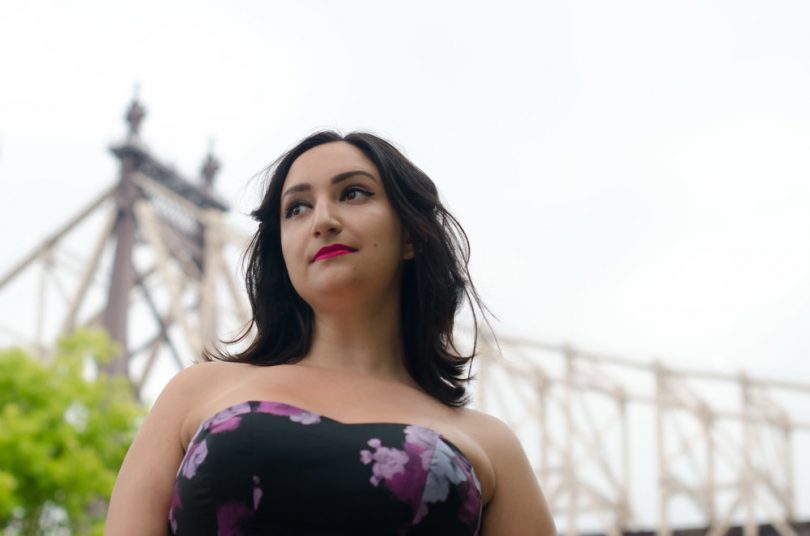
"Intertwined" (self-released) features the combined talents of Tal Cohen and vocalist Danielle Wertz. Ms. Wertz, a native of Virginia, met the pianist when both were studying at the Frost School of Music at the University of Miami. Her voice will remind some of Kate McGarry, Gretchen Parlato, Sara Gazarek, and Sheila Jordan. There's a quality of lightness that shines through whether she is romping through the melody, as she does on the title track or wrapped in the gentle melody of "Autumn Leaves." On the latter track, Jamie Oehlers adds his breathy tenor saxophone, responding to the vocalist as well as creating a memorable solo. Listen to how Cohen weaves his lines throughout the piece, not only building the foundation but also responding to the emotion of his companions. The sparsity of the accompaniment allows Ms. Wertz to explore the words, their meanings, their relationship to the melody and the improvisations.

Actually, the first sounds one hears on the opening track is Oehlers's hypnotic melodic fragment leading in "Beautiful Love", a song first made famous in 1931 by the Wayne King Orchestra. The gentle vocal and the articulate piano work join the saxophone as the trio open the piece, each one listening to the other and responding.  Cohen's "Chopin Meets Abach" blends wordless vocals with a rolling piano line, the power of the music coming from his the voice builds along with the piano, not always in contrast but in union with the message of the composition.


The story the duo tells on "Manhattan In the Rain" (composed by Duncan Lamont) is powerful description of chance encounter that goes from good to sad. It is performed without sentimentality or treacle but with honesty and beauty (the rainstorm conjured up by Cohen's piano is magical).  Throughout the program, one can hear how time the musicians spent exploring the songs, moving away from cliched performances into interpretations that are more personal.  That's what audiences usually want. If artists are going
perform standards, make the pieces sound brand-new.  If the emotions are honest, the music has power.

"Intertwined" is powerful. Danielle Wertz and Tal Cohen have created an album that transports the listener beyond the ordinary. Be open and the music will seem like an adventure, a good and satisfying experience.

For more information, go to www.daniellewertz.com or to www.talcohenmusic.com.

Here's a video that tells the story behind the recording:

Saturday, June 17, 2017

Trio Music for June 2017 - Pianos (Pt 1)

Dan Tepfer has a new album, "Eleven Cages" (Sunnyside Records), his return to the trio format in nearly seven years.  Joined here by Thomas Morgan (bass) and Nate Wood (drums), the pianist and composer creates a musical exploration of freedom through the concept of the myriad cages in out lives. Some we create, others are foisted upon us - the composer here is focussed more on the former than the latter yet.  In ways, songs are cages: they have walls created by time constraints, by technique, by imagination, by rhythms that adhere to a steady beat.  Listeners can construct cages, usually by not being willing to trust the artist's imagination.  Putting labels on music helps some people but are often "cages" for musicians which often forces them into boxes where they do not wish to be.

photo by Debra Scherrer
Seven originals plus 2 group improvisations ("Cage Free I" and "Cage Free 2") and two fascinating "standards" (one from 1935, the other from 2008) gives the Trio the blueprint to cover a wide swath of musical territory. The album opens with the hard-driving "Roadrunner" (an original), with Wood slapping out a forceful beat and Morgan joining forces with the pianist's left hand to create quite a groove.  "Minor Fall" follows: the pace is slower, the melody more formal with Morgan displaying his Charlie Haden-like ability to put so much depth into a single note.  Notice as well the minimalist percussion and how Wood really helps to complete the portrait the song is creating.

Listen to how Tepfer, Morgan, and Wood play with time and not just on the free improvs.  "Hindi Hex" is a piano solo based on a traditional North Indian music form.  A funky excursion into Beyonce's "Single Ladies" offers a multitude of delights (try typing while listening - impossible!)  Check out the playful "Little Princess" that speeds up, slows down, crawls, runs, strolls, and keeps the listener on his/her toes.  The album closes with George Gershwin's "I Loves You Porgy", another work that shows how Morgan can impact a piece.  His counterpoint is as impressive as the lovely melody.

"Eleven Cages" is, at turns, playful, soothing, challenging, and always musical. Dan Tepfer, along with Thomas Morgan and Nate Wood, gives the listener much to savor, an aural experience to return to time and again.  Highly recommended!

For more information, go to www.dantepfer.com.

Here's the opening track:


Composer and pianist Pete Malinverni and his Trio looks to the "beyond" for his latest recording, "Heaven" (Saranac Records).  The 10-song program is more spiritual than religious: it includes a number of traditional American gospel and folk songs, two pieces from Edward Kennedy Ellington (including the delightful title track), a swinging remake of Curtis Mayfield's "People Get Ready", "Eili, Eili" from the pen of Hungarian Jewish poet and soldier Hannah Senesh, a lovely take of Molly Mason & Jay Ungar's "Ashokan Farewell", and the leader's own music for "Psalm 23." The music is gentle yet uplifting, a balm in times of sadness and loss but also a reminder of the peace one can find in contemplation.

Chamber Music America
Performing alongside Malinverni is bassist Ben Allison and drummer Akira Tana. plus three guests (one each on three separate songs).  This rhythm section knows just how to caress a melody, how to support the lyrical pianist, and be in the moment.  Listen to the gentle backing on the Senesh piece, the bass counterpoint and the brush work.  But they can swing as well.  Their support of the pianist and guest Steve Wilson (alto saxophone) on "Wade In The Water" is just right, the joyful walking bass and sprightly drum work.  Vocalist Karin Allyson joins Malinverni and Ben Allison on "Shenandoah" - the bassist takes the first solo in the middle of the piece and his melodic turn sets the mood for the leader.  Jon Faddis sits in on muted trumpet on "Come Sunday."  His solo is actually quite devilish as it bounces atop the snappy brush work of Tana.

photo by Sally Green
Pete Malinverni is an accomplished musician, having released over a dozen albums in the 30+ years he's been a professional musician. He's composed a suite for Gospel Choir and jazz ensemble as well as having set a poem of James Weldon Johnson to music. He's expanded his music for "Psalm 23" (which appears on "Heaven" as a powerful ballad) into a suite for big band and gospel choir.  Malinverni's certainly got "soul" - can't miss that on this album's "Down in the River To Pray." Not all of his music has a religious or spiritual bent but he's not afraid to let that side of his curiosity to show as an artist.  It's in full bloom on "Heaven" and it's a delight to hear.

For more information, go to www.petemalinverni.com.

Here's the title track:


MEM3 is Michael Cabe (piano), Ernesto Cervini (drums), and Mark Lau (bass). They first came together in 2006 to record with Ernesto's sister Amy on her "Famous Blue" recording - in 2007, they recorded their first album, "Pennsylvania Grey" (self-released) but they are all such busy musicians, it has taken nine years for the follow-up. "Circles" (also self-released) was recorded in 2011 but issued earlier this year and shows how they have grown as a musicians and composers, how their friendship makes the music stronger.

As on their debut, each person contributed three original songs plus there is one adaptation of a hymn (in this instance, it's a powerful reading of "Faith of Our Fathers"). The band admits they have been influenced by artists and groups such as Oscar Peterson, The Bad Plus, and EST (Cervini's "4ES" was composed for and dedicated to the leader of EST, the late Esbjorn Svensson).  MEM3 are not mimics.  They use electronics sparingly but what stands out for me is how well they combine melody with rhythmic drive.

Listen to Cabe's "Native Dancer" and how it builds off of the pianist's percussive and funky phrases plus how Lau and Cervini (especially his excellent brush work) relentlessly push the piece forward.  The driving quality is also evident on the pianist's "Shire Song", even during the melodic bass solo (more fine brushes from Cervini). It's fascinating to hear how they move away from and back to the lovely, folky melody.  The power of songs such as "Olympic" and "Circles" can be heard on how the three musicians work together to set the stage for the music, the insistent piano riffs, the throbbing bass, and the relentless drumming. The title track shows the influence of "progressive rock" especially in the waves of synthesizer lines that rise out over the pounding piano.

Best of all, they are not afraid to play ballads, songs like "AFJ", with its pealing gospel lines, and "Anthem", which has the feel of a classic "soul" ballad, a vehicle for Aretha Franklin, Betty LaVette, or the late Sharon Jones.  The piano solo on the latter cut is so "vocal" throughout, especially as it builds to its powerful close (but don't ignore the heart-felt bass solo at the opening of the piece).

"Circles" grows with each successive listen as you hear how well this music is constructed, when you realize that each member of MEM3 checked their egos at the studio door to create this fine example of "group" music.

For more information, go to www.facebook.com/MEM3NYC/.

Here's a taste of the trio's music:


Theo Hill is a young pianist who hails from Albany, NY who now lives and works in New York City.  Over his decade-plus in the city, Hill has worked and recorded with the likes of trumpeter Charles Tolliver, trombonist Frank Lacy, drummer Jeff "Tain" Watts, saxophonist Dave Liebman, trombonist David Gibson (he's on two CDs with his band), the Mingus Big Band, and many others.  Hill's debut CD, "Live at Small's" (Small's LIVE), was a quintet issued in October of 2014.

His new recording, "Promethean", is his first for Posi-Tone Records and is a trio date with bassist Yasushi Nakamura and drummer Mark Whitfield, Jr. One might be tempted to assume as he reads the program that, with the exception of the pianist's composition "The Phoenix", that this CD is an homage to Hill's influences. There are two pieces from Tony Williams ("Pee Wee" and "Citadel") and Kenny Kirkland ("Blasphemy" and "Chance") as well as one each from Bobby Timmons, Herbie Hancock, Victor Lewis, Hale Smith, Chick Corea, and Duke Pearson. The lone original is a tribute to McCoy Tyner; one hears it in the muscular chords and the powerful surges from the rhythm section.

Right from the opening notes of Timmons's "This Here", one can hear that Hill is a masterful pianist and that he can "swing" with force, joy, and purpose,  Messrs. Nakamura and Whitfield, Jr. are equal partners in this adventure, keeping the rhythms percolating and creating foundations that not only support  but also push the pianist and songs forward.  Smith's "I Love Music" (recorded, most notably, by Ahmad Jamal in 1970) is given a funky treatment with the rhythm section locked into the groove. Corea's "Litha" rises on Latin rhythms into a high-energy romp (note that fast-paced "walking" bass and superb cymbal work) - it's on pieces such as those that one hears the real joy Hill and the Trio can create. Yes, the pace may be funky or frantic but the music transcends mere technique. There's such a handsome solo piano reading of "Chance", with its floating chords and articulated single-note lines, illuminating an artist not afraid of making a song his own.

The main definition of promethean is "daringly original and creative."  That may be hyperbolic in some instances and I wish to modify it just a bit in the case of Theo Hill.  He's a daring musician who is continually creative, willing to take chances with the "tradition" without being sacrilegious. No need to shoot the (jazz) messenger but to honor him and her by continuing to move the music forward.  Enjoy "Promethean."

For more information, go to www.theoshill.com.

Here's the original tune from the album:


Tuesday, June 13, 2017

NYSQ Sets, Upsets, and Resets Standards

"Sleight of Hand" is the sixth album from the New York Standards Quartet (NYSQ), a quartet formed in 2006 by David Berkman (piano), Tim Armacost (tenor and soprano saxophones), and Gene Jackson (drums).  For this CD, their third for Whirlwind Recordings, they welcome back bassist Daiki Yasukagawa for his third album with the band.

As the group's name implies, most of their material comes from either the Great American Songbook or from classic jazz composers, such as Thelonious Monk, Duke Ellington, or Hank Mobley (all of whom are represented on this album).  And, as they have done on all their recording and on their numerous gigs (in the United States, Europe, and Asia), these musicians approach the songs with fresh ears and ideas.

NYSQ loves to swing. "Soul Eyes" (Mal Waldron) jumps from the get-go, Armacost's tenor leading the way.  Check out the rhythm section - they are cooking up as storm with Jackson leading the way, Yasukagawa laying down a stunning walking bass line, and Berkman providing the percussive chords in the background.  After the tenor reaches the end of his improvisational journey, the pianist takes his own joyful romp over the active rhythm section.  The pianist imparts a "rent party" feel to his short but sweet opening to Monk's "Ask Me Now."  Jackson plays with the rhythms, giving them a bit more bounce while the bassist plays delightfully melodic lines beside him. Yasukagawa's muscular bass lines lead the band into Mobley's "This I Dig Of You" - when the rest of the group jumps, the piece takes off in a big hurry with a powerful swing and smart musicality. There is a Charlie Parker feel to the melody line of Berkman's "Sleight of Hand" (played by both piano and tenor); it's so much fun to hear how much fun the band is having playing together.

The ballads on the program also stand out.  "In a Sentimental Mood", a piece that has, arguably, been recorded thousands of time, is emotionally strong.  The splashing cymbals and impressionistic piano support the tenor as it moves gently though the melody with just the right amount of improvised commentary at the end of lines.  Berkman paints a little darker shade of framing around Jule Styne's "I Fall In Love Too Easily" before Armacost, on soprano here, alternately dances through or caresses the melody. Halfway through the piece, Jackson and Yasukagawa kick up their heels with the piece really picking up steam. Check out the blazing version of "Lover Man" that closes the disc for a lesson on how a drummer can motivate soloists.  There is a gentle swing to "Detour Ahead" (composed in the 1940s by Herb Ellis, John Frigo, and Lou Carter), the quiet opening leading to Armacost (on tenor) reading the plaintive melody as Jackson's brushes deftly tap dance underneath.

When you listen to as much music as I do, every once in a while it's nice to be entertained.  That is exactly what the NYSQ do with the music on "Sleight of Hand" - they entertain.  The Quartet does not "dumb down" the music or resort to worn-out cliches. They don't worry about being either too simple or too complicated, too "avant-garde" or too "straight-ahead." They play and do so magnificently.  Jump in with both ears and this music will make you smile nice and wide!

For more information, go to nysq.org.  You can also check them out at www.whirlwindrecordings.com/new-york-standards-quartet-nysq/.

Here's the Mobley tune:

Monday, June 12, 2017

Brass: Polished, Burnished, & Modern

Here's a modern take on the brass band concept.  Trumpet, trombone, and tuba plus piano, electric guitar, and drums is the makeup of Rebecca Hennessy's FOG Brass Band. "Two Calls" (self-released) is the Canadian ensemble second release and first full-length album. Based in Toronto, Ms. Hennessy (trumpet, peck horn, baritone horn) is very busy musician leading several groups and playing in several others.  FBB plays music that may remind you, at times, of Charles Ives, the Henry Threadgill Sextett, and Guillermo Klein's Los Gauchos but, really, has quickly developed a sound of its own. This is not a "marching band"  but a group that utilized all of its parts to the utmost.  Kudos to drummer Nico Dann and tuba player Jay Burr as they are the "engineers" that stoke the figures this music creates. Pianist Tania Gill also help keep the music flowing as does guitarist Don Scott.  Rounding out the front line is trombonist Tom Richards.

There are touches of New Orleans brass band music that show up on pieces such as the bluesy "Lagoon" and "Snag", a peppy dance tune that sound inspired by The Meters. But there are also pieces such as the opener "Red Herring" that has such a drive and is the piece most like Mr. Threadgill's music. That's followed by the prayer-like "Horn Lake", an impressionistic work that might have been inspired by walking along the shore in the early morning looking out at the still waters. Listen to the pictures the band creates with just the trumpet, quiet guitar, tape loops and triangle.  3/4s of the way in, the music suddenly falls into a samba-like rhythm and the piece literally dances out.

photo by Michael Fisher
Highlights abound. Guitarist Scott gets to romp his way through the first half of "Kings County Sheriff", soloing over the dancing drums and tuba. There's a touch of Klezmer in the horn melody and at the beginning of Ms. Hennessy's far-ranging solo. Bird songs introduce the title track (and continue for a little bit under the musical introduction); it's a funky, jazzy, dance piece that features strong solos from Richards and Ms. Gill.  There's a playful feel to "Birds For Free", a piece that starts in a Latin style before changing tempo. Listen to how Dann drives this piece, especially under the trumpet and trombone solos.

"Two Calls" closes with the lovely "Why Are You So Sad Booker Little". Not only is that a great title but the piece is a handsome ballad in which all the members of the sextet make fine contributions. The music is quiet, somber, not a celebration of the great trumpeter (1938-1961) as much as an elegy for him, for the promise as well as the maturity one could hear in his recordings.

The contemporary music scene, while not financially breaking new ground, certainly has produced a number for fine young bands and composers.  Rebecca Hennessy's FOG Brass Band covers a wide swath of musical territory over the 48 minutes of "Two Calls" and the journey is very rewarding. This album is not only "fun" to listen to, as brass band music often, but also melodically rewarding and adventurous.

If you find yourself in Toronto on June 29, FOG is playing the Toronto Jazz Festival - to find out more, go to torontojazz.com. To find out more about Ms. Hennessy and her myriad projects (including the delightful Way North), go to rebeccahennessy.com.

Take a look and a listen to "Lagoon":


I've been reading about trumpeter and composer Jaimie Branch for the past few years and was excited to see her debut album hit the streets last month. "Fly or Die" (International Anthem) lives up to its name as Ms. Branch takes many chance on the 10-song program that features three other transplanted Chicagoans (cellist Tomeka Reid, drummer Chad Taylor, and bassist Jason Ajemian - like the  trumpeter, all now live in the New York City area).  Ms. Branch has worked in ensembles led by bassist William Parker and saxophonist Matana Roberts as well as with TV On The Radio. Her work exemplifies the AACM tradition, meaning nothing is sacred save for experimentation as well as cliches are forbidden.

photo by Mark Pallman
The program opens with the aptly titled "Jump Off", 16 second of squalling trumpet that leads into Taylor's countdown into "theme 001." One can hear traces of Wadada Leo Smith in Ms. Branch's clarion call and tone. The drummer lays down as irresistible rhythm as Ms. Reid and Ajemian play off each other, plucking, bowing, and creating a storm underneath. Matt Schneider's acoustic guitar shows up at the end, leading into the trancelike "...meanwhile." He plucks, the bassist and cellist play arco, the drummer offers light percussion, and the leader is nowhere to be heard.  She returns on "theme 002", playing muted trumpet over the infectious, dancing drums of Taylor. The West Indian feel continues as the mute is removed and the trumpeter rises above the rhythmic excitement.

That's just the first four tracks.  "Leaves of Glass" features fellow brass players Josh Berman (cornet) and Ben Lamar Gay (cornet) and they create a sonic blueprint that opens up to the arco cello and bass, a flurry of percussion, fiery trumpet, and scary overdubbed denoting "the storm."

Prepare to be surprised by the breadth and vitality of the music on "Fly or Die."  Although the album is barely 36 minutes long, there is so much going on, so many possibilities.  One can only imagine how this music roars and whispers in live settings.  Jaimie Branch took her time to deliver her debut album and it is well worth the wait.

For more information, go to www.intlanthem.com/releases/iarc0011.

Here's a track with the quartet:


Trumpeter and composer Farnell Newton (born 1997, Miami, FL) s a graduate of Oberlin Conservatory of Music who moved to Portland, OR, and is now a full-time member of that community's music scene.  He has worked with singer-songwriter Jill Sobule, funk bassist Bootsy Collins, Darrell Grant, Gladys Knight and many others.  "Back To Earth" is his sixth album as a leader and his debut on Posi-Tone Records. While his 2015 recording "Ready To Roll" was more of a contemporary soul album, his new effort is straight-ahead displaying his formidable "chops".  Joining him are Greg Goebel (piano), Dylan Sundstrom (bass), Christopher Brown (drums), and, on most of the tracks, trombonist Kyle Molitor, all members of the Portland scene.

Eight of the 11 tracks are Newton originals with one tune each by drummer Brown, Freddie Hubbard, and Wayne Shorter. Brown's piece, "Back To Earth" is a funky ballad introduced by a sweet piano melody plus Goebel gets the first solo, an expansive melodic adventure.  The leader doesn't come in until halfway through the 6-minute piece but he rides the groove with an easy solo that even has a bit of fire to it. "Fire" is what hears on the Hubbard tune, "Arietas", a piece off the trumpeter's 1961 "Ready For Freddie" Lp (where the title was spelled "Arietis"). The "burning" piece features splendid work from the rhythm section and fine solos from Geobel and Newton.  Shorter's "El Gaucho" (off his "Adam's Apple" recording) changes tempos, has an attractive feel, and, here, a pleasing Latin rhythm.

The original pieces have their charms as well. "Road To The South" swings atop an insistent rhythmic drive, giving the leader the impetus to rise above the fray. There's also a sweet solo from Molitor and a powerful turn from Goebel (who is quite impressive throughout.) The pianist works around the melody created by the brass on "Redefining The Norm", not so much a counterpoint but a creating a lovely frame around tune. And, again, his solo stands.  His introduction to "Crossing The Tracks" leads the listeners to a soulful tune with several smart twists-and-turns.

Throughout "Back To Earth", Farnell Newton and his compatriots create an enjoyable sound that's not challenging as much as it is soothing, soulful, and melodic. This music sounds good as you sit on the back porch or in the park in the late afternoon as the sun paints the world golden.

For more information, go to www.posi-tone.com/backtoearth/backtoearth.html.

Here's the title track:


Tuesday, June 6, 2017

Anniversary Tour, New Music, Sideman Gig

Jorden Hemingway/Bad Behavior
For the last four decades, these smiling gentlemen on the left - Mark Helias (bass), Gerry Hemingway (drums, percussion), and Ray Anderson (trombone) - have been touring this country, Europe, and beyond in an ensemble they smartly titled BassDrumBone.  Over that time, they have released 10 Lps and/or CDs, each led his own group, took time off for illness, toured and/or recorded with other people/groups yet always came back to this trio configuration. Methinks that is because not only do they sound good playing together, they enjoy playing together.

Connecticut fans get a rare opportunity this week to see BDB twice in the midst of its 40th Anniversary Tour.  Friday evening, Messrs. Helias, Hemingway, and Anderson return to Firehouse 12, 45 Crown Street in New Haven to play two sets.  The trio last played the venue in May of 2008 - I was there and can assure you they "rocked the house."  There's a strong steak of blues that runs through their music as well as ties to the avant-garde, to the "free" sounds of the late 1960s and '70s, to straight-ahead "blowing", to funk, and to the New Orleans roots of jazz.  The band's most recent recording, 2016's "The Long Road" (Auricle Records), kicked off the group's Anniversary celebration: it's a 2-CD set with guest appearances from Joe Lovano (tenor sax) and Jason Moran (piano).  It's a wonderful blend of original tunes by all three members of the group and closes with two live tracks from 2013

The New Haven show is the final one of the Firehouse 12 Spring 2017 Concert Series and is a perfect way to kick off the two-week long International Festival of Arts & Ideas (thought the series is not connected to IFA&I, BassDrumBone epitomizes the adventurous scope of the programs to over over the course of the Festival).  The first set begins at 8:30 p.m.  For more information about Friday's gig, call 203-785-0468 of go to firehouse12.com.

On Saturday, the trio ventures north on Route 91 to Hartford to play a concert at Real Art Ways, 56 Arbor Street.  The event is free and open to the public.  For more information, go to www.realartways.org or call 860-232-1006.

Take a look and a listen:


**********************************************************
Mark Helias is also a member of Canadian-born saxophonist and composer Quinsin Nachoff's Ethereal Trio. Their self-titled debut album has just been issued on Whirlwind Recordings and is a joy to listen to.  The bassist, who has led several trios over his long career, is the perfect fit for an ensemble of this size: he possesses a really powerful sound, is extremely melodic as well as percussive, is excellent at arco bass ("bowing"), and has a great sense of what his bandmates need from him.  On this recording, he's paired in the rhythm section with drummer Dan Weiss who is also a fine accompanist with a strong sense of melody and forward motion.  They provide Nachoff with such great support and counterpoint as well as a sense that he can play anything. And he gives them material to really dig into, not just rely on cliches but to truly explore the possibilities.

My personal touchstone for sax-bass-drums trios has always been Sonny Rollins's "Freedom Suite." One can hear a hint of the blueprint that 1958 recording created; still, this is definitely 2017 music.  The funky beat Weiss produces on "Subliminal Circularity" has a hip hop feel but notice how the bass moves on his own around the beat while the tenor navigates in between the two "sonic" worlds.  The opening track, "Clairvoyant Jest", might remind one of a groove that could be found on Dave Holland's "Conference of the Birds", the intelligent meshing of structure and freedom. That carries over to the second track, "Imagination Reconstruction" - here, the rhythm is more intense, the sound a bit more diffuse yet the piece does not boil over. Both the bassist and drummer take short solos that rise organically from the music.

The leader is no slouch. He, too, enjoys the freedom the open-ended music goes him, exploring so many different possibilities. Hear how he navigates the aptly-titled "Push-Pull Topology" with its odd-time meters, his melody actually hugging the beat while his solo dances along with Weiss's playful drums.  The handsome ballad "Gravitas" is a lovely blend of tenor sax (played in a register not unlike Charles Lloyd and with a similar lightness), splendid brush work and cello-like tones from the bowed bass.  This is dramatic music, the interactions displaying the trio's keen sense of listening to each other. That description is also apt for the final track, "Portrait in Sepia Tones" - Helias leads off the piece unaccompanied before Weiss tiptoes in (sounds like he's not holding sticks or brushes). After several minutes, the bass drops out for a moment for a statement from the drums before returning 25 seconds later to play counterpoint to the tenor melody (Nachoff sits out the first three minutes).  Throughout the piece, Helias switches from bowed to plucked bass. At the six minute mark, the bassist fall into quite a walking bass line pursued by the drums and tenor - the frantic tempo and exciting interactions continue to close to the end of the 10 minute piece when they trio falls into a funky beat (like the afore-mentioned "Subliminal Circularity") to "dance" the piece to its close.

Quinsin Nachoff's Ethereal Trio has its exquisite moments but also many powerful moments as well.  Messrs. Nachoff, Mark Helias, and Dan Weiss each contribute to the success of the music, each with an authoritative "voice" and an understanding how to make their interactions human and special.

For more information, go to www.quinsin.com.

Here's a track to sink your teeth and ears into:

Monday, June 5, 2017

A Most Interesting Tribute

rollingstone.com
Upon hearing of the death of Gregg Allman, I was transported back to the night I first heard The Allman Brothers Band in concert.  Their first Lp had been released on Atco/Capricorn in late 1969 and they immediately went on tour supporting the J. Giels Band. Saw them at an old concert hall in Springfield, Massachusetts.  When they hit the stage, there may have been 30 people in the audience but the ABB rocked as if the house was full.  Gregg sat behind his Hammond B-3 organ, belting vocals, his brother Duane and Dickey Betts trading solos that roared through the auditorium while the rhythm section - drummers Jai Johanny Johanson and Butch Trucks plus bassist Berry Oakley - pounded away and played heart-thumping bass. I was covering the event for our campus newspaper so I got to go backstage to visit the band as the headliner was setting up. They were excited about how well the set went and that they were getting press coverage - they were fine Southern Gentlemen, offering my girlfriend and I beers. I talked about the Blues with Gregg for a few minutes, amazed that someone just 16 months older than me could sound a 60-year old bluesman.  He laughed and pointed to the cigarette in his and try beer in his hand, stating that these were "two reasons I can shout."  Got a minute to chat with a few others before they headed out to the tour bus - never did stay to hear the J Giels Band (though I did see them the following year).

After Duane died in 1971, I lost interest in the band (although I wore out the grooves on "Live at The Fillmore East").  Gregg carried on with the band until 1975, started a solo career that had its ups-and-downs (his 2011 collaboration with T-Bone Burnett, titled "Low Country Blues", is an excellent recording), rejoining the group in 1989, an ever-shifting lineup that lasted another 25 years.

Drummer Tiziano Tononi (pictured left) is one of the last people I expected to record a tribute to The Allman Brothers Band but his new album "Trouble No More...All Men Are Brothers" (Long Song Records) is a loud and loving tribute to the group with a focus on the earlier recordings mixed in with a pair of Dickey Betts songs and three originals.  Tononi has assembled quite a group - what's interesting on first glance about Southbound is that there are no guitars or keyboards (save for Carmelo Massimo Torre who plays accordion) and the lead instruments are Emanuele Parrini (violin, viola) and Emanuele Passerini (tenor and soprano saxophones) plus Piero Bittolo Bon (alto sax, bass clarinet, flutes). The rhythm section features Joe Fonda (electric and acoustic bass) and Pacho (congas, bongos, and percussion).  The majority of the tracks also feature the voice of Marta Riviglia, who has worked with all sorts of ensembles from symphony orchestra to jazz quartets to duos and more (and working a lot with electronics).

If all you know of Tiziano Tononi is the work he has done with tenor saxophonist Daniele Cavallanti (on albums dedicated to Ornette Coleman, Roland Kirk, and Don Cherry, among others with original works), this music will probably surprise you as well. The album opens with an explosive reading of "Whipping Post" which has such an exciting forward motion created by the bass and drums)  - there's also a tumultuous soprano sax solo (the "reprise" shows up after the second track and is more diffuse).  On tracks such as "It's Not My Cross to Bear", "Don't Want You No More", and Willie Cobb's "You Don't Love Me", it's a treat to hear the drummer lock in Fonda and play such high-energy blues (the latter song feature a smashing interchange between viola and accordion!)  Bittolo Bon opens "...Cross to Bear" with a rip-roaring alto sax solo followed by Ms. Riviglia digging into the lyrics shadowed by Parrini hard-edged violin. Passserini's tenor plays a hardy solo in the middle before the bands quiets down for a delightful accordion spotlight. Listen to the ensemble rip through "Hot 'Lanta" featuring burning solos from Parrini, Passerini (soprano), and Bittolo Bon (bass clarinet) fired up by the blazing drums, congas, and the hard-edged bass playing.

Arguably the best track on the album is the Eastern-sounding take of "Midnight Rider" (video below), replete with droning accordion, lively bongos, urdu drums, double-tracked vocals, and haunting bass flute solo.  The exotic sounds carry over to the drummer's original piece "For Berry O." but here it's just gongs, shaken percussion, cymbals, steel drums, accordion, congas, and drum set but no voice, strings, or reeds.  Another original work in "Requiem For Skydog", a deep blues dedicated to Duane Allman that features solos from alto and tenor saxophones plus violin as well as impressive acoustic bass melodies.

Mr. Cavallanti shows up on a rousing take of King Curtis's "Soul Serenade" joined by the squalling soprano sax. The best part may be Cavallanti's unaccompanied coda, the only time the main melody of the song is played.

The only misstep (to me) is the final track, "You Don't Love Me (glorious ending)" with Ms. Riviglia riffing on the lyrics in a duet with herself while the band initially wails away. Everyone drops out but the vocalist and the leader, then the voice departs and it's just the drums taking the album to its conclusion.   However, "Trouble No More...All Men Are Brothers" (subtitled "A Tribute to the Spiritual Unity of The Allman Brothers Band") is quite an exciting project. Starting with the powerful rhythms, adding Marta Riviglia's expressive vocals punctuated by the reeds, strings, and accordion, Tiziano Tononi and Southbound give their all to honor a band that has quite an effect on the United States and beyond.

For more information, go to www.longsongrecords.com.

As promised, "Midnight Rider."

Friday, June 2, 2017

Coming Home Again

This Saturday June 3, vocalist, lyricist, and composer Allegra Levy performs at 8 p.m. in the Polish National Home, 60 Charter Oak Avenue/Pulaski Plaza, in Hartford. The West Hartford native is celebrating the release of her second album, "Cities Between Us" (Steeplechase Records), a delightful album that finds the vocalist fronting a ensemble that features Kirk Knuffke (cornet), Stephen Riley (tenor saxophone), Carmen Staff (piano), Jay Anderson (bass) and Billy Drummond (drums).

I spoke with Ms. Levy around the time (late 2014) of the release of her Steeplechase debut.  She was living and working in Hong Kong China. That nearly year-long residency was her "dues-paying" gig (she now lives in New York City) and one can hear in the songs she wrote for the new album.  Her mentor at The New England Conservatory, where she studied before going overseas, was trumpeter John McNeil, who has worked with a number of fine musicians and vocalists - it's clear from the start that Ms. Levy knows what she wants from her musicians and herself, setting challenges such as writing lyrics to the songs by Duke Jordan ("Lullaby of the Orient") and Dexter Gordon ("Soy Califa") and deciding that the majority of the material are original pieces. Also, many of the songs stretch out so that not only are the melodies well-constructed but also the solos have time to develop.  The lyrics speak of her separation from her friends, family, and lover and are extremely mature for someone who is but 27 years-old.  Despite the sadness inherent in the much of her lyrics, the music has various moods ("Misery Makes the Music" is a pleasing tango while the delightful "Soy Califa" is a hard-bop delight).

Ms. Staaf will be on piano for the Hartford concert along with West Hartford native Tim Norton (bass) and former West Hartford residents Richie Barshay (drums) and Joel Frahm (tenor saxophone) both of whom graduated from Hall High School (as did Ms. Levy).  It should be a delight to hear the vocalist working with Mr. Frahm as he is one of the best and sensitive accompanist a singer would ever want.

For ticket information, click on www.eventbrite.com/e/allegra-levys-cd-release-show-with-joel-frahm-richie-barshay-carmen-staaf-and-tim-norton-tickets-34058530983?aff=eac2. To learn more about Ms. Levy, go to www.allegralevy.com.

Here's the title track recorded live at the CD release show in New York City: