Showing posts with label quintet. Show all posts

Friday, June 12, 2015

Two Michaels and One Sam, Bassists & Composers

Michael Bates is one might call a "Renaissance" musician.  He's recorded music by Shostakovich, created mainstream recordings, and is co-host, with trumpeter Dave Douglas, of the Greenleaf Music podcast, "A Noise From the Deep."

Judging by the cover of his new recording, "Northern Spy" (Stereoscopic), one realizes the title relates more to his Canadian heritage (with a nod to James Bond) than to the apple of the same name. It's his third trio recording, the first being his 2004 debut "Outside Sources" and the second a 2014 date co-led with saxophonist Peter Van Huffel, "Boom Crane."  Here, he leads a group with fellow Canadian Michael Blake (tenor saxophone) and Jeremy "Bean" Clemons (drums). Right from the opening notes of "Theme for a Blind Man", it's evident this will be yet another change of direction for the bassist. This music has its roots planted in the blues  Instead of a slide guitar, there is the thick toned bass notes behind the moaning voice and the heavy breathing of the saxophone.  "Essex House" is a slow blues with Blake's swaggering tenor pushed forward by the throbbing bass and steady drums. In the quieter moments, one can hear the basic blues patterns. "An Otis Theme on Curtis Changes" gives its influences in the title and features serious "testifying" from Blake.  The very slow take of Henry Mancini's "The Days of Wine and Roses" is quite powerful as well, sad but defiant as befits the storyline of the movie.

And the trio can swing.  "Roxy" has a great groove laid down by the walking bass and the driving drums.  Blake digs in, giving his all, jumping up into the higher register of the sax every now and then. The drummer takes the spotlight on the aptly-titled "Bean", moving around the kit with abandon. His partners join on a quick set of riffs but, for the most part, Clemons is the main voice. His funky intro to the title track provides the bed for the hip-shaking bass lines and the expressive conversational sax phrases. The final track, "Neptune", picks up on the energy of that track and intensifies it even more.  Blake really lets loose yet never loses control, even as the rhythm section pushes really hard beneath him.

"Northern Spy" is an aural treat, with strong playing, heady compositions and and "in-your-face" presentation. Michael Bates has such a "deep" tone, his notes seem to grab your chest to say "pay attention" - his cohorts also give their best, making this album a tasty addition to your library. For more information, go to outsidesources.org.

Michael Oien grew up in Wisconsin in a house filled with all sorts of music. At the age of 12, he met bassist Richard David and he found his true instrument.  After graduating from the Berklee School in Boston, Oien moved to New York City in 2004, finding work with drummer Yotan Rosenbaum, saxophonists Darius Jones and Uri Gurvich plus guitarists Nir Felder and Mick Goodrich.

Now, he has a debut CD.  "And Now" (Fresh Sound New Talent) features a quintet with the "rising star" guitarist Matthew Stevens, Canadian-born pianist and composer Jamie Reynolds (husband of vocalist Melissa Stylianou),  drummer Eric Doob, and alto saxophonist Nick Videen (tenor saxophonist Travis LaPlante appears on one track). The program concentrates more on the bassist's compositions (6 originals plus the traditional "All My Trials") than on his prowess as a soloist.  To his credit, the album starts with the lovely ballad "In The Early Autumn" - he does not play his first note until after the piano introduction and the acoustic guitar reading of the theme (over 90 seconds into the song).  He's careful to make sure that one fully hears the melody before Stevens' striking solo.  Oien opens the next track, "Skol", with a forceful Mingus-like solo before Doob enters with a skipping beat.  Videen's slow alto sax lines are a smart counterpoint to the rousing rhythm section (no piano or guitar on this track). The alto solo eventually picks up steam which pushes Doob to react in kind.

The centerpiece of the album is the 3-part "Dreamer".  "Part 1" opens with bass, cymbals and alto saxophone in legato before Stevens enters with his atmospheric electric guitar chords.  The bouncing bass lines lead in "Part 2" with Reynold's piano joining in. There is a touch of Pat Metheny in the melody and chords but the pace slows for the saxophone, piano, and guitar to move around each other.  "Part 3" opens with Videen's solo over Doob's striking drum work and Reynolds' powerful chords and short phrases. After the alto sax drops away the pianist moves the song into a different mood, more contemplative, before the rhythm section picks up in intensity and Reynolds responds in kind.  Soon, Stevens joins the mix in a support mode, his phrases in sync with the alto sax pushing the piece to its climax and a soft coda.

One of the more impressive aspects of the music is how the musicians moved around inside the pieces.  "Smile This Mile" has a lovely melody played by Videen, pushed along by the rich piano chords until Reynolds steps out. He does not rush, his phrases flowing like a leaf in the wind while Doob and Oien serve as both musical and emotional counterpoint.  The alto sax solo starts in the same "mood" before going in a more playful direction, dancing around the chords and the active drums.

"And Now" close with a solo bass reading of "All My Trials" - as he does throughout the album in his supportive role, Michael Oien shows a melodic side.  One hears traces of Charlie Haden, Charles Mingus, and Dave Holland in his assertive yet tasteful journey through the piece. His debut as a leader is impactful, especially in his desire to make this a "group" effort, to showcase the work of saxophonist Nick Videen and to give both Jamie Reynolds and Matt Stevens major roles in telling his stories.  Kudos to Eric Doob in his capacity as sparkplug for the music and battery mate to the leader's rhythmic conception. Overall, a splendid introduction to the music and vision of Michael Oien.

For more information, go to michaeloien.com.

art by Jeffrey Bishop
It's been nearly 4 &1/2 years since bassist/composer Sam Trapchak (born 1984, Livonia, MI) released his debut CD "Lollipopocalypse" with his quartet Put Together Funny. That group found the bassist in the company of Greg Ward (alto saxophone), Tom Chang (electric guitar), and Arthur Vint (drums).  Trapchak is set to release his 2nd CD "Land Grab" (Raw Toast Records), another quartet date with both Ward and Chang but now with Christian Coleman in the drummer's seat (and minus the group name).

What else has remained from the first effort is the impressive drive in the songs, the intelligent interactions of the musicians and the playful melodies the bassist creates for the quartet. Greg Ward impresses with his facility and bright tone, Tom Chang is both fiery and introspective, and Christian Coleman displays power and subtlety throughout.  "Lumpy's Blues" is just that, a hard-rocking blues with an odd meter and a smoking guitar solo. The leader gets to step out, displaying a big tone akin to that of Dave Holland. "Bell Curve" is a sweet ballad with classical overtones - Ward's expressive alto phrases reach into the higher registers of the alto saxophone. He has a tone not unlike Arthur Blythe in that one can hear the influence of the blues in the way he shapes his notes and how he "tells a story" in his solos. Hear how he moans in the background during the early moments of "Beautiful/Furious" eventually taking over the melody from the bass.  His solo takes its energy from Coleman's intense drumming.  Chang's fine guitar playing walks a line between jazz, rock and blues. When he lets loose over the active rhythm section on "Breathing Room" and "Pterofractal", all genres blur into his "attack mode" attitude.  Yet, his soft opening lines and continuing counterpoint on "Bell Curve" is spare yet vital to the movement of the piece. The mesmerizing back-and-forth riffing in the early part of the title track gets one's attention by creating the tension in tandem with the insistent bass note underneath the melody line played by Ward. The structure of the piece changes after the first part of the saxophone solo, picking up in intensity as the guitarist's rapid-fire phrases bob and weave in the mix. His solo near the end is refreshingly intense fueled by the drummer's insistent forward motion.

Through it all, Trapchak's bass sets the tone.  He can be percussive, his throbbing pulse freeing up Coleman to push and interact with the soloists.  His solid lines never waver, he does not step out of his foundational role  just to "show off", and is the heart of the music.  The parts he plays allow the others the freedom to move around in the structure.  When he and Coleman lock in under the saxophone solo on "Breathing Room", Trapchak's ever-changing yet steady bass lines are riveting.

The music and performances on "Land Grab" will grab you, make you sit up and pay attention, make you want to come back again and again to hear its kaleidoscope of sounds.  Sam Trapchak stands at the center of this music, his compositions and musicianship creating a joyful and adventurous listening experience.

For more information, go to samtrapchak.com.

Monday, June 1, 2015

The Low Reeds & The Harmonic Mood

Brian Landrus, born in Reno, Nevada, is a graduate of the University of Nevada/Reno and earned 2 Master of Music Degrees from the New England Conservatory of Music in Boston.  His list of work experience runs the gamut from soul music (The Four Tops, The Temptations) to r'n'b (The Coasters) to jazz (Bob Brookmeyer, Maria Schneider, Ryan Truesdell Gil Evans Project) and beyond.  He specializes in low woodwinds and on "The Deep Below" (BlueLand Records), he plays baritone saxophone, bass clarinet, bass saxophone, and bass flute.  It's his 3rd recording since 2012 to feature bassist Lonnie Plaxico (1960, Chicago) and the 2nd to feature master Billy Hart (1940, Washington D.C.) And, it's his first Trio date as a leader.

On one hand, one might be tempted to write that Sonny Rollins is the touchstone for this date but, on first listen, the name of Jimmy Guiffre came to mind.  It's the space in the music, the airiness of pieces such as "Fields of Zava" (bass clarinet), the "deep" blues that runs through "I'm A Fool To Want You" (baritone sax) and the playful variations of John Coltrane's "Giant Steps" (played solo on bari sax).  The rhythm section is exceptional throughout the program.  Right from the opening notes of the first track "Fly" (bari sax, composedly Landrus and Plaxico), one can hear this is a true group effort/conversation.  On the Landrus original "Will She Ever Know", Hart's dancing brush work and Plaxico's bouncing line underscore the plaintive bass flute melody. The low flute makes a return on "Ancient", a stunning and understated ballad with whisper-soft brush work and full-toned bass (and his solo is quite melodic). The drummer's exuberant support on "The Age" kicks the bari sax forward while the bassist plays a melodic counterpoint.  Plaxico's moaning bowed bass and Hart's scrambling drums sounds create a mysterious aural soundscape for the final track, "Once Again" - during the bass solo, Landrus carries the bottom on his bass clarinet (be sure to listen for the Hart-beat at the very close of the tune).

Besides the Coltrane classic, there are 2 other solo performances.  The handsome woody tones of the bass clarinet makes "Just A Fading Memory" stand out. There's a poetic quality to the melody, the notes seeming to fade at the end of each line. It's bass clarinet for the other solo work, the gently flowing melody that is "Open Water."  Landrus keeps these pieces short yet each one sounds complete.

With 14 tracks clocking at 53 minutes, "The Deep Below" concentrates more on melody and group interaction than on long, convoluted, solos. The interplay of Brian Landrus, Lonnie Plaxico and Billy Hart makes this album so listenable, so enjoyable. For more information, go to brianlandrus.com.

Here's the opening track:


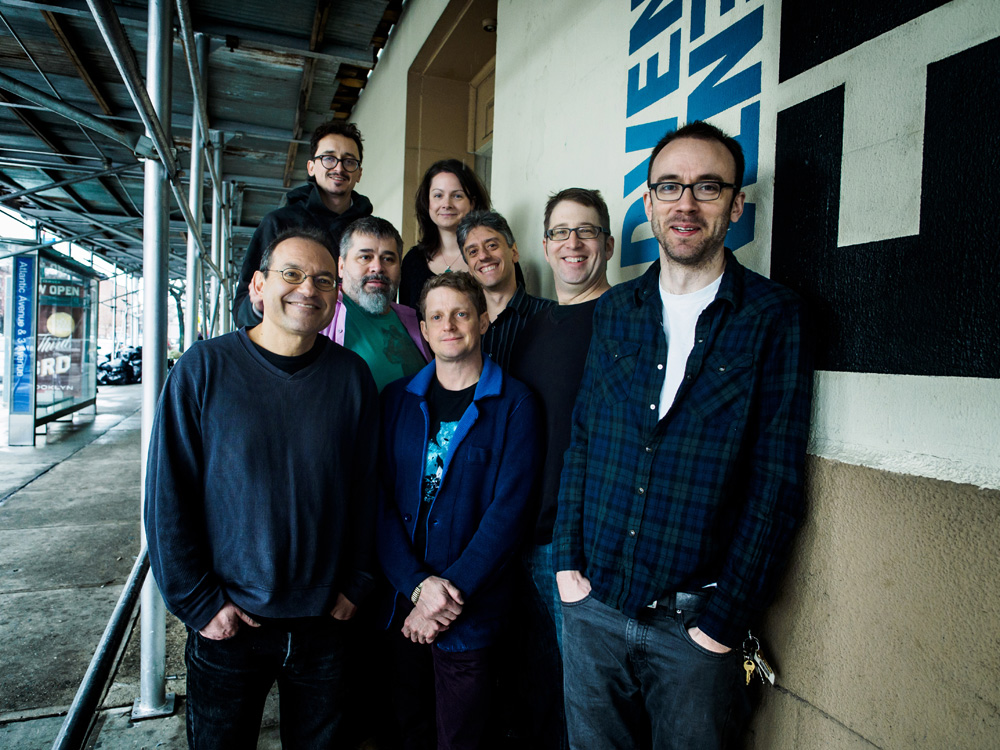
Though the Chesky name is well-known in the recording industry for its groundbreaking audiophile label (started in 1978 by brothers Norman and David), I must admit I was mostly unaware of David Chesky's work as a composer and pianist.  One glance at his webpage (www.davidchesky.com) is enlightening, informing one of his classical endeavors, compositions for dance troupes,  children's ballets and various jazz projects dating back to the .  In 2013, Chesky introduced his latest band, a quintet known as Jazz in the New Harmonic (pictured below) featuring Billy Drummond (drums), Javon Jackson (tenor saxophone, clarinet), Peter Washington (bass) and Jeremy Pelt (trumpet).

The quintet's second CD, "Primal Scream" (Chesky Records) posits the band in the heart of the late 1950s "Kind of Blue" sound that led to the classic Miles Davis Quintet (Wayne Shorter, Herbie Hancock, Tony Williams, and Ron Carter.  To the composer's credit, he is not imitating that music as much as channeling the mood.  The opening cut, "Check Point Charlie" places the music in that era and conjures up the classic Davis Lp cited above. Mesmerizing  pieces such as "Kill The Philharmonic" and "Quiet Desperation" have a trance-like quality due mostly to the airy and angular quality of the piano chords and the circular bass lines. Yet, on the first track mentioned (and throughout the program), Drummond supplies the fire that heats the music.  He kicks hard beneath Pelt's passionate solo and drops into a funky "boogaloo" for Jackson's playful tenor spotlight. The title of the CD might conjure images of Dr. Arthur Janov's controversial therapy practices of the mid-1960s; the track itself has great energy coming from the bass and drums plus sparkling solos from Jackson and Pelt but the highlight is the dream-like piano solo (cannot miss the classical inferences) over the powerful rhythm section. The closing cut, the highly rhythmical "Sleepless In New York", has a playful melody for saxophone plus muted trumpet and piano counterpoint.  Washington's bass lines dance alongside Drummond's elemental drumming (no frills, just the constancy of the rhythm). When Chesky steps out, he picks up on the playfulness of the previous soloists but also gets deep into the bass "groove."

"Jazz In The New Harmonic: Primal Scream" makes no bones about its debt to the music of the masters and makes a powerful statement about the need for jazz to "dance" again.  David Chesky, through his music and prose, states "we're a groove-based society", inviting all listeners to this darkly shaded yet funky experience.  Kudos to all involved!

Thursday, May 21, 2015

Idiosyncratic Audio

Listen to the music of Henry Threadgill from 40 years ago, when the trio known as Air made its first recording.  His saxophone and flute, the majestic bass of Fred Hopkins (1947-1999) and the brilliant percussion of Steve McCall (1933-1989) sounded like few other trios (compare their recordings to the work Sonny Rollins created in the 1950s) - the evidence of Threadgill's Chicago upbringing can be heard in the occasional hints of blues that enter the pieces but the freedom, the unexpected twists that don't sound dated or forced even today, their intuitive interactions (both live and on record) excited many people willing to travel down the trails they blazed.

Threadgill formed Zooid at the turn of the 21st Century building the sextet/quintet around the incredible tuba work of Jose Davila and the expressive guitar of Liberty Ellman.  By the time of the group second Pi recording "This Brings Us To, Vol 1." (2009), drummer Elliot Humberto Kavee joined the ensemble with cellist Christopher Hoffman coming the 6th member (original cellist Dana Leong was on the band's initial release but left before #2.)

"In For a Penny, In For a Pound" is the new Pi release and, with the departure of bassist Stomu Takeishi, the group is once more a quintet. The 2-CD set features 6 tracks with each disc starting with a short track (the first disk is the title track, subtitled "opening" while the second disk starts with "Off The Prompt Box" subtitled "exordium", meaning "the beginning.") The other 4 tracks are much longer, episodic compositions dedicated to the different instruments (with the exception of the reeds) in which the quintet breaks into smaller formations at various times.  Threadgill is fine voce throughout, his squiggly alto lines or colorful flute playing (he plays both concert and bass flutes) weaving in and out of the sound spectrum.  "Ceroepic (for drums and percussion)" opens with the impressive melodic interaction, the alto sax in the lead, Davila playing counterpoint while both the guitar and cello plays the foundational bass lines.  Kavee's drums people the work forward as the solos unwind, first Threadgill then Hoffman.  After the fine cello solo, the piece and heads off into quiet territory, with just cello, guitar and percussion in the mix. After several several changes in direction, Threadgill's flute takes the lead for a turn before handing off to Davila, now on trombone.  Despite the subtitle, there is never a drum solo in the spotlight although Kavee is crucial to the movement in several sections. Meanwhile the following cut, "Unoepic (for cello)" does start with the instrument the piece is named for but soon everyone joins in.

Meanwhile, this music features all the elements we have come to expect in Threadgill's music.  Rhythms that push but do not represent any particular "style", solos that grow right out of the melodies and great interactions.  On "...Prompt Box", listen to how each musician plays rhythm especially and notice how the leader steps out after the opening theme, not to return. The interaction of guitar and cello at the onset of the last cut, "Unoepic (for guitar)", sets the stage for several duo dialogues (alto sax and drums, cello and drums) yet, over the course on nearly 18 minutes, there are moments when the musicians solo over drums, tuba and guitar or guitar, cello and drums and so forth. Threadgill's alto erupts out of a drum solo, exchanging phrases with cello and guitar, then stepping out for a thoughtful and somewhat abstract solo.

At 80 minutes, "In For a Penny, In For a Pound" is much to digest and would not fit easily on one disk.  That said, this suite is most certainly interconnected, with themes moving in and out of separate tracks. While there are solos throughout, the rhythm section does not just "comp" or simply keep "time" but are vitally important to the movement and direction of each piece.  When you listen, pay attention to what Liberty Ellman, Christopher Hoffmann and Jose Davila are playing when the there are solos. Melodies and rhythms intermingle, all while the music continues to move forward.  On the CD jacket, Henry Threadgill gives "my endearing thanks and respect" to both Sonny Rollins and Ornette Coleman, musicians, soloists, bandleaders and composers who paved the way for his vision and his music.  Yet, we can be thankful that there is no one like Henry Threadgill. At 71, he's going strong (his work with Wadada Leo Smith and Jack DeJohnette on new recordings is wonderful), seeming to grow stronger with every recording and every ensemble.  For more information, go to www.pirecordings.com/artist/henry_threadgill.

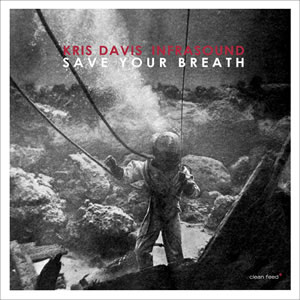
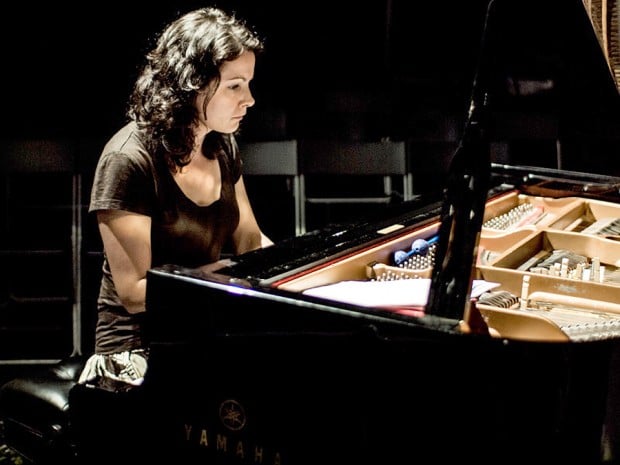
Composer and pianist Kris Davis, over the past 12 years since her debut CD appeared on Fresh Sound New Talent ("Life Span"), has grown in ways one might not have expected.  Her solo piano recordings reveal an artist always searching for new ways to express herself, the Trio dates find her and rhythm section avoiding cliches, and her work with Ingrid Laubrock and Tyshawn Sorey in Paradoxical Frog is indescribably audacious.  Her arrangements for Tony Malaby's 2011 recording "Novela" (where she worked with 4 reeds, 3 brass, drums and piano, set the stage for her new project "Infrasound" an octet that features 4 clarinetists (Ben Goldberg, Oscar Noriega, Joachim Badenhorst, and Andrew Bishop), guitarist Nate Radley, organist Gary Versace, drummer Jim Black, and her piano. There is a video on Ms. Davis' website that tells the story behind the group and recording (watch it here)  - the octet had not worked together as a unit until the night before its first gig and went into the recording studio the day after the gig!

That written, her new recording - "Save Your Breath" (Clean Feed Records) -  is a tribute to the talent of the musicians, to her arrangements, to her music that allows the ensemble to explore textures and rhythms, to the way silence and noise are a part of the mix and to how the lower reeds (bass clarinets and contrabass clarinets) are utilized.  Opening with "Union Forever", which slowly moves towards a melody not unlike the chorus of "The Battle Cry Of Freedom" but not before introducing all the musicians.  Black is often the spark plug, punching and jabbing, goosing the band forward.  After the band drops out, a lonely clarinet plays above tolling piano chords. Davis' arrangement also has the organ moving in and out the mix, Versace's burbling lines adding a different flavor to the music.  Is that accordion on the introduction of "Always Leave Them (Wanting More)", it's ethereal high notes drifting above the piano and increasingly powerful drums. Radley's guitar serves a similar purpose to the accordion, weaving in and out of the sounds from the reeds and the powerful piano chords. Slowly, the piece builds with the drums and piano in a fiery interchange while the clarinets keen quietly.  Suddenly, the piece falls into a soulful rhythm for Noriega's powerful solo. "Whirly Swirly", which first appeared on Ms. Davis' 2014 Trio CD "Waiting For You To Grow", is a vehicle for Radley's hard-edged solo, over a bass line from Versace and rampaging drums.  The piece stops on a dime and becomes extremely quiet, organ swirls and clarinet phrases nearly inaudible unless you sit still.  When the band returns, Badenhorst's roaring clarinet is front-and-center over a chordal pattern not unlike a Black Sabbath tune.

The title song closes the program. The longest track (14:50), the sound rarely rises above a whisper, the instrumentalists stepping up and then fading out. Yet it's not an afterthought or an epilogue.  Look at the cover photo - the music describes what to must be like to be underwater, to be standing on the ocean floor connected to the world above by ropes, breathing air from a tank, the only sounds being your breathing and whatever is going on in your mind.  Each voice in the ensemble contributes to this adventure and it's makes for absorbing listening.

"Save Your Breath" has moments of great beauty and harsh noises ("The Ghost of Your Previous Fuckup" offers much of the latter without ignoring the former), often moving with great force and determination.  Considering the time the octet had to rehearse, perform, and record, this is incredibly fine music.  I can imagine how pieces could get stronger with more performances (alas, only 2 European dates on Ms. Davis' website) but this recording is mighty good.  For more information, go to www.krisdavis.net.

Here's a taste of this fine recording:

Thursday, August 14, 2014

August Winds and More

I recommend that, before you listen to "Corduroy" (Little Sky Records), the 3rd CD from guitarist/composer David Ullmann, you go to his website - davidullmann.com/video/ - and check out the video in which and members of his David Ullmann 8 speak about the making of the CD.  You'll meet drummer Vinnie Sperrazza, vibraphonist Chris Dingman (both of whom played on his previous album "Falling") plus saxophonist Loren Stillman, clarinetist Mike McGinnis, and cornetist Kirk Knuffke (trombonist Brian Drye and bassist Gary Wang - who also played on "Falling" - round out the octet.) And, you will meet Mr. Ullmann who smiles a lot while talking about his band.

That genial attitude permeates the music on "Corduroy", songs which the composer says were influenced by TV show theme songs from the 1970s (such as "M.A.S.H." and "Taxi").  This music is filled with singable melodies; just try to listen to the title track without wanting to hum along. Sperrazza's fine cymbal work lights up the proceedings on "Ocelot", especially during the fine solos by Drye and McGinnis (both of whom play in The 4 Bags) - the "bang" of the snare drum also stands out when it leads the charge into Knuffke's solo. There's just a hint of Steely Dan in the opening section of "Something You Said" and wonderful West Coast bop turn on "Papaya." Both tracks feature exemplary guitar playing, the former for its quietly rippling single-note runs while Ullmann's rhythm playing shines on the latter (Dingman's vibes solo really impresses as does Stillman's strong alto work and, of course, Knuffke contributes another fine solo.) The soulful ballad  "You Can't Go Back" is a well-constructed composition, with a sweet melody, fine harmonies and short solos from the leader, Knuffke and Wang.  Still, it's the emotional quality of the song that will resonate long after you finish listening.

The closing track, the aptly titled "Moving On", is also a strong ballad.  The piece seems influenced by Wayne Horvitz, especially the voicings of the reeds and brass.  The melody moves around the front line before Drye and Stillman play solo lines that weave around each other. Following that, the guitar, bass clarinet and cornet follow the same format until their lines merge and the opening melody returns.  It's one of the prettiest pieces you'll hear this year (and, perhaps, for a long time to come).

"Corduroy" is comfortable music, great to get lost in (the passionate playing of Vinnie Sperrazza immediately catches your ear with the melodies a close second).  Every musician in the David Ullmann 8 is involved in the success of this music.  The music seems to float effortlessly from the speakers, with the perfect balance of fire and calm, solos and ensemble playing.  One can understand why David Ullmann smiles so much in the video - you will as well.  For more information, go to davidullmann.com.

Pianist Joel Forrester and soprano saxophonist Phillip Johnston started The Microscopic Septet in 1980 as a vehicle for a saxophone quartet with rhythm section.  For 13 years (through 1992), they toured and recorded, playing the often quirky tunes of its founders, songs that sound as if there was a juke joint in New York City where the proprietor locked Duke Ellington, Sun Ra, "Fats" Waller and Julius Hemphill into a room and they came with a splendid hybrid.  The band's hiatus ended in 2006 and "Manhattan Moonrise" (Cuneiform Records) is the 3rd installment in their comeback. Amazingly, there have only been 2 changes in membership since the band started;  Forrester and Johnston recruited the rhythm section of Dave Hofstra (bass) and Richard Dworkin (drums) as well as baritone saxophonist Dave Sewelson with alto saxophonist Don Davis replacing John Zorn (really) in 1981 and tenor saxophonist Mike Hashim joining when the band reformed 8 years ago.

As for the music, there's plenty of variety in the 12 song, 61 minute program.  Johnston's sprightly "When You Get in Over Your Head" starts the program with the composer's shifting tempos and stop-on-a-dime changes. He also contributed the super funky "Obeying the Chemicals" that sounds like tune from The Band with an Allan Toussaint horn arrangement with an Albert Ammons-flavored piano solo.  The subject is swing on Johnston's "Let's Coolerate One", a jumping jive with a hearty walking bass underneath a fine baritone sax solo followed by a boppish tenor spotlight and a sweet piano solo. His final contribution is "You Got That Right!", a "jump blues" powered by splashing cymbals and thick toned bass lines.

The other 8 compositions belong to Forrester;  they range from the subtle "pop" sounds of "No Time" to the bouncing title track, with sections influenced by Thelonious Monk and Artie Shaw.  Much more Monk in the slow blues of "A Snapshot Of the Soul" but the horn lines favor Coleman Hawkins. More blues, this time with an Ellingtonian feel, on "Star Turn" while there's a touch of gospel and r'n'b in the bouncy "Hang It On a Line" (the playful melody line and accompanying harmonies are mighty attractive as well.) Dworkin's fat-back drums and Hofstra's buoyant bass lines keep the piece jumping. Smart bow to "Hey Joe" during the baritone solo. The lovely unaccompanied piano solo at the onset of "Blue" does not prepare one for the musical chaos that follows, although the band does teeter on the brink of sanity every now and then.  Is that a hint of Bach or Rachmaninoff in the melody line before the band breaks into a New Orleans groove on the final track, "Occupy Your Life"? Whatever it is, the tune has a snaky groove that dances beneath the solos.  The composer delivers a heartfelt vocal near the close of the tune, reminding the listener to take control of their destiny.

Thee is something about the gentle anarchy of The Microscopic Septet that does good for one's soul.   The band can swing, rock, glide, bounce and keep you guessing from one minute to the next.  Their brand of musical joy never sounds stale - "Manhattan Moonrise" is good music that sounds better with each successive listen.  For more information, go to www.microscopicseptet.com.

Here's a taste of the title track:


Russian-born and Brooklyn-raised, guitarist/composer Gene Segal studied music at William Paterson University in New Jersey, studying with guitarists Vic Juris, Gene Bertocini and Paul Murphy. He also studied composition with Richard DeRosa.  In 2009, he issued his debut CD, "Hypnotic" (Innova) featuring the fine work of organist Sam Barsh and drummer Matt Kane (plus a 3-piece horn section).  His 2nd disk, "Mental Images", finds the guitarist on the SteepleChase/LookOut label with another excellent band, this time featuring the front line of Jon Irabagon (alto saxophone) and Sam Sadigursky (tenor sax, clarinet) plus the fiery rhythm section of Sean Conly (bass) and Jaimeo Brown (drums).

Segal, Conly and Jaimeo Brown conjure up James Brown on the super-bad funky opening track,
"Healing Feeling."  The deep groove (replete with "wah-wah" guitar comping) supports Irabagon's blazing solo.  The leader steps out for his own "fuzzed-up" statement while Sadigursky (on tenor) draws down the intensity level at the start of his solo only to build it back up (with the drummer mightily pushing him on.) The proceedings take a turn for the Platonic on "Allegory of the Cave", a ballad with an Eastern European feel (and the occasional waltz tempo). Sadigursky's woody bass clarinet tones move the band into "Minds Eye", a ballad with great intensity.  The clarinet solo twists and turns on the power of Brown's rapid-fire drumming and then joins with the bass and guitar to support a strong drum spotlight.

There's a playful and "free" feel to "Irrational Drives" as well as another intense alto solo while "The Bearded Lady" feels a flowing soprano sax solo from Sadigursky and more powerful drumming. Perhaps my favorite track is the mysterious "Trapeze Act", with its "film noir" feel and splendid clarinet work. In fact, Sadigursky dominates the first 2/3rds of the piece yet Segal's "rock-ish" solo stands out as well.

By the time you reach the "avant-blues" of the last track "Elephants", you realize that no 2 tracks sound the same and that Jaimeo Brown can be a game changer with his powerful drum work.  Gene Segal is no slouch on his instrument not only when he is guiding the band through the pieces with his strong chordal support but also when he takes the spotlight.  His background work often suggests the influences of both Bill Frisell and former teacher John Abercrombie but Segal is very much his own man.  "Hypnotic" was quite good but "Mental Images" is a giant step forward.  For more information, go to www.genesegal.com.