In May of 2021, tenor saxophonist and composer James Brandon Lewis released "Jesup Wagon" on Tao Forms (AUM Fidelity). The music on the album told the inspirational story of George Washington Carver (1864-1943), agricultural scientist, inventor, and community organizer (the Southern farming communities). The recording introduced the world to the Red Lily Quintet. Composed of Lewis, Kirk Knuffke (cornet), Chris Hoffman (cello), William Parker (bass), and Chad Taylor (drums, percussion), the ensemble contains multitudes, playing with creativity, invention fire, and wit. The album made a slew of "Best of" lists later that year and deservedly so.
Lewis and the RLQ is back, this time album inspired by the saxophonist's grandmother. "For Mahalia, With Love" (Tao Forms) is a nine-song program of spirituals made famous by Ms. Jackson (1911-1972) during the four+ decades she toured the United States and the world. Many people point to the influence of Gospel music on the blues and "soul" music but certainly Black spirituals have influenced a multitude of artists from Louis Armstrong to Duke Ellington to John Coltrane to Archie Shepp to the wonderful albums of Hank Jones and Charlie Haden (there are plenty more). Lewis and company lean more to the Coltrane type of "testifying" but unlike the 1965 classic "A Love Supreme", there is only one original work on "For Mahalia"–the program opens with "Sparrow", which includes the melody "His Eye Is On The Sparrow" (composed in 1905 by Charles H. Gabriel and Civilla D. Martin) and the leader's "Even the Sparrow".
Smithsonian/Museum of African History
This music covers a wide swath of territory. From the fiery saxophone shouts on "Calvary" to the swinging final minutes of "Go Down Moses" to the hard-edged driving force of "Wade In The Water" to the joyous power of "Swing Low", this is music that celebrates Ms. Jackson's legacy and builds upon the lessons learned, the lives lost, and the freedoms gained (and now in jeopardy) over the last 400 years. The music also builds off the messages in the music adapted from the teachings Blacks learned in their churches, the prayers of hope and freedom that flowed into and out of the music. Check out the sly grooves of "Elijah Rock", the splendid bass solo that opens the piece, the long rubato tenor/trumpet call-and-response, and the mid-song drop into tempo; if that does not makes you want to shout "Hallelujah" for its sweet blend of African, Swing, and Caribbean rhythms, I do not know what will
The Red Lily Quintet is an excellent ensemble and the music James Brandon Lewis creates and/or arranges for them gives each person room to move, to influence the direction, to add to the harmonies, to engage in the call-and-response, and more. The saxophonist's interactions with Knuffke soar, shout praise, and dance on many of the pieces. Parker and Taylor are...well....they are a rhythm section par excellence in that one creates the foundation and the other the flow plus the fire. There are times when Hoffman's cello gets covered but he's there, sometimes playing counterpoint to the melody, other times counterpoint to the bass lines.
All told, "For Mahalia, With Love" is a great collection of songs for many and varied reasons, not the least of which is the the ensemble's powerful playing and the excellent settings created by James Brandon Lewis. Do dip your feet into this mighty stream!
For more information, go to https://jblewis.com/about. To purchase the recording, go to https://jamesbrandonlewis.bandcamp.com/album/for-mahalia-with-love. For a limited time, if you purchase the compact disk or vinyl versions of the album, you receive a second disk features Lewis leading the Lutoslawski Quartet in his chamber music piece "These Are Soulful Days", recorded live at its premiere performance in November 2021 at the Jazztopad Festival in Wroclaw, Poland.
Revive your spirits with "Swing Low":
Photo: Brian Harkin/NYT
Tenor saxophonist Mark Turner has been collecting critical acclaim since he moved to New York City in the early 1990s. One might say he has a "cool" tone" but you could also argue he's very much his own man. In late 2019, Turner recorded "Return From the Stars" for ECM with a quartet featuring Jason Palmer (trumpet), long-time collaborator Joe Martin (acoustic bass), and the young, dynamic, drummer Jonathan Pinson. That group was invited by photographer and label owner Jimmy Katz (Giant Step Arts) to take part in his label's new series. Titled "Modern Masters and New Horizons", the series is curated by Palmer and drummer Nasheet Waits and will include contributions from artists such as vibraphonist Chien Chien Lu, saxophonists Neta Ranaan and Ben Solomon, drummer Eric McPherson and others.
The first release in the series "Live at The Village Vanguard" and features the Mark Turner Quartet, the same ensemble on the ECM album. Recorded over two nights in June of 2022, the 11-song, 2+ hours, program features material from the earlier studio recording, new pieces written specifically for this ensemble as well as older Turner originals. What Katz the producer is get out of the artist's way and lets the band do what they do best–play. Listen to "Return from the Stars" below to hear how tight the band is, how much they listen to each other, and how this music flows. "Brother, Sister", first recorded in 2014 for ECM with a different quartet (save for Martin), opens with a long, poetic, powerful, solo tenor sax statement––the band comes in seemingly on tiptoes but pay attention to Pinson on the offbeat and Martin's swinging counterpoint. Palmer gets a shorter unaccompanied solo before the the band reenters. Now the trumpet and sax play long tones while Martin solos. Notice how the textures change as the music moves forward.
The newest piece on the album, "Wasteland", is a fascinating ballad that also opens with an unaccompanied tenor sax solo––this time, one hears a plaintive cry, a sense of deep sorrow or, even, loss of hope that leads to a full group elegy. There are long bass notes, Pinson on his toms, a melody line for the sax and trumpet that starts in unison, moves away, and back but in counterpoint now. When you listen to the song in total, you realize that not only is it an elegy but also serves as a vehicle for the drummer to create short solos in response to and seeming rejection of sorrow.
Photo: Jimmy & Dena Katz
"It's Not Alright With Me" is, at 18:36, the longest track on the album. The playfulness of the melody brings images of the Clifford Brown/Max Roach Quintet. While the rhythms prances and struts, the band takes its time to move through the melody section. Martin gets the first solo and it's a tour-de-force, quite melodic yet percussive, careering forward at breakneck speed. Turner's solo starts slowly but he rides the waves created by Pinson to create a masterful, hard-edged, dramatic solo.
The oldest Turner song on the program, "Lennie Groove", is from the leader's second album, 1998's "In This World". The piece has a nervous, almost jittery, melody line which does fall into a delightfully swinging "groove".
"Live at The Village Vanguard" is yet another high water mark in Mark Turner's three decade career. To me, the best to listen to this album is to sit back, put on headphones, pretend you're at one of the tables at the Vanguard, and let the music play. There's so much music to listen to so take your time and let them play!
As I write this, it's nine months since pianist, educator, and composer Frank Kimbrough passed. In that time, he has been memorialized in magazines and blogs, feted by his peers and students as well having 60 of his compositions recorded by Newvelle Records, a digital-release only featuring 67 musicians in multiple groupings. Kimbrough himself recorded in many smaller group settings, solo, duos, trios, quartets, plus sat in the piano chair of the Maria Schneider Orchestra for over 25 years, multiple tours, and eight albums. The North Carolina-native always played with thought, wit, intelligence, and a subtle swing that supported his bandmates and kept the attention of the audience. He could play "out" without making one feel as if the music was spinning off into infinity.
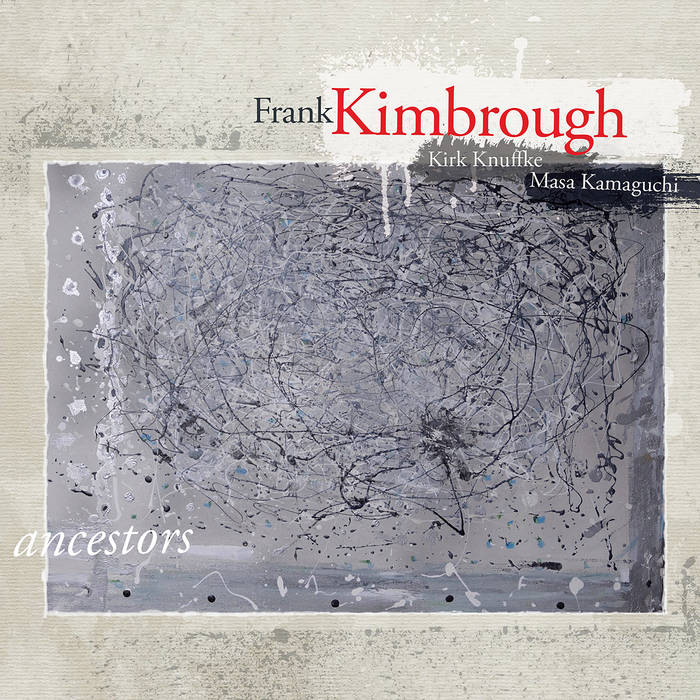
Sunnyside has just issued "Ancestors", a trio session recorded in 2017 featuring the pianist with cornetist Kirk Knuffke and bassist Masa Kamaguchi performing 11 pieces. Seven are Kimbrough compositions, two are credited to the pianist and Knuffke, with one by the cornetist and Yamaguchi plus one by Kimbrough's wife Maryanne De Prophetis. It's hard to be objective as I knew Frank for over two decades, having chatted with him on the phone, at gigs, and via email. He was always friendly, always willing to answer a question about the music. Listening to him play solo was a treat; there were the pianistic influences of Paul Bley, Keith Jarrett, and a touch of Thelonious Monk yet he was not beholden to them, especially as his writing and playing matured. Kimbrough was never afraid to revisit his older compositions when he was playing with a new lineup.
Approach this music early in the morning when your defenses are down. Much of the music is contemplative, moving at a ballad tempo . For instance, "Air" moves at slow, slow, pace, Knuffke seemingly whispering out the melody as Kamaguchi plucks and plays short lines. Meanwhile, it's the piano that builds the foundation of the song. During his solo, Kimbrough uses space and the sustain pedal to create melodic lines that seem like clouds scattering across the sky. "Jimmy G" (dedicated to reed master Jimmy Giuffre) has the feel of Monk in the easy rolling piano lines as well as a bluesy, Chet Baker, feel from the cornet. The piano solo also mines the blues vein with just the right amount of grit before the bass solo kicks the heat up a notch. Every piece is worth exploring again and again –– even the two+ minute corner-piano percussion duo "Eyes" stands out for Knuffke's playful improvisation over the percussive sound of Kimbrough thumping on the side of the piano.
"Ancestors" can also be a worthwhile late evening spin, a musical after-dinner drink that soothes the wrinkles of the day. Frank Kimbrough is gone from this plane of existence but he left a strong musical legacy that will move you as well as entertain you.
For the first 2/3rds (or so) of the 20th Century, Black Creative Music was concerned with "today"or "looking to tomorrow, to a better day". With the passing of John Coltrane, the music seemed, in the public eye, to stall only to be rejuvenated the following decade by the work of Chicago's AACM but soon retreated again under the onslaught of new, more commercial, developments such as hip-hop and rap, as well as the rise of the Neo-Conservatives. Still, many artists in the 21st Century have figured out how to keep one foot in the past, the other in the present, and an eye to the future.
Over the past decade+, tenor saxophonist, composer, and poet James Brandon Lewis has been receiving more and more attention for his creative approaches to Black Music. He's issued six albums as a leader, two co-lead with drummer/ mbira player Chad Taylor, and is one of the co-founders of the poetry/ music/ performance art ensemble Heroes Are Gang Leaders. His tone on tenor saxophone hearkens back to John Coltrane and Archie Shepp but his music takes its directions form artists such as Henry Threadgill, the Art Ensemble of Chicago, Julius Hemphill, and Oliver Lake. After graduating from Howard University in 2006, the Buffalo, NY, native spent several years in Colorado playing gospel music. Lewis did his graduate work at CalArts, studying with Charlie Haden and Wadada Leo Smith (and others) before moving to New York City in 2012. There, he began playing with pianist Marilyn Crispell, vibraphonist Karl Berger, pianist Eri Yamamoto, and fellow tenor saxophonist Charle Gayle. His debut CD, "Moments", was self-released in 2010; since then, he's released two albums on Okeh Music, one each on BNS Records and Intakt Music, and, in 2019, Relative Pitch released "An Unruly Manifesto".
His new album, "Jesup Wagon" (Tao Forms), was recorded during the pandemic and tells the story of Dr. George Washington Carver (1864-1943). Born in the South before the end of the Civil War, Dr. Carver went on study at Iowa State Agricultural College and started at Tuskegee University in Alabama in 1896 becoming the Director of the Agricultural Experimentation Station the following year. Most people know of the work he did with peanuts but he also found over 100 uses for sweet potatoes but was also an artist (the album cover is his painting), a musician (he played piano and accordion), and was an early environmentalist. Dr. Carver believed that science and art worked hand-in-hand to create a fuller human being. When Lewis was a young student, he was very interested in Science and wrote a paper on Dr. Carver. With the release of the new album, Lewis can not only celebrate the life of an amazing person but also give the listener a bigger picture of his accomplishments.
The album takes its name from from the movable science Experiment Station that Dr. Carver designed in 1906 (pictured left) as a mobile school to help poor Black farmers in Alabama. Because the vehicle was loaded down, the station moved quite slowly. Still, it moved through the countryside helping as many people as possible. To tell this story and to have resonate with the sounds of the Deep South, Lewis populates his songs with the sounds of the Red Lily Quintet, a group composed of Kirk Knuffke (cornet), Chad Taylor (drums, mbira), William Parker (bass, gimbri - which is a three-string bass lute), and Chris Hoffman (cello). This music may remind one of Julius Hemphill's "Dogon A.D." or some of the pieces Henry Threadgill composed for Air and his Sextett.
The title song opens the album – in fact, Lewis opens the album unaccompanied playing a blues melody, blatting out low notes, squealing now and then. The band enters and we are dancing forward on the hard blues of Knuffke's cornet. Pay attention to the rhythm section, to the plucked cello and thumping bass and, especially to the raucous, hard dancing drums. Parker's gimbri plays a 4-note figure that leads in the drums, cowbell, and hand percussion plus Hoffman's cello for "Lowlands of Sorrow". The song, named for the conditions Dr. Carver found when he arrived at the fields that the sharecroppers used to grow what they could under adverse conditions. Lewis's tumultuous tenor spars with the crisp sounds of the cornet –– their "conversation" over the roiling rhythm section drive the piece to its quiet conclusion.
This powerful music rarely lets up. From the fugue-like opening of "Arachis" which leads to a rumbling free-blowing mid-section to the dancing rhythms of "Fallen Flowers" (Hoffman's bowed then plucked solo over just drums and bass stands out) to the relentless drive of "Experiment Station", Taylor pushes the band from his drum seat while Lewis's tenor sax roars, Knuffke's cornet crackles, Hoffman's cello shines in counterpoint, and Parker's bass holds the proceedings together.
Put simply, "Jesup Wagon" is a great album, certainly one of the best releases in the past 18 months. Not only does James Brandon Lewis weave a compelling narrative about the genius that was Dr George Washington Carver but also subtly reminds the listener of the hardships Black people had in the United States through the first half of the 20th Century (and beyond). Another highlight of the album package is the excellent and comprehensive essay from author Robin D. G. Kelley. This music of the Red Lily Quintet will certainly challenge you but the rewards are great.
Dan Blake (tenor and soprano saxophones), like many of his contemporaries, is a multi-faceted composer. He has recorded and released three albums is the jazz genre plus has composed for the contemporary classical Mivos Quartet as well as a Chamber Orchestra and done several soundtracks for short films. He studied at the New England Conservatory of Music and Tufts University (working n two degrees simultaneously. Among the people he studied music with was Steve Lacy, Danilo Perez, Robert Dick, and composer Tania Leon. He has played and recorded with percussionist Rogerio Boccato, Anthony Braxton, Esperanza Spalding, and keyboard artist Leo Genovese.
His fourth album (second for Sunnyside Records), "Da Fé", features Carmen Staaf (piano, Fender Rhodes), Dmitri Ishenko (acoustic and electric basses), and Jeff Williams (drums) plus Leo Genovese (synths, electric keyboards, Fender Rhodes, acoustic piano). While Blake's 2016 Sunnyside release "The Digging", was basically a trio album (bassist Ishenko and drummer Eric Harland) that had a "freer" sound, "Da Fé" covers a wider swath of musical territory owing to the work of John Coltrane in the 60s and Wayne Shorter in the 80s through the present day. Pieces such as "Fish in Puddles" and "Cry In The East" feature strong piano work from Ms. Staaf and the impressive, open-ended, drumming of Williams. The solid rhythm section gives the Blake's soprano plenty of support to express its feeling of freedom, of soaring through cloudless skies. The addition of Genovese's slippery synth work on "...Puddles" and Blake's overdubbed sopranos during the last 90 seconds adds more heft.
The opening of "Dr. Armchair" explodes with shards of sound from the piano and soprano before Blake and Ms. Staff play the melody. While the rhythm section keeps a steady beat, the front line go on wild ride. They move back to and away from melody led by the crashing phrases of the pianist. Then the song just stops. There's an urgency to the tenor saxophone on "The Grifter"; as Ms. Staff moves into her solo, the bassist and drummer settle down but the pianist soon pushes to intense interactions. The tenor solo stays fairly straight-ahead and delightfully melodic until the end when Genovese's synths swoop and the overdubbed tenor . Blake's overdubbed tenors introduce "The Cliff (Waat)" playing a repetitive figure while the rhythm section push against him and finally join in the fragmented melody. Soon, several tenors saxes are soloing as is Ms. Staaf while the bass and drums thunder below. Ishenko's short bass solo quiets the piece down but not for long.
Photo: Christopher Drukker
The title track ("Da Fé" translate to "of faith") rolls in on a steady pulse with Genovese's synths burbling out of the right and left speakers while Blake's soprano chase them in and out of the mix. Slowly but steadily the piece takes shape especially on the entry of the acoustic piano. The Shorter influence is quite evident here not so much in the sounds of the soprano sax but with the chattering synthesizers and the long, angular, melody that is played throughout the first half of the 6:30 piece until when Blake takes off on a rambunctious solo shadowed by his recorded loops.
The "Epilogue – It Heals Itself" is more than an afterthought but a full-throated (Blake on several sopranos and tenors) prayer for a better world. While the quartet recorded before the Pandemic, both Leo Genovese and Dan Blake spent a day each in the studio adding and overdubbing, filling out the sound changing the density of the music but not the intentions. "Da Fé" illustrates how the saxophonist and composer has matured, how his writing has developed, and how his ideas/ beliefs are clearer to the listener. Give a listen, give more –– enjoy!
No matter how you look at 2018, it was a year of extremes. Strange weather, devastating fires, tsunamis, hurricanes, droughts, and that's without mentioning the extreme political polarization in the US and many other countries. Musicians, through their music, recognize these extremes, they reflect on how their audiences are weathering, their music can provoke, can soothe, can issue a call-to-action, can ignore it all and just dance. All is not lost - extremely messed up - and more people are beginning to respond with positive action. Can it negate the rise of authoritarianism? Can it quell the cult of personality that grows stronger each year? We don't seem to elect leaders but cardboard cutouts beholden to the highest bidders (and that's true for both major parties in the US) - many only seem to speak their minds when they are ready to retire.
Does it all come down to the mighty dollar? The cynic says "of course" and the optimist knows it does but prays for change. Nothing new under the sun yet that sun shines every day meaning there's always the opportunity for change. One has to be brave these days just to get out of bed but if you just pull the covers over your head, the ones in power take that as a vote of confidence. No one says this world is supposed to make sense.
Anyway, music and family remain my balm in bad times. Always has, Expect they always will. Have a great New Year, let your voice be heard (whether you are pro or con), and keep your communities going!
*****************************************
Just a glance at the track listing of the new Kirk Knuffke CD, "Witness" (SteepleChase), and you'll know you're in for quite an aural adventure. From spirituals to Strayhorn, Sun Ra to Guiseppe Verdi, Puccini to Henry Mancini, the program is delightfully. The cornettist shares top billing with operatic baritone Steven Herring while creating the music with Russ Lossing (piano) and Ben Goldberg (contralto clarinet, clarinet).
The album opens with the traditional "Witness", the clarion call of the cornet and the lows notes of the contralto clarinet leading Herring in. When Lossing enters, the music takes on deeper gospel hues. When Knuffke steps out to "testify", he's supported by Goldberg's low lines and Lossing's impressionist piano chords. The clarinet solo is emotionally rich leading to a far-ranging piano solo playing variations on the melody. When Herring returns, he responds to the higher energy level with a even more powerful vocal.
That's just the opening track. Surprises along the way include a playful take on Sun Ra's "The Satellites Are Spinning" - the original version, from 1971, is basically voice and drums but here Herring opens by reciting the lyrics while the musicians "free-associate" around him. As the piece tumbles forward, Herring sings in a call-and-response with Knuffke while Lossing and Goldberg dance around them. Following Sun Ra is Verdi's "Iago's Credo" (from "Otello"). Herring stays close to the handsome melody as the cornet, contralto clarinet and piano improvise around him. The musicians capture the emotion in the vocal, sometimes matching the energy while, other times, they step back to allow the voice to stand out.
There's a beautiful reading of the Henry Mancini/Johnny Mercer song "Charade." Opening with voice and piano, the contralto clarinet and cornet enter on the second verse. Pay attention to the beauty of the piano accompaniment and how Herring inhabits the lyrics. Throughout the album, Knuffke is in sync with the voice, acting as counterpoint and responder. Everyone step away for the stunning piano solo followed by an equally impressive (and quite bluesy) cornet spot. While Goldberg is mostly in the background, do pay attention to his "foundational" lines.
Knuffke sets poems by contemporary poet Kirby Congdon and the late Carl Sandburg to music. Sandburg's work, "Subway" is a short blues chant that rides forward on the rhythmical lines of cornet and clarinet joined on the second verse by the piano. The energy and interactions give the music such urgency that the song ends much too soon.
From beginning to end, "Witness" is a fascinating recording. There's so much music here, four voices working together to create a unified message. Music crosses so many borders, so many walls, religions, politics, and much more. This mix of gospel, poetry, popular songs, opera, creative music and spirited improvisations is often stunning yet will make smile all the way through. Kirk Knuffke, Steven Herring, Ben Goldberg, and Russ Lossing made magic in the studio and we are the beneficiaries.
Although it's official release date is not until 1/11/19, it's been impossible keep the new album by alto saxophonist Greg Ward out of the CD player. The full title "Greg Ward Presents Rogue Parade: Stompin' Off From Greenwood" (Greenleaf Music) tells the listener much about this album. One - this is a new group for Ward. Consisting of two electric guitars (Matt Gold and Dave Miller) plus the splendid rhythm section of Matt Ulery (bass, electric bass) and Quin Kirchner (drums), the music they make is notable for its irresistible forward motion and Ward's delightful melodic flow. Two - this is the second album Ward has made since his return to Chicago and has all the earmarks of the newer music from the Windy City. The blend of funk, r'n'b, hip hop rhythms, jazz, and exciting interactions may remind some of Tortoise and Ornate Coleman's Prime Times but there are traces of the world-music adventuresome attitude of Makaya McCraven as well.
Chicago Reader
Since I've been listening to this music without paying attention to song titles (all songs are by Ward save for Hoagy Carmichael's "Stardust"), I would recommend you do the same. On initial listenings, listen for how the rhythm section powers this music (Kirchner's blend of busy cymbals and active snare work is quite exciting while Ulery not only keeps the bottom solid but engages with Ward playing subtle counterpoint). Ward's alto tone can be so sweet (especially in the higher registers) but there's power in his melodic lines. It takes a few times through to hear the guitarists - initially, it seems as both are there for the various colors they create but they also provide melodic introductions and the occasional solo. Their sound is not distorted yet the effects they use are often subtle and powerful. Note the beginning of the album's final track (people who buy the download from Greenleaf get a bonus final track) - "Sundown" is driven by both guitars with Ward giving support. The energy level continues to rise from the onset and is overwhelming by the close. There are several ballads. One is the generously melodic "Pitch Black", the softness of the alto and the rhythm guitar rising above the clatter of Kirchner's percussion and Ulery's solid bass lines. Still, as the piece comes to a close, the intensity picks up still the band does not lose its melodic way.
Go back to the beginning, to the high-powered "Metropolis", and you'll really hear how all the elements of this music come together to make a unified statement. How the melodies and counter-melodies, how the rhythms from the drums and guitars push the music, and how you can hum many of these melodies (even if you can't keep up at times). Music often gives me hope for the future - "Stompin' Off From Greenwood" makes me smile, bounce my feet, challenges me to listen with fresh ears, opening up to the myriad possibilities in this music, making me wish I was in the audience as the band developed this program leading uptown the recording.
"Greg Ward Presents Rogue Parade" is the latest installment in the musician's maturity as a composer and bandleader. He's been busy since returning to Chicago, adding his saxophone to many different ensembles and recordings (including 2018's Benje Daneman's Searchparty "Light in the Darkness"). Greg Ward is making great strides and we are lucky to be part of the experience!
When one attempts to describe saxophonist Jeff Lederer, the words "exuberant", "dynamic", "elemental", and "fun-loving" come to mind. In concert with the Matt Wilson Quartet and the Honey Ear Trio, he can be, and often is, ebullient, a Puck-ish character whose approach to the tenor sax knows no limits. In his own groups, Lederer's music blends blues, swing, hymns, gospel, and so much more. He has an affinity for the music and sound of saxophonist Albert Ayler (1936-1970) and has recorded a number of his works as well as dedicating several of his original pieces to the fiery musician.
Lederer's latest recorded adventure (and ensemble), titled "Brooklyn Blowhards" (Little (i) Music), blends his love for Ayler's music (5 of the 14 tracks are Ayler tunes) and sea shanteys - an unlikely match, you say, but ,when played by the octet of Petr Cancura (tenor saxophone), Kirk Knuffke (cornet, slide trumpet), Brian Drye (trombone), Art Bailey (accordion) and the percussion trio of Allison Miller, Stephen LaRosa, and Mr. Wilson (trap drums, ship's bell, chum bucket, chain), this music is so alive. Joining the ensemble on 5 tracks is vocalist Mary LaRose (Lederer's wife) and, on 3 tracks, guitarist Gary Lucas. There are moments when the music sounds like an unhinged Salvation Army Band (before and after the Cancura/Lederer duo on "Black Ball Line" and all throughout "Haul Away Joe") and cuts where the ensemble swaggers or romps with such panache (Ayler's "Heavenly Home" and his classic "Bells"). Check out Matt Wilson's "Dancing Waters", a truly lovely ballad with Ms. LaRose's wordless vocals and Lucas's sparkling dobro, underpinned by the swirling reeds and brass, building to an amazing climax on the power of the drummers, beginning and ending with a short chorale that sounds like a prayer. Lederer's "The Language of Resistance" is a stunning work for the octet, a spotlight for the leader's soprano sax and Bailey's fine accordion work.
Inspired playing abounds throughout the program. Solos by Knuffke and Drye enliven the traditional "Haul on the Bowline" while the spiky slide work of Lucas shines on "Shenandoah." Ms. LaRose leads the way on the raucous take of Ayler's "Island Harvest" capturing the humor of the original version without imitating lyricist and vocalist Mary Parks. The multi-tracked voices on "Shallow Brown" blends sweetly with the dobro, the accordion swells, the martial drumming, and the sway of the horns.
"Brooklyn Blowhards" is serious fun, music that reaches back to music of early America while illustrating how Albert Ayler tapped into traditional musics, making it sound new and "free.' Jeff Lederer, who arranged the entire project, was inspired by the brilliant work of artist Matt Kish, who created "Moby Dick in Pictures - One Drawing for Every Page". Play this loud, let the music ring through the house while raising your glass to the ingenuity and vision of this splendid musician and his mighty band.