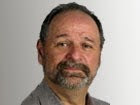
Joshua Kwassman is a native of Newington, CT, a graduate of the New School in New York City and an impressive young composer (24 years old). He and his group are coming to The Buttonwood Tree, 605 Main Street in Middletown this Saturday (March 16) to celebrate the release of his debut recording, "Songs of the Brother Spirit" (Truth Revolution Records). The CD, recorded in May and August of 2011, will surprise many jazz fans as it a very mature statement in that the performances revolve around the compositions and are not just vehicles for lengthy solos. And, although there is a vocalist in the recording and in the group coming to Middletown, the song-stories that make up the program have no words. Kwassman cites Brian Blade's Fellowship Band as a big influence on his music and group philosophy and one can hear Blade's sound in the blend of guitar and piano, the open chords and the folk-like melodies.
Joshua Kwassman, who plays alto and soprano saxophone, clarinets, flute, melodica and piano, recorded this program with his friends, most of whom have played this music many times. The rhythm section of Craig Akin (acoustic bass) and Rodrigo Recabarren (drums, percussion) are not just "time players" but add colors, help to create the dynamic variation and change of moods. Israeli-born guitarist Gilad Hekelsman plays guitar on 6 of the 8 tracks with Jeff Miles (who is in the ensemble at The Buttonwood) on 1 track. Angelo DiLoreto (4 tracks) splits the piano duty with Adam Kromelow (3 tracks) and it's Di Loreto who will be in the band on Saturday. Arielle Feinman is the "voice" of Kwassman's music (she also contributes glockenspiel on the beautiful "Meditation", a piece for piano, voice and clarinet. The composer created syllables for the vocalist (it's not gibberish yet does not sound like a familiar language.) "The Nowhere Trail", the 3-part, 27 minute work that closes the CD, covers an impressive swath of musical territory. "Part 1", the longest section at nearly 12 minutes, blends the exciting guitar work of Miles with the expressive voice, Di Loreto's forceful piano and Kwassman's active clarinet. The music is a blend of contemporary jazz, progressive rock influences and Brazilian sounds. "Part II" opens with a handsome acoustic guitar melody (Hekelsman) that has the influence of Ralph Towner. When the ensemble enters, the music rises on the overdubbed guitars and Ms, Feinman's ethereal vocal. The composer moves from clarinet to melodica in the background, offering a counterpoint to the melody line. "Part III" starts quietly but soon picks up in intensity, offering solo opportunities for the leader (on alto saxophone) followed by a section in which the voice, guitar, piano, and soprano saxophone blend their tones, slowly for each instrument to drop out save for the acoustic guitar and an introspective close.
Other highlights include the powerful "In Light There Is Song", another piece that picks up as it moves along only to stop in the middle for a rubato interlude then picks up again. The episodic nature of this material encourages the listener to attention yet songs such as "2/22" allow one to close his eyes and just let the sounds wash over. Opening with atmospheric electric guitar, the voice enters then the composer on piano and the trio presents the melody in such a gentle manner.
"Songs of the Brother Spirit" is quite a mature debut for composer and multi-instrumentalist Joshua Kwassman. One can tell he poured his heart and soul into this music, songs that are moving, honest and filled with sparkling moments. For more information about the composer/musician, go to www.joshuskwassman.com. To reserve a seat for Saturday's performance, go to www.buttonwood.org.
Showing posts with label CD release. Show all posts
Monday, March 11, 2013
Monday, February 28, 2011
Ten Fingers, Two Hands, One Fertile Mind
Alone at The Vanguard - Fred Hersch (Palmetto Records) - It's been 3 years since pianist/composer Hersch became so ill that he went into a coma for 2 months; when he emerged, he was unable to eat or drink, had to endure a tracheotomy and dialysis plus he lost the ability to play piano. Hersch has since recovered most, if not all, of his faculties and, as one can hear from this recording from December of 2010, his playing is fine. (In May of this year, Hersch's "My Coma Dreams", a multi-media depiction of his experiences, will have its premiere at Montclair State University.)
This program, actually the last set on the last night of a 6-night stay at the Village Vanguard, is, in a word, wonderful. Combining 4 original pieces with one each by Eubie Blake, Thelonious Monk, and Sonny Rollins plus a work from Brazilian composer Jacob de Bandolim as well as the standard "In the Wee Small Hours of the Morning", this is music to savor either alone or with a close friend. It's not so much that this is "romantic" music (though it has its moments), it's contemplative, probing, and, in the end, filled with the joy of a musician inflight full - the music would be lost on a group of people unless they were sitting in a club or concert space. Every piece is required listening, from the bluesy riffs of "Down Home" (dedicated to guitarist Bill Frisell - during the solo, listen for the quote from "If I Only Had a Brain" ) to the melodic and harmonic elegance of "Pastorale" (dedicated to Robert Schumann.) Blakes' "Memories of You" has a contemplative, melancholy, feel while Rollins' "Doxy" starts quietly, formal in the stately presentation of the melody line before the pianist takes the piece through shifts of mood and dynamic variations.
Fred Hersch has long been one of the musicians I turn to when in need of rejuvenation. Not because the music is revolutionary or "swings like mad" or, on the other hand, mindless and loud. There is a clarity of vision in his music, he's not afraid to take other composer's work and find his own interpretation while his original compositions are thoughtful and well-organized, always leaving room for exploration. If you have never explored his recording "Leaves of Grass" (Palmetto, 2005), which utilizes Walt Whitman landmark work from the 19th Century, find it and dig deeply into its complex yet approachable world. Meanwhile, "Alone at the Vanguard", as I wrote above, is wonderful listening. For more information, go to www.palmetto-records.com. To find out more about "My Coma Dreams", go to www.fredhersch.com.
Subscribe to:
Posts (Atom)