Monday, June 6, 2016

Firehouse Finale (sort of), Side Door Swings & New Music

The final concert in the Spring 2016 Concert Series at Firehouse 12 in New Haven brings the Jay Rosen Clarinet Madness to the recording studio/performance venue. Rosen, a drummer and composer, has been a vital member of the creative music scene for nearly three decades having worked with artists such as reed master Vinny Golia, trumpeter Paul Smoker, violinist Billy Bang and many others.  He's a member of Trio X, an improvising trio that also features saxophonist and trumpeter Joe McPhee and bassist Dominic Duval.  Their series of albums for the CIMP label are recommended listening.

For this gig, Rosen is joined by long-time associates Perry Robinson and Michael Marcus. Both clarinetists are also veterans of the scene with Robinson (77 years old) first recording in the 1960s and Marcus (63) in the late 1980s.  Both have extensive credentials ranging from intimate duos and trios to big bands.

Clarinet Madness will play two sets - 8:30 and 10 p.m. - with separate admissions.  For more information, go to firehouse12.org or call 203-785-0468.   Originally, this concert was to be the last of this season but there is to be a coda - more on that later in the week.

allaboutjazz.com
Trumpeter, composer, and educator Duane Eubanks is the youngest of three brothers, all of whom are making their mark of the contemporary music scene.  Older brothers Kevin and Robin are busy leading their own ensembles; both have been integral members of bands led by bassist Dave Holland as has Duane (Holland's Big Band).  Slowly but sure, Duane has built a career as a bandleader, worked with artists such as the late Mulgrew Miller, Orrin Evans, and drummer Jeff Williams as well as with Alicia Keys, Wu Tang Clan, and Mos Def.  His new Sunnyside release, "DE3: Live at Maxwell's", is an impressive triumph finding him in a trio setting with drummer Eric McPherson and bassist Dezron Douglas, both musicians with solid connections to Hartford, CT (studying at the Jackie McLean Institute at The Hartt School with the bassist also a Hartford native.)

Duane Eubanks brings a Quintet to The Side Door Jazz Club this Friday (6/10) that not only features young Mr. Douglas and Mr. McPherson but also the fine tenor saxophonist Abraham Burton (he, too, studied with Mr. McLean) and pianist Allyn Johnson (an excellent musician from the Washington D.C. area).  This is shaping up to be quite a fine night of music at the Old Lyme venue.

The Door opens at 7:30 p.m. and the band takes the stage at 8:30.  For more information, go to thesidedoorjazz.com.  To learn more about the trumpeter, go to www.duaneeubanks.com.

Here's the group in the studio (Marc Cary on the piano) from 2015:


On Saturday, Jan & Ken welcome back the Eric Wyatt Quartet.  The saxophonist and composer first played in Old Lyme in July 2014 celebrating the release of his Posi-Tone CD, "Borough of Kings."  Mr. Wyatt has been mentored by Sonny Rollins ( a family friend as well as being the great saxophone master) and worked with saxophonist Kenny Garrett, trumpeter Jeremy Pelt, drummer EJ Strickland, and many more.

Joining him will be pianist Benito Gonzalez (who's also featured on the album), bassist Essiet Essiet, and drummer Chris Beck.  Expect the music to be powerful (there's a live performance of John Coltrane's "Pursuance" on Wyatt's website that will tear the speakers off the wall) as well as sensitive and blues-drenched. The man plays with conviction and soul so expect to be moved when the Quartet hits the stage.

For more information and reservations, call 860-434-0886.  To learn more about the saxophonist, go to www.ericwyatt-music.com.

Here's the Quartet (different rhythm section) live at Small's in 2015:


*******************************************
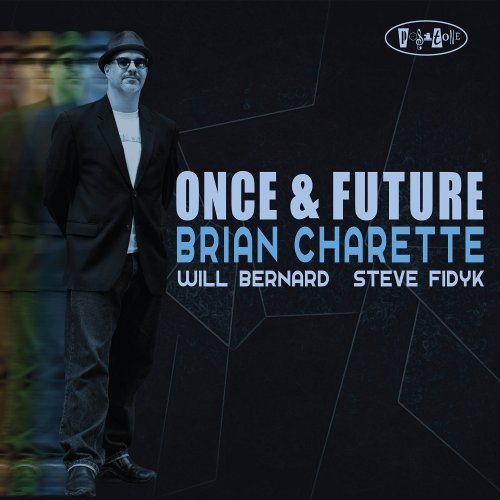
Organist Brian Charette (also quite a fine pianist) has a new album whose concept came during a break at a recording session where he found a copy of his book "101 Hammond B-3 Tips" resting atop the studio's organ. Looking back through the instructional guide where he had written about the "giants of the Hammond Organ", Charette decided his next album would include works by many of this giants as well as nods to the new "Lions" of the instrument.

"Once & Future" is his fourth Trio CD for Posi-Tone and features guitarist Will Bernard and drummer Steve Fidyk.  Out of the 14 tracks, three are originals, one is a standard ("At Last" from the pens of Mack Gordon and Harry Warren), and the rest come from either organists or jazz greats - there's even a mighty funky version of James Brown's "Ain't It Funky Now" which would sound out of place on an album by The Meters.  There's the hard-edged funk of Larry Young's "Tyrone" that he recorded on his debut for Blue Note "Into Something".  A little more of "swing-funk" is heard of "Hot Barbecue" which Jack McDuff recorded in 1965.  Fidyk's cymbal work is pretty impressive as is Bernard's chunky riffs and sparkling solo.  The legendary Jimmy Smith wrote "Mellow Mood" for his collaboration with guitarist Wes Montgomery who contributed "Road Song" to their project.  Charette and company play the tunes back-to-back; the former has a bit of a mysterious sound in the opening that flows throughout the organ solo while the latter is a medium-tempo groove with a pleasant melody and excellent solos from Charette and Bernard (this is his second recording with the organist's trio).

There are a pair of splendid cuts back-to-back in Bud Powell's "Dance of the Infidels" and Woody Shaw's "Zoltan" (as recorded by Larry Young in 1966). Both tracks swing with delight, the former jumping atop the excellent bass lines of Charette while the latter retains the marching band introduction from the original before Fidyk's fine cymbals sets the pace for the organ and guitar.

The leader's three contributions include's the program's closing track, the blues-soaked shuffle "Blues For 96."  The sounds the organist gets from his various drawbar settings changes from track to track as well as during the song.  What stands out is that not only does each song have its own personality but also that Charette, Bernard, and Fidyk never lose their focus or push the proceedings but let each song unfold organically. And, they are having fun.

"Once & Future" is a pleasure to sit down and listen to.  Everyone plays well, the program is smartly chosen, and, with a little digging, you discover organists you have never heard (for instance, Freddie Roach and Leon Spencer).  Hats off to Brian Charette for another fine disk.  Now, see if you can convince producer Marc Free to record your Sextette!

For more information about the CD, go to www.posi-tone.com/1&future/1&future.html. To learn more about the Meriden, CT native, go to www.briancharette.com.

As a reviewer, I get plenty of music to fill my days and nights. But, I grew up in the 1960s, falling in love with the music of The Beatles, The Who and The Rolling Stones but also The Coasters, The Drifters, The Four Tops, Booker T & The MGs, and Otis Redding.  First William Bell song I ever heard was "You Don't Miss Your Water ('Til Your Well Runs Dry)" off of Redding's "Otis Blue" Lp. I sought Mr. Bell's recordings (on Stax Records) and, while he don't have grit and "oomph" of Otis, his smooth voice and articulation stood out from the "Soul Shouters" (closer to Sam Cooke than Wilson Pickett).  He composed a number of good-sized hits including "Born Under a Bad Sign" for Albert King (this version still sends chills up and down my spine) and "Everybody Loves a Winner" for Delaney and Bonnie.

photo by David McLister
After Stax collapsed in the 1970s, Bell continued writing and recording songs, having hits on both "pop" and "r'n'b" charts. Artists such as Billy Idol, Linda Ronstadt, Rod Stewart, and Etta James recorded his songs Bell has never given up performing and, over the past few years, he has been quite busy with movie appearances, most notably in the documentary "Take Me To The River" where he is heard alongside Snoop Dogg. In 2013, he was part of a large contingent of musicians and vocalists who appeared "In Performance at the White House: Memphis Soul" - click here to watch the entire show.

Now, thanks to Concord Records, Stax is back in business and the label's latest release is "This Is Where I Live" by William Bell.  Produced by John Leventhal (Rosanne Cash), the music is that wondrous mix of gospel, blues, country and soul that Bell has created for nearly 60 years.  Listening to the new album and checking out the recent videos, he's got quite a voice at the age of 77.  It's got a bit more grit which he uses to great effect on the remake of "Born Under a Bad Sign" (snappy new arrangement from the producer).  The ballads, such as "All Your Stories" and "The House Always Win", recall his earlier songs but display the wisdom of maturity. There are cuts that are so funky yet so melodic - "Mississippi - Arkansas Bridge" and "People Want to Go Home" - you just start to tap your foot and, before the songs ends, you're singing along.

photo by D. McLister
If you like classic soul music, never lost your fervor for the sounds of Stax/Volt, and enjoy a well-constructed song with a real story (not just lines that leads to a catchy hook), "This Is Where I Live" will more than satisfy your cravings.  It's such a treat that William Bell is back on the radio, back on record, still writing songs from the soul, filled with that irresistible Memphis beat.  As I write above, plenty of music comes out of my mailbox and into my in-box every month, but I purchased this recording and it is worth 10 times what I paid. Go home to William Bell and, despite all the madness around s every day, the world will feel less frightening.

For more information, go to www.williambell.com.

Here's the artist and the producer talking about the making of the album:

Sunday, June 5, 2016

Saying Goodbye to Marco Eneidi

Saxophonist, composer, and arranger Marco Eneidi, born in Portland, Oregon in 1956, came of age in the San Francisco Bay area.  His first instrument was guitar but he soon switched to reeds, specifically the alto saxophone.  He played in various ensembles around the Bay area before moving to New York City in 1981 to connect with saxophonist Jimmy Lyons who spent many years working alongside pianist Cecil Taylor). Eneidi soon began working with and learning from people such as saxophonist Jemeel Moondoc, bassist William Parker, trumpeter/conceptualist Bill Dixon, drummer Denis Charles, and others.

After moving back to California in the mid-90s, he formed a large ensemble with tenor saxophonist Glenn Spearman (1947-1998); depending on the composition, the size of the ensemble fluctuated between 15 and 40.  In 2004, Eneidi moved to Austria and was very involved in the European creative music scene. Around a year ago, he moved to Mexico, continuing to play up until his passing.

Marco Eneidi was scheduled to come to New Haven this week to perform with guitarist Joe Morris (pictured left). Instead, Morris will perform at tribute to the saxophonist Wednesday night (6/08) at Never Ending Books, 810 State Street in the Elm City, in duo with bassist Carl Testa. Opening the show at 8 p.m. will be the duo of Chris Cretella (guitar) and Mike Paolucci (drums).

For more information, go to www.facebook.com/events/600772333415729/.

Monday, May 30, 2016

Large Ensemble Music Spring '16 (Part II)

Los Guachos has been composer, pianist, and arranger Guillermo Klein's main vehicle of musical expression for over two decades. He started a big band in New York City after graduating from Berklee College of Music in Boston but soon scaled that down to 11 pieces. The personnel has stayed fairly constant over the past 15 years; the reed section consists of Bill McHenry (tenor saxophone), Chris Cheek (soprano, tenor, and baritone saxes), and Miguel Zenon (alto sax) while Diego Urcola (trumpet, trombone), Taylor Haskins (trumpet, flugelhorn), Sandro Tomasi (trombone), and Richard Nant (percussion, trumpet) make up the brass section.  Ben Monder (guitar), Klein (piano), Fernando Huergo (electric bass), and Jeff Ballard (drums) are the rhythm section (with Nant).

"V" is Klein's eighth recording for Sunnyside Records (6th as leader) and is comprised of two suites plus two more songs.  The program opens with the three-part "Suite Indiana" which combines two original compositions and a fascinating rearrangement of Miles Davis's "Donna Lee."  The latter tune, made famous by Charlie Parker, has its melody spread among the brass and reeds and broken into rhythmic fragments.  That track is bookended by "Back Home Again" (with a melody line and arrangement reminiscent of Steve Reich) and "Patria Espiral" which expands upon the two previous melodies and rhythmic patterns.

The centerpiece of the album is the 34+ minute, seven-part, "Suite Jazmin." The music displays the versatility of the ensemble right from the opening seconds of "Symmetry I" as the composer spreads the melody lines throughout the band, from the versatile bassist Huergo to the reeds while Ballard moves from a martial beat to a modified swing.  "Si No Sabes 4/4" has a lilting melody plus a raucous solo from Monder and is immediately followed by "Si No Sabes 9/8" which takes the melody down a much different path inspired by the sensuous rhythms. "Burrito Hill Mirror" follows, its spiky rhythm created by the opening interactions of guitar and piano (mirroring each other) yet the handsome melody flows easily over the halting percussion (Nant and Ballard mirroring as well) whereas the following track, "Human Feel Mirror" is more upbeat, it's circular melodic fragments creating a percussive feel from the entire ensemble.  "Jazmin" is a lovely ballad with a striking melody line (played by Zenon and Cheek on soprano and echoed by the muted trumpets), lovely harmonies, and a fine solo from Cheek.  "Symmetry II (Si No Sabes Que No Sabes)" is a quiet reiteration of the beginning of the "Suite" as well as a charming close.

The album closes with "Ashes" (an Andrew Hill piece composed for the album "The Invisible Hand" that he recorded with Greg Osby and Jim Hall) and "Quemando Velas" (Burning Candles).  Both are ballads, the Hill composition retaining the spare quality of its original, a striking melody for flugelhorn with Klein's arrangement built right off the melody.  The latter piece begins immediately after the previous song, the melody carried by the alto and tenor saxophones but notice the echoes behind the front lines as well as Monder's shimmering accompaniment. The melody shifts to the brass, quietly pushed forward by percussion.  The delicacy of the music is matched by the emotional content, there's a feeling of peace and contentment as the song slowly concludes.

"V" is a work that demands your attention and rewards the listener many times over.  Like the previous recordings of Los Guachos, the seamless blend of melody with harmony, the way the Argentinean rhythms permeate so much of the music as well as the impressive ensemble arrangements, all those factors and more illustrate the artistry of Guillermo Klein.  Highly recommended!

For more information and to sample the album, go to sunnysidezone.com/album/los-guachos-v.

Composer, arranger, pianist and educator Andy Jaffe has had a career that spans over four decades and, like many people involved in the jazz world, much of that time has been spent in academia. He has taught at many universities and colleges in the Northeast but mostly at Williams College for the past 29 years.  Jaffe has co-led a large ensemble with trombonist and educator Bill Lowe (writer's note: Mr. Lowe's Jazz class was the first course I took at Wesleyan University on the road to my Master's Degree and, for a music reviewer, far from a "gut course") that, with the exception of two CDs, remains woefully under-recorded.

His new CD, "Andy Jaffe Nonet + 4: Arc" (Playscape Recordings) looks backwards even as it moves forward.  The impetus for the program came from a semester that he spent teaching and performing in Taiwan.  Played by an impressive ensemble that includes the reed section of Kris Allen (alto saxophone), Jimmy Greene (tenor and soprano saxes), Bruce Williamson (bass clarinet, soprano sax), and Tom Olin (tenor, soprano, and baritone saxes) plus the unorthodox brass section of Wallace Roney (trumpet) and John Clark (French horn). Besides the leader on piano and all arrangements, the rhythm section consists of his son Marty Jaffe (bass) and Jonathan Barber (drums).   The "4" alluded to in the album title is the Interesting Quartet from Taiwan composed of Wei-jun Hwang (first violin), Wei-hsin Liu (second violin), Chiee Yeh (viola) and Jiro Yeh (cello) who appear on four of the nine cuts.

The program features five new pieces, three composed in the 1980s and a forceful yet gracious performance of the spiritual "Go Down Moses" arranged for saxophone quartet.  On the spiritual, Williamson leads the way on soprano while the others reeds dance and weave below him (which may remind some of Julius Hemphill's arrangements for the World Saxophone Quartet).  Greene and Allen take short but powerful solos; still, the ensemble arrangement truly shines.  Of the "older pieces, two were composed for Max Roach's Double Quartet (which included the Unknown String Quartet).  Jaffe considered the great drummer/educator as a mentor and these powerful pieces, "Steve Biko" and "Theme for the New 60s" pay tribute to how Mr. Roach knew that his music needed to reflect the political issues facing the world.  The latter piece swings with a vengeance with strong solos from Roney, Allen, the leader and Barber.  "...Biko" also has excellent solo work (especially the fiery exchange between Williamson's bass clarinet and Clark's French horn but it's the powerful melody that stands out and how Jaffe's arrangement uses the strings to echo the melody, supply harmony as well as serve as counterpoint.

The album includes two lovely ballads, "In Case This Is Goodbye" and "Now Then", both new works.  The title of the former gives the piece its emotional foundation, the melody, colored by the strings and the deep sounds of the bass clarinet, its heart, and the soloists its true expression.  Allen's alto rises high above the rhythm section whereas the strings accompany the excellent soprano solo. Clark's solo is so understated but powerful while Marty Jaffe's bowed solo is pleasingly melodic. The strings return for the piano solo with an arrangement that leads back to the opening theme.  The album's final track, "Now Then", is lovely with fine percussion from Barber, sweet underpinning from the bass clarinet and other reeds while the French horn plays the theme and has the first solo.

Roney shines as a member of the ensemble plus his expressive set as a soloist. He fires on all cylinders on the highly-swinging "Brainworm" (Barber is the driving force here) and during a lengthy solo on "Fleurette Chinoise" (Greene's soprano solo on this track is wonderfully playful). Roney's muted solo and ensemble playing on the title track also stands out.

"Arc" is a collection of pieces that contain so many delightful elements, from melodies that sing in one's ears to arrangements that fill out the sound without cluttering the aural landscape to solos, many of them short, that are creative and direct.  Andy Jaffe Nonet + 4 is a long-awaited gem from this classy composer, arranger, and first-class pianist.

For more information, go to andyjaffe.com.

Sunday, May 29, 2016

Mario P in Blue + Side Door Swings + Baritone Sax Trio

Bassist, composer, and CT native Mario Pavone continues to create music that challenges himself, his associates and the audiences in the most positive ways.  For over five decades, he has created his own path, working alongside the late saxophonist Thomas Chapin, vibraphonist Bobby Naughton, and others, leading his own ensembles for the past 18 years.

The Trio he brings to Firehouse 12 in New Haven this coming Friday (6/03) includes the impressive young pianist Matt Mitchell (Tim Berne Snakeoil, Dave Douglas) and the multi-faceted percussionist Tyshawn Sorey (Fieldwork, Paradoxical Frog). The ensemble released "Blue Dialect" in 2015 on the Portuguese Clean Feed label, an album filled with wonderful interactions, splendid solos, and impressive forward motion.  Expect the same at this gig as the band is preparing to record its next album the following day.

They will play two sets - 8:30 and 10 p.m. (separate admission charges) - for more information, go to firehouse12.com or call 203-785-0468.

Here is the trio from 2014:


Early in 2016, alto saxophonist Greg Abate issued "Kindred Spirits" (Whaling City Sounds), a double album featuring his mentor Phil Woods and the Tim Ray Trio.  Mr. Woods passed several months before the CD (recorded 8/11/2014) was issued but sounds in good form as he, Abate and the Trio (pianist Ray, bassist John Lockwood, and drummer Mark Walker) run through a sparkling group of standards (plus a bit of dialogue).

This Friday, Mr. Abate, the Tim Ray Trio, and special guest Richie Cole (alto saxophone) come to The Side Door Jazz Club in Old Lyme CT to pay tribute to Phil Woods and the delightful album mentioned above.  Cole, like the late Mr. Woods and Abate, has greatly been influenced by Charlie Parker but, like the other two gentlemen, moved on to create his own sound and style.

Join these fine musicians as they spend an evening "Celebrating Phil Woods" - sounds like a delightful excursion for an early June evening.  Doors open at 7:30 p.m. with the music starting at 8:30.  For more information, call 860-434-0886.

Here's the Quintet with Phil Woods dancing through "Yardbird Suite":


On Saturday night, The Side Door welcomes Mike LeDonne's Groover Trio.  LeDonne, well known and respected for his piano work, has been playing Hammond B-3 organ a lot more over the last decade.  Having first come on to the jazz scene in the 1970s working wit Benny Goodman and Sonny Rollins, LeDonne spent over a decade as music director with vibraphonist Milt Jackson and has worked with saxophonist Benny Golson for nearly two decades.

For the Old Lyme appearance, he's joined by guitarist Mark Whitfield and drummer McClenty Hunter.  Expect the music to be funky and to swing with abandon.  The music commences at 8:30 p.m.  For more information, go to thesidedoorjazz.com.


IntegritynMusic
Also on Saturday (6/04), The Buttonwood Tree, 605 Main Street in Middletown, welcomes back guitarist and composer Sinan Bakir for an evening of his music for Trio.  The Turkish-born Bakir came to the United States from his native land to study music at the Hartford Conservatory; he liked it so much that he stayed, forsaking his engineering degree for a life in music.  He's released two CDs and is busy performing in New York City, Stamford CT, Northampton MA and elsewhere.  Filling out the Trio will be bassist Silvain Castellano and drummer George Mastrogianis.

The music starts at 8 p.m.  For more information go to www.buttonwood.org or www.sinanbakir.com.


*********************************************

Baritone saxophonist Eden Bareket, born in Buenos Aires, Argentina and raised in Tel Aviv, Israel, moved to the United States/New York City in 2013 and has become a very busy musician.  He's a member of drummer Ari Hoenig's Nonet, Eyal Viner's Big Band, and the Anbessa Orchestra a.k.a LIONS, a septet dedicated to playing Ethiopian music of the 1960s and 70s.

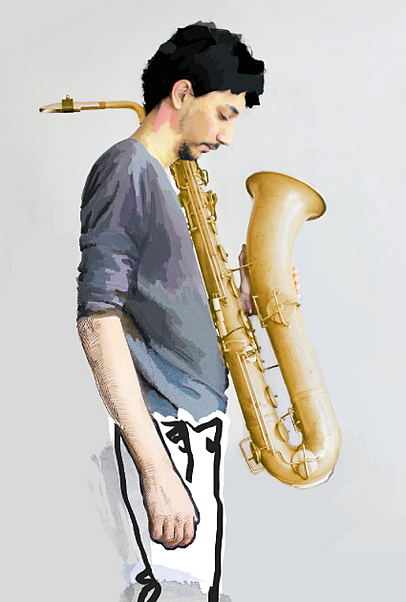
For his U.S. debut album , "Choice" (Fresh Sound New Talent - his first Lp was recorded and issued in Israel - click here), he fronts a Trio that features his brother Or Bareket (bass) and Felix Lecaros (drums).  The music the Trio creates is melodic, playful, soulful, filled with smart interactions, always involving, and, though all but one of the nine tracks are Eden's original compositions, sounds as if each member has a say in how the piece sounds.  Take the title track.  Introduced by the bass (a slowly descending line with harmonics), the melody is guided along by the excellent brush work of Lecaros (a native of Chile who also works with bassist Joe Fonda).  Bareket plays in the sax's mid-to-higher range, creating a solo that has allusions to the work of Sonny Rollins and Gerry Mulligan.  "Arguing With Myself" is a forceful and funky piece in which the saxophone and bass plays phrases that wrap around each other and sometimes overlap.  During the sax solo, the bassist and drummer lock into a funky beat that really drives the piece forward.  One of the prettier pieces, "The Last One", has a most delicate melody.  The musicians allow the song to unfold slowly, never pushing but letting the music flow. The saxophonist plays throughout yet this always sounds like an ensemble piece. Bassist Bareket, who also works with Ari Hoenig as well with pianist Jean-Michel Pilc and the 3 Cohens, has a lovely sound (well recorded by Luis BacquĆ© who also mixed and mastered the recording in his Roselle, New Jersey, studios) - his work is stunning throughout. The one non-original is Peter Gabriel's "Don't Give Up", a beautiful melody that the Trio plays with great delicacy and fire (especially the saxophonist).  There is also a subtle chorus of baritone saxes  about 2/3rds of the way through the 7-minute song.

art by Christine Cha
Though the baritone saxophone is often thought of as a foundational instrument in a big band, musicians such as Harry Carney (from the Duke Ellington Band), Joe Temperley (long-time member of the Lincoln Center Jazz Orchestra who passed a few weeks ago), Gary Smulyan, the afore-mentioned Mr. Mulligan, Claire Daly, and a few others have proven that the big reed can be just as musical as a tenor, alto, or soprano sax.  Eden Bareket is a very musical player, comfortable in the mid and upper ranges of his chosen instrument and not afraid to play softly.  And, he can also belt it out when the music calls for it.  "Choice" is a delightful musical adventure, the work of three musicians who are tuned in to the music and into each other. Give this one listen and you'll want to return time and again.

For more information, go to www.edenbareket.com.

Here's the Trio in action from a 2014 live-in-studio date with the song that opens the CD:

Saturday, May 21, 2016

Such Sweet Thunder

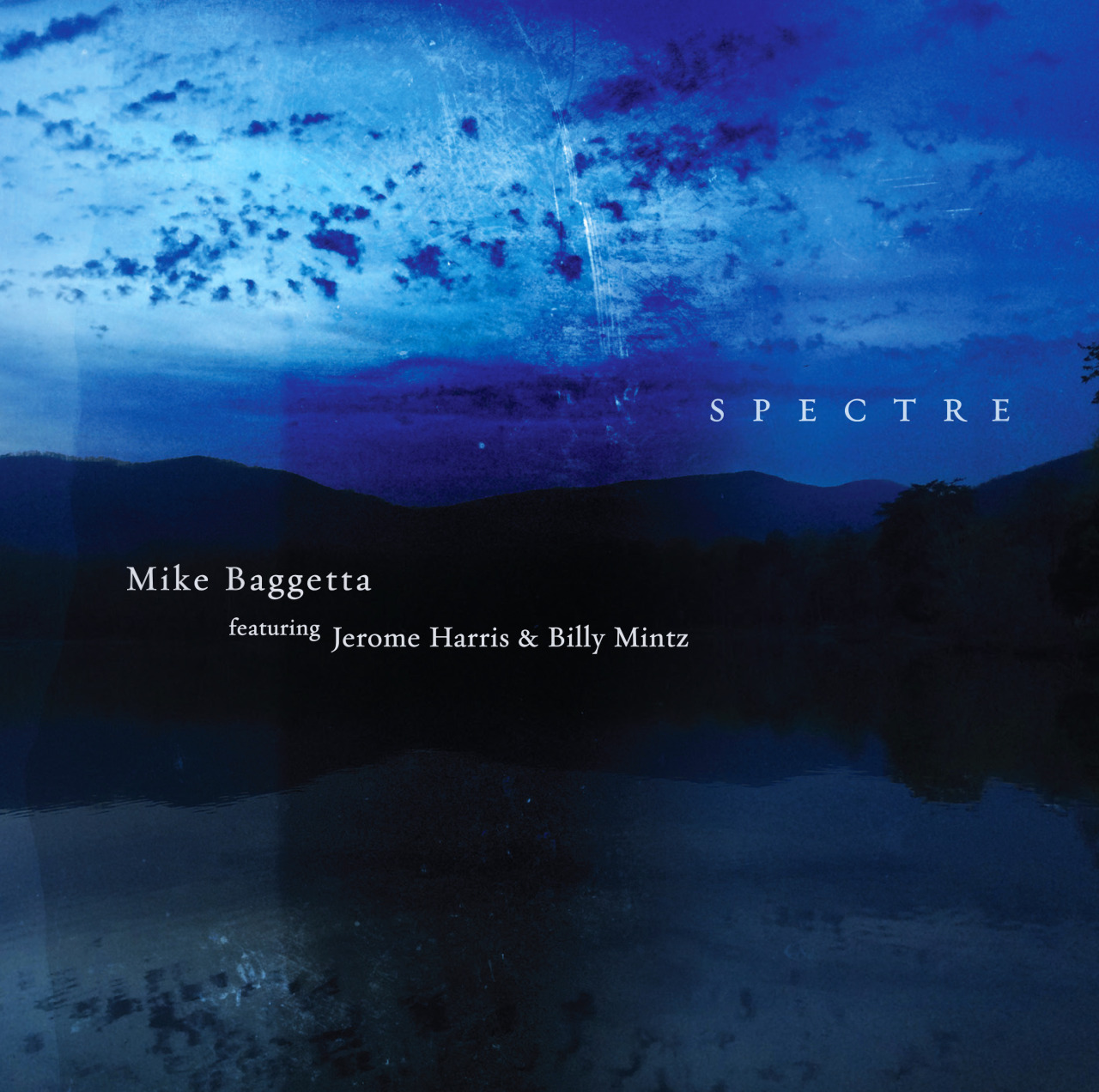
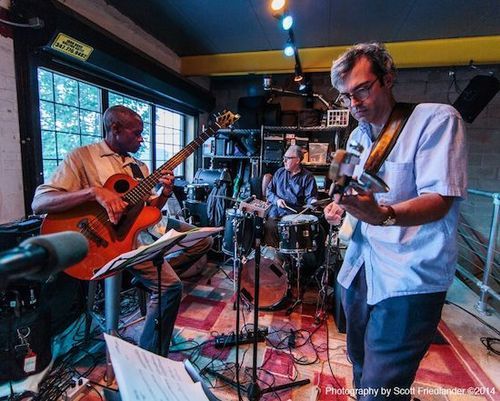
Having seen guitarist Mike Baggetta play in a solo setting, duo with trumpeter Kris Tiner in their TIN/BAG ensemble, and in his long-running quartet with saxophonist Jason Rigby, drummer George Schuller, and bassist Eivind Opsvik and Cameron Brown, I was excited to see "Spectre" (Fresh Sound New Talent) arrive as a trio date.  With the acoustic bass guitar sounds of Jerome Harris, the drum work of Billy Mintz, and the leader's guitars plus live processing, one would expect this music to go in many directions, and it certainly does. Five of the nine tracks are Baggetta originals, there is one track credited to all three ("Second Prelude", the opening cut), a heavy-metal inspired cut, "Nasty" composed by Mintz, Wayne Walker and Webb Pierce's country classic "Leavin' On Your Mind" (a big hit for Loretta Lynn in 1963), and Ornette Coleman's "War Orphans" (with versions recorded by Paul Motian, Bobo Stenson, and Charlie Haden's Liberation Music Orchestra.)

With the exception of the afore-mentioned "Nasty" and the guitar solo on Baggetta's "The Only Blues", this music is often quiet, filled with pauses and silences, the three musicians interacting in the studio having a conversation that draws the listener in. A piece such as "Passage", a Baggetta original that stretches out for over 10 minutes, the looping guitar lines, the wonderful melodic work of Harris and Mintz's splendid brushes, keeps one involved all the way through.  The first few times, you wonder where it's going; when you return again, listen closely to how this music moves, how each player is important to the direction and the sound, and how just how well the guitarist integrates the electronics.

downtownmusic.net
Don't confuse softer volume with lack of intensity when listening to this trio.  Baggetta's other-worldly sounds, with phrases that may remind some of the "bent" country sounds of Bill Frisell or the expressive Jeff Beck, blend well with the musicality of Harris and colorings of Mintz.  The three-part title suite sounds improvised, as does the majority of the album, but when you return to the music, a logic and sense of purpose appears.  The album closes with the Ornette Coleman work, the guitarist alone with looping, creating a stark yet emotionally rich atmosphere that makes "War Orphans" all the more poignant.

The dark blues of the album cover are a good signpost as to what to expect when one listens to "Spectre." There is a spaciousness to the music that one often feels as if he were standing on a mountain top surveying the universe.  Mike Baggetta turned to fellow guitarist David Torn for the mastering; his sense of sonic landscapes influences the project as each participant's sound is given equal weight as one falls under the spell of this music.  Dig in, dig deeply, and you will be moved, challenged, and ultimately satisfied.

For more information, go to mikebaggetta.com.

Here's a taste:

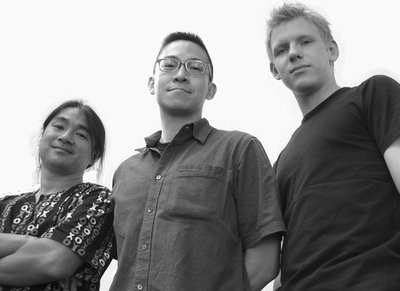
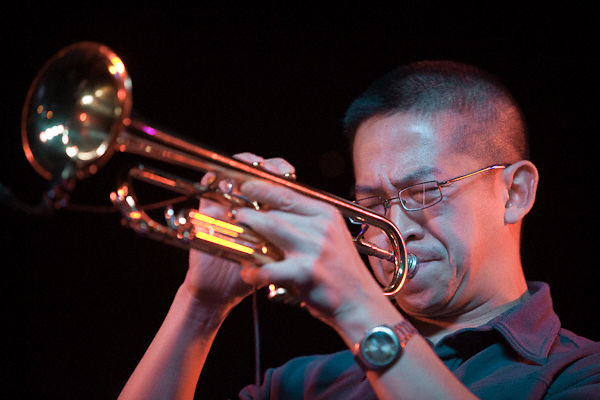
As a young person growing up in the Seattle, WA, area, trumpeter and composer Cuong Vu was greatly influenced by guitarist Pat Metheny. Vu spent several years in the early 2000s touring and recording with the guitarist's band. He has also worked with pianist Myra Melford, saxophonist Chris Speed, guitarist Joel Harrison and vocalist Laurie Anderson (among others). As a leader, Vu has recorded several albums for Knitting Factory and ArtistShare plus his Vu-Tet album on Origin Records. He's been working with the rhythm section of Stomu Takeishi (electric bass) and Ted Poor (drums) for over a decade (and three recordings), musicians who give as good as they get and more.

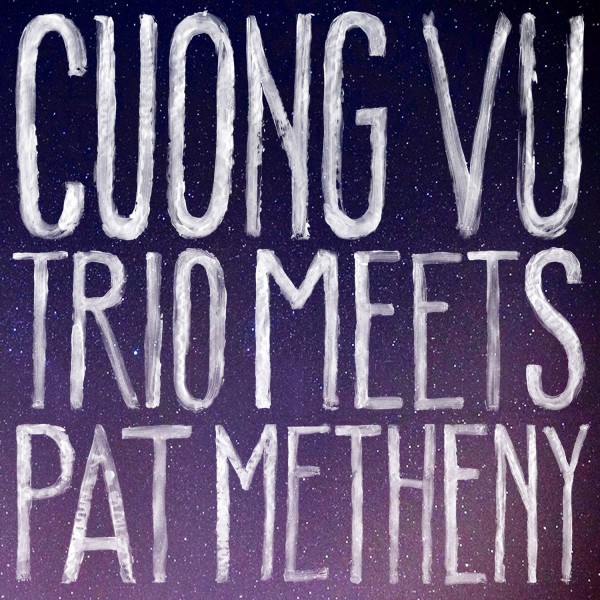
"Cuong Vu Trio Meets Pat Metheny" (Nonesuch Records) is a bit of a misnomer. This project does not feel like a "jam session"; instead, the seven tracks are a group effort.  Takeishi's fundamental bass lines, Poor's thrashing drums, Vu's forceful trumpet, and Methany's powerful guitar work seem like a natural fit. The program starts quietly, "Acid Kiss" arriving on a soft trumpet melody then slowly and steadily picks up in intensity, Vu's searing sound underpinned by squealing guitar, until the music seems to explode. Right near the end, the trumpet and guitar blend so closely the two musicians sound like one. There's plenty of fire on "Not Crazy (Just Giddy Upping)" with its post-modern electric/electronic bop.  Vu's trumpet solo moves up and down, in and out, reaching for sounds in the manner of the late Kenny Wheeler (especially reaching reaching for non-melodic sounds.)

If you have followed Pat Metheny's music and career over the past 40+ years, you know how much he likes to experiment with sounds and textures.  His brass-like sounds on songs such as "Let's Get Back" or his wailing solo on "Tiny Little Pieces", the latter over the rampaging rhythm section, prove he's not rating on his laurels.  On the latter track, his feedback and loops play right into Vu's coarse, raspy, trumpet sound, as if they were inside each other's minds.  Metheny gets bluesy and references John McLaughlin during "Telescope" (his composition), moving from supple melodic runs to roaring flurries of notes.  Both he and Vu take it down a few notches for the handsome "Seeds of Doubt" the guitar flowing atop Poor's active drums and cymbals and Takeishi's spot-on counterpoint.

There are moments on "Cuong Vu Trio Meets Pat Metheny" when the listener is reminded of electric Miles Davis and how that trumpeter, especially in the live setting, really pushed his band to go further with the music.  Then, there are cuts such as "Tune Blues" (composed by saxophonist Andrew D'Angelo), where the quartet swings hard but with a bluesy flair, electronics aside (save for Metheny).  The music is a bit off-center, Poor pounding away with Takeishi keeps the rhythm moving forward.  You should actually listen to this recording several times in a row start to finish, concentrating on different musicians each time.  When you can stand back and let the sound fill the house, your room, or the car, even your headphones, this music has the power to take you far beyond the ordinary.

For more information, go to www.cuongvu.com.

Thursday, May 19, 2016

Posi-Tone: a Double Dose of Dease + Spike's Enlightened Music

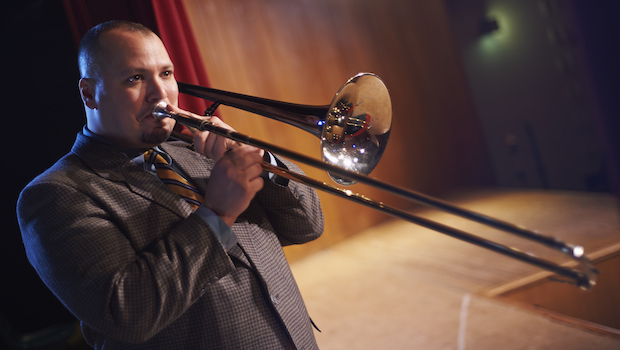
Michael Dease, trombonist, composer, arranger, educator, and a native of Georgia, has had quite the busy life since being accepted into the first class of jazz students at The Juilliard School in New York City.  He has toured, performed or recorded with the likes of Roy Hargrove, Christian McBride, Renee Rosnes, The Heath Brothers, and so many others.

In the past nine months, he's released two new recordings for Posi-Tone Records, his second and third for the Los Angeles based label (his first was the delightful big band date titled "Relentless.")  "Decisions" is a quintet date featuring the talents of Tim Green (alto saxophone on five tracks), Glenn Zaleski (piano), Rodney Whitaker (bass) and Ulysses Owens (drums), all leaders in their own right. The program is a delightful mix of seven originals and three "standards."  Several of the pieces have political overtones in their titles including the handsome ballads "Trayvon" and Bernard Ighner's "Everything Must Change."  The majority of the album swings with glee, from the shuffling opener "Grove's Grooves" to the funky "Jason's Gonna Get Ya" to the bluesy "Gorgeous Gwen" ( the blend of trombone and sax on the melody has a tinge of The Jazz Crusaders).  Throughout, Owens and Whitaker keep the front line on there toes without forcing the issues while Zaleski impresses with both his support and his excellent solos.  Dease has a such a attractive tone, even buttery at times, and his solos are so smart.  He navigates through the rhythm section such lyrical composure on the Harry Warren/Joe Young classic "You're My Everything" and dances with delight through "The Big D."   Green adds much on his appearances, the highlights being the expansive solo on "Right Place Wrong Time" and his high-flying turn through "Grove's Grooves."

"Decisions" is music that asks questions while reminding listeners of the joys of coming together for creative endeavors.  Give the album several listens and the music will insinuate itself in your mind and soul - can't ask for more than that.

The brand new Dease disk, "Father Figure", not only casts the trombonist in the role of leader but also mentor.  He, Glenn Zaleski (a young pro) and Behn Gillece (vibraphone) are the veterans in an ensemble that also features bassist Endea Owens, drummer Luther Allison plus alto saxophonists Markus Howell and Immanuel Wilkins.  Ms. Owens and Mr. Allison make for an impressive rhythm section throughout, her active lines not just supporting but also offering counterpoint while his cymbal work is exemplary as are his choices of when to "push." Howell appears on 6 of the 11 tracks; he has a bright sound and many of his phrases joyfully dance above the rhythm section.  Wilkins, still in his teens, seems to have a more supportive role on his 4 appearances but does get off a raucous solo on the opener "Church of the Good Hustler." Mr. Gillece appears on most of the tracks and his vibes sound mesh nicely with the different lineups on the disk. His rippling sound is a highlight on Dease's "Brooklyn", named for both the borough in which his family lives and also for his baby daughter.

There are numerous highlights throughout, among them the playful "Marian The Librarian" (from Meredith Wilson's "The Music Man").  Dease and Zaleski caress the melody as the rhythm section dances delightfully in support. That quartet return to the Broadway and Hollywood hit for a sweet turn through "Till There Was You", the melody lovingly played on trombone and followed by a jaunty solo.  Michael Howell's "The Pursuit for Inspiration" is a medium-tempo ballad with Dease and Howell playing the melody - the young alto saxophonist plays a fine, assured, solo while Ms. Owens' counterpoint stands out.  "Annette's For Sure", from the pen of trumpeter Claudio Roditi, is a sweet romp with strong solos from the leader, Zaleski, and Howell. The quintet (with Gillece and Howell but minus Zaleski) visit the blues on "Riff Raff", a sweetly-played tune from trombonist Grachan Moncur III with excellent solos all around.  Gillece takes his over the rhythm section only and it really shines.  The title track closes the album on a bop-ish note with the leader creating a snappy melody and a sparkling solo (including a sneaky quote from "Parisian Thoroughfare" at the onset.) Ms. Owens take a short but excellent break before Zaleski shows off his Bud Powell-like chops.

With "Father Figure", Michael Dease shines the spotlight on a fine group of musicians, several of whom he has worked with during his tenure on the faculty of Michigan State University. He's generous with solo time for the members of the ensemble but don't lose of the sight of the fact that he himself is a fine soloist, often with a most handsome tone. This music is a delightful way to spend the day.

For more information, go to www.michaeldease.com.

Here's a video introduction to the CD and to Michael Dease as a musician and human being:


Pianist and composer Spike Wilner, a native of Manhattan, may be best known for his "night job", manager of both Smalls Jazz Club and its next-door neighbor, Mezzrow.  He's also quite an accomplished pianist and band leader; "Koan" is his 10th album as a leader and 3rd for the Posi-Tone label.  The CD, like his previous release, "La Tendresse", is a trio date, this time with Tyler Mitchell (bass) and Anthony Pinciotti (drums).  The 12-song program features excellent originals, jazz classics (including two compositions by Duke Ellington) and a pair of standards.

One can hear from the get-go that this is an ensemble who have spent a good deal of time working together and listening to each other.  When they "swing", as they do with a vengeance on Tadd Dameron's "Hot House" or gently on Wilner's "Iceberg Slim", the three musicians do so in service of the melody and with the joy of improvisation.  The Ellington works, 1940's "Warm Valley" (revived on Duke's trio date with Max Roach and Charles Mingus) and 1938's "Gypsy Without a Song", have such expansive melodies, the former with its gentle melody that stretches over several verses and the latter with a Latin tinge and gentle swing.  One of the more experimental works is the leader's "Monkey Mind", which starts gently but Wilner begins adding sheets of notes over chattering percussion and intermittent bass lines.

The final three tracks bring the session to a close on quite a high note. "Young at Heart" (the melody composed by Johnny Richards) opens quietly with Wilner playing the melody slowly (his left hand sounds, early on, like Vince Guaraldi's left hand "Cast Your Fate to the Wind"). After the rhythm section enters, the energy slowly picks up but the pianist's solo is a series of variations on that melody.  Next is the trio's impressive exploration of Ornette Coleman's "Lonely Woman" (certainly the late saxophonist and composer's most oft-recorded work.)  Wilner's left hand, along with Mitchell's bass lines, not only really swing but there are moments, especially after the bass solo, when the music has a folk music feel. The inventive nature of the trio's interactions push the piece forward right up to the drum solo and, after that, it's back to the theme.  The album closes with "Blues For the Common Man", a Wilner original that takes its theme from Aaron Copeland's famous "Fanfare...."  After a formal opening with Copeland's melody, the piece drops into a slow blues a la Percy Mayfield.  The pace picks up several notches during the piano solo that juxtaposes familiar phrases with long, flowing, single-note runs.  Right before the close, the trio slows down, Wilner takes more of a gospel tack (big, bold, chords) and the music and come to a satisfying close.

"Koan", as a musical meditation, works well in the early morning and late at night, windows open, the sounds of the outside either waking up and quietly disappearing.  Spike Wilner has such a creative  mind, teasing idea out if songs one might think have been wrung dry over the years.  This is a great program to enjoy from start-to-finish and I heartily recommend that you do.

For more information, go to www.spikewilner.com.

Here's Spike Wilner in his home setting with Anthony Pinciotti and Tyler Mitchell from March of this year:


<

Wednesday, May 18, 2016

Piano: The Environment External & Internal

Since his recording debut in 2006 with reed master Dave Liebman ("Vienna Dialogues"), pianist and composer Bobby Avey has built quite an impressive resumĆ©.  He won the Thelonious Monk Composition in 2011, just months after releasing his first CD as a leader. Also in 2011, he won a grant from Chamber Music America to travel to Haiti to research and record a Vodou Ceremony.  The upshot of that journey was the brilliant collection of pieces that make up the 2014 Whirlwind Recording "Authority Melts From Me."  He's also recorded a set of solo pieces recorded after "Authority.." but released before it on a CD titled "Be Not So Long to Speak." Avey now tours with Liebman's Expansions band and subs for Matt Mitchell in Rudresh Mahanthappa's Bird Calls.

"Inhuman Wilderness" is his new album.  Issued on pianist Marc Copland's InnerVoiceJazz label, the 8 tracks, composed by Avey, is  his creative reaction to how man treats his fellow man as well as how man ignores environmental warnings.  Whereas he does not use the album jacket or his website to voice his feelings, it comes out in the powerful music on the CD.  Featuring his long-time rhythm section of Thomson Kneeland (bass) and Jordan Perlson (drums) plus John O'Gallagher (alto saxophone on four tracks), there is such an urgency in this material that it can not be ignored.  Perlson's chattering drums leads off the first cut "Countless Voices of Unknown People" - the music takes a while to build but then the "alarming" sounds of the piano using about the hip hop beat take over, circular phrases repeated over and over, that the listener is on edge.

O'Gallagher join the fray for "Fall Not a Tear", his insistent alto sax rising high above the powerful rhythms created by the trio.  Their shifting rhythms also have a nervous quality that dissipate in the middle of the piece as the music gets introspective before Avey joins in an interaction with Kneeland and then Perlson.  The roiling left hand and rampaging drums that open "Land Theft"give way to the bowed bass, splashy high hat and ominous low note and then to the powerful attack of Perlson; it's all done in 102 seconds but not before stunning the listener.

The solo piano track, "Rent The Sky", is a dissonant ballad that starts quietly, much like a storm building on a muggy summer afternoon.  Soon, the tolling chords begin to pierce the speakers, the rumbling bass notes creating a thunder-like foundation.  The storm rolls through quickly, the music slows and fades to silence which, dramatically, lasts for nearly 20 seconds.

It is hard not to highlight each track on "Inhuman Wilderness" as each one carries such strength. Even the title cut, an extremely quiet excursion for quartet, has power as if one was walking late at night after a tornado has laid waste to his neighborhood.  Does the pianist/composer have hope for the world?   The music of the final track, "Composure Must Be Rare", is soft nearly all the way through before rising to a powerful peak, only to drop down to cymbal sounding over a piano note. The ominous chords have disappeared, the saxophone is less strident and we land, gently, far from the discontent of the opening track.  Dramatic music for a dramatic time, challenging the listener to take action - how impressive. Bobby Avey has been an impressive musician since his first recordings and he is quickly maturing into a major force on the contemporary music stage.

For more information, go to www.bobbyavey.com.  The CD will be released on June 24 2016.

Here's the opening track:


Pianist Luis Perdomo, a native of Venezuela, has built quite a career since moving to the United States in 1993.  He's toured regularly as a member of Miguel Zenon's Quartet and Ravi Coltane's ensemble, recorded with guitarist David Gilmore, saxophonist Jon Irabagon, percussionist Ray Barretto, and a slew of others.  He's recorded seven CDs as the leader of various-sized ensembles.  His 8th album, "Montage" (Hot Tone Music), is his first solo recording, a vivid representation of his technique, his compositional and interpretive skills plus his understanding of the history of modern music.

The 14 tracks on the disk are spot evenly between originals - five of which are part of a series of "Montages" - and seven interpretations. The latter group includes "Monk's Dream" in all of its blues-drenched glory but with a hint of Leonard Bernstein in the chords and Art Tatum in the left hand.  It's always fun to hear Stanley Cowell's "Cal Massey", a tune with such a fine melody and room for expansive solos such as the one Perdomo creates in three minutes (love the boogie-woogie behind the theme!) The romantic ballad "Si Te Contara", from the pen of Cuban composer FĆ©lix Reina Altuna (1921-1998) blends a Latin tinge with a handsome melody that displays the influence of Irving Berlin's "Lets Face The Music and Dance." The playful take on "La Revuelta de Don Fulgencio" (composed by Austrian-born Venezuelan-based composer Gerry Weil) is a tour-de-force, filled with powerful left hand runs and dancing phrases from the right.  Perdomo refashions "Mambo Mongo", a piece composed for percussionist Mongo Santamaria by William Allen, concentrating on the melody and replacing the "mambo" beat with a flowing bass line.  What emerges is a lovely and emotional song.

Nick Carter photo
As stated, five of the originals bear the name "Montages" and have the subtitles of "Fleeing", "Sleepwalker", "Angst", "Air", and "The Ascent." These are among the most "poetic" tracks in that the titles refer to the action in the music. "Fleeing" has a rapid-fire running rhythm line while "Sleepwalker" is more deliberate, as if the pianist was carefully walking through a dark room in search of a melody.  They are fairly short (two over 3 minutes, the rest under 2:08) but hardly slight.  The other two Perdomo-penned pieces include the lovely medium-tempo ballad "Amani" which shows the influence of Fred Hersch in the melody and how the pianist develops the solo, expanding outward from the "foundation." The other original, "The Boundary Law" is also the longest (6:52) and also builds up from a strong foundation of a flowing circular bass line.  Then, the music slows down while Perdomo explores the possibilities in the melody. IT'd easy for the listener to get lost in the performance, the passion and emotion, the rolling melodic phrases, and ringing high notes.

"Montage" is a album filled with special moments, passages of piano that take your breath away. Unlike the solo piano explorations of Keith Jarrett, which usually unfold over long periods of time allowing the listener to fall into a meditative state, the music created by Luis Perdomo is often succinct, with melodies that grab your attention from the first note. This music - released on  the label owned by his wife, bassist and composer Mimi Jones - is most certainly a treat.

For more information, go to www.luisperdomojazz.com.

Here's the pianist in a solo setting from 2012: