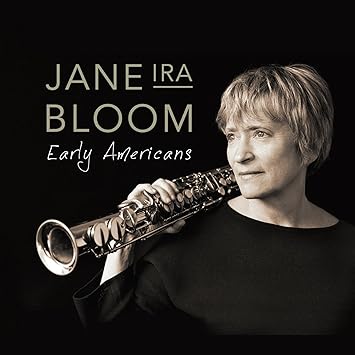
In a career that has spanned over 3 decades, 15 albums, numerous collaborations with musicians from around the world, dance troupes and even the National Aeronautics and Space Administration (NASA), soprano saxophonist and composer Jane Ira Bloom has never recorded a trio album. With the release of "Early Americans" (Outline Records), she can cross that accomplishment off her carer bucket list. With her latest associates (and long-time friends), drummer Bobby Previte (he has appeared on 7 of Ms. Bloom's recordings) and bassist Mark Helias (this is his third), she has created a program of 12 originals plus a stunning solo reading of Leonard Bernstein's "Somewhere."
Kelly Davidson
The album opens with "Song Patrol", a rhythmic adventure with a handsome melody. First, the listener notices how the drums and bass immediately lock not the rhythms then the lovely soprano sax enters with the melody. Ms. Bloom's tone, unlike any other soprano saxophonist (that's a compliment), is creamy, husky at times but always with a vocal quality. "Nearly", a tribute to the late trumpeter Kenny Wheeler, is an attractive ballad, with the echo of the saxophonist often filling the silence between phrases. There's a West African feel to the exciting "Hips & Sticks", Previte really dancing while Helias moves his melodic accompaniment around the bass. Listen to the percussive quality of Ms. Bloom's playing, intimating a flute or bird song. Can't miss the James Brown funkiness of "Rhyme or Rhythm" as the rhythm section locks into the beat while Ms. Bloom dances atop the infectious sounds, her electronically altered sound casting a spell. Electronics reappear on "Big Bill" a piece that just rocks out with the soprano saxophone darting like a sparrow over the bouncy bass lines and thumping drums. The ending will make you chuckle.
John Dolan
The program includes several lovely ballads besides the two solo pieces. "Mind Gray River" is a powerful, impressionistic, work, riding on the strummed bass chords and thumping drums/splashing cymbals. The interplay of sound and silence, bowed bass and clicking percussion, and a blend of long and short phrases from the saxophone lends an abstract beauty to "Say More." The stunning bass work of Helias on "Other Eyes", a duet adventure with Ms. Bloom, is simple, direct and ever-so-melodic. The soprano melody is also direct yet with a dream-like quality.
"Early Americans" is a joy from beginning to end. It's fun, melodic, rhythmical, adventurous, emotionally satisfying, and, at times, quite moving. Jane Ira Bloom continues to search the worlds around her, above and inside her to create music that resonates long after the sounds fade. Few musicians are comfortable taking the chances that she has throughout her career - her contemporaries such as Dave Douglas, her long-time friend Fred Hersch, Vijay Iyer, and Henry Threadgill come to mind. Even fewer have the emotional depth she plumbs through her music. Find this album; listen to it over and over until your soul is satisfied.
Here's a track to whet your appetite:
On the surface, bringing together the talents of David Murray (tenor saxophone, bass clarinet), Geri Allen (piano) and Terri Lyne Carrington (drums) may seem a bit far-fetched but actually makes great sense. Murray, now in his 4th decade as a musician, has recorded over 130 albums and still seems as young as he did when he joined the World Saxophone Quartet in the late 1970s. Ms. Allen recorded her debut as a leader in 1984, having grown up in Detroit, MI, and studying at Howard University, and going on to be a major voice on the contemporary scene. Ms. Carrington also began her career in the 1980s going on to play with Wayne Shorter, Dianne Reeves, Steve Coleman, and Herbie Hancock (among others) - she's also has a number of critically acclaimed albums and won three GRAMMYs.
"Perfection" (Motéma Music) is their first album together and comes mighty close to living up to its name. The song that gives the recording the name is a previously-unreleased transcription of an Ornette Coleman solo from the early 1960s that trumpeter Bobby Bradford transcribed and later gave to Murray. It's the only track with extra musicians - bassist Charnett Moffett, trombonist Craig Harris, and trumpeter Wallace Roney, Jr. - and is a high-energy romp with solos all around.
Given that both Murray and Ms. Allen are such individualists and powerful soloists, it's important to note how much of a group effort this album is Each member contributes original pieces - three each by Murray and Ms. Carrington while Ms. Allen provides two plus a lovely arrangement of the traditional folk tune "Barbara Allen." The pianist first heard that song in rehearsal with bassist Charlie Haden and, since it's her mother's name, she chose to play it as a tribute to both the bassist and her parent. Ms. Carrington's "Geri-Rigged" is a high-powered song that showcases how well the drummer composes and interacts within the ensemble. She and the saxophonist take off at one point, reminiscent of how John Coltrane and Elvin Jones used to duet. Her "Samsara (for Wayne)" is a lovely ballad tribute to Wayne Shorter, featuring fine solos from both Ms. Allen and Murray (who always sounds like himself). Here, Murray's tone is deeper, filled with emotion. The saxophonist composed "The David, Geri & Terri Show", a rhythmic jaunt with exciting solos from all and an especially fiery exchange between Ms. Allen and Mr. Murray. His "Cycles and Season" bounces between funky and straight-ahead rhythms. The trio cycles through several iterations of the theme and chorus before the saxophonist plays an impassioned solo. Ms. Carrington does a lovely tap dance on drums at the opening of and through the duration Ms. Allen's "For Fr. Peter O'Brien" with Mr. Murray on bass clarinet and the composer playing a bluesy yet dancing piano solo. The piece is dedicated to the Reverend O'Brien (1940 - 2015), the first Executive Director of the Mary Lou Williams Foundation and long-time friend of jazz.
The Murray, Allen & Carrington Power Trio is no misnomer. This album is quite powerful but not just in how the music is played but also in the emotional power of the songs and the wonderful interactions of the musicians. Let's hope this ensemble can continue to build upon its "Perfection."
Trumpeter and composer Duane Eubanks, the youngest of the three brothers from Philadelphia, PA. who have made their impact of contemporary jazz, released his Sunnyside Records debut in 2015, a sextet date titled "Things of That Particular Nature". He pared the group down to the rhythm section of Dezron Douglas (bass) and Eric McPherson (drums) and you can hear the results on "DE3: Live at Maxwell's" (Sunnyside).
What's obvious from the outset is that this is a true trio effort (even down to Jimmy and Deena Katz's cover image with the drummer in the middle - on the back, the bassist is in the middle). The leader's liner message notes the Hartford, CT. connection with both McPherson and Douglas graduates of the Jackie McLean Institute of Jazz at the University of Hartford (the bassist is a native city as well). What stands out is the terrific interactions of the trio, the thick bass sounds dancing over the active drumming while the trumpet weaves his way in and out of the spotlight. "A Slight Taste", its rhythmic melody introduced by composer Douglas while McPherson's brushes scamper over the drum kit, is a delightful romp. The slow blues of "Saturday Moanin'" (credited to all three) features a handsome trumpet melody; the deliberate pace of the piece allows the listener to hear each part and the leader's soulful solo perfectly captures the mood.
"Strokish", the longest piece in the program at 7:09, opens with an exciting three-minute drum solo, that leads into a high-powered dance for the trio. The furious "walking" bass lines and splendid drum work gives Eubanks support for a ripping solo. Douglas's melodic and percussive bass solo leads his musical partners into "Ebony Slick"; he and McPherson then set up a funky rhythm for the hard-hitting trumpet. Eubanks play the tune's theme in the horn's middle range while his solo dances through the octaves. The album's closer "Little Rock" (the composition also credited to the trio) builds up from the lovely circular bass lines into a conversation between the trumpeter and drummer that gives both the freedom to move in and away each other. There are moments near the close where the trumpet lines are fragments of melody but the bassist brings the music to a gentle (and satisfying) finish.
DE3 and co-producer Jimmy Katz set up the recording equipment in New York City's legendary Maxwell's Drum Shop, creating a sonic atmosphere like NPR's "Tiny Desk Concert." You don't hear the audience but the results are intimate, drawing the listener in, hanging on every sound. Duane Eubanks, who has worked with numerous artists from Elvin Jones to Alicia Keys, is making his mark as a leader and this new album is, arguably, his best.
A pleasingly busy weekend of music in CT including 2 fine shows at The Side Door Jazz Club in Old Lyme. On Friday (5/06), Jan & Ken welcome pianist Eldar Djangirov & his Trio. Eldar, born in the former Soviet Union but raised in Kansas City, Missouri, between playing professionally before he was a teenager. He signed to Sony Records in 2005, releasing his 3rd CD at the age of 18 (his self-released debut came out when he was just 14). A technically brilliant pianist, he has matured in a thoughtful musician with a great knowledge of many different genres. He has also worked with saxophonist J.D. Allen on two of the tenor player's Savant releases.
Not sure who's in the rhythm section but, rest assured, this music will be fiery yet with finesse (check out the video below). Doors open at 7:30 p.m. and the music starts 60 minutes later. Go to thesidedoorjazz.com for more information.
Here's Eldar's Trio in action:
On Saturday, The Side Door opens for the David Gibson Quintet. Trombonist and composer Gibson, raised in Oklahoma, has been fairly busy since moving to New York City nearly two decades ago. He's arranged, composed, and recorded with such artists as Slide Hampton, vocalist Nancy Wilson, the Dizzy Gillespie Alumni Band, Orrin Evans' Captain Black Big Band plus issued six albums as a leader, three on the Nagel-Heyer label and his most recent three on Posi-Tone Records.
His latest CD, "Boom", came out early in 2015 and he's bringing most of the group that recorded that fine session with him to Old Lyme. The rhythm sections consists of pianist Theo Hill, bassist Alex Claffey, and drummer Kush Abadey with trumpeter Freddie Hendrix joining Gibson in the all-brass front line. Everyone save for the trumpeter is featured on the recording (my review is here.)
The Quintet will play two sets commencing at 8:30 p.m. For reservations and more information, call 860-434-0886. To learn more about the trombonist, go to www.jazzbone.org.
Here's a tune from the latest CD to whet your appetite for Saturday night:
Firehouse 12 in New Haven presents drummer and composer Allison MillerBoom Tic Boom in concert Friday at 8:30 p.m. Ms. Miller, who has worked with a slew of artists including vocalist Natalie Merchant, pianist Kenny Barron, bassist Ben Allison, and organist Dr. Lonnie Smith, is on tour performing music from her album "Otis Was a Polar Bear" (The Royal Potato Family). Her third recording as a leader features an all-star cast including Kirk Knuffke (cornet), Ben Goldberg (clarinet), Jenny Scheinman (violin, vocals), Myra Melford (piano), and Todd Sickafoose (drums) and that's the ensemble coming to the Elm City (recent gigs have Gary Versace subbing for Ms. Melford.)
"Otis...", composed after the birth of the drummer's first child, is a splendid recording from start to finish. While her previous recordings had their strengths (especially the interaction of the pianist and bassist with the drummer), the new recording expands the sonic palette with the addition of cornet and clarinet. Plus, having a baby has allowed the more melodic side of Ms. Miller as a composer to be front-and-center. Not that the music doesn't swing - there are moments of great intensity - but the overall effect is one of playfulness.
Boom Tic Boom plays 2 sets, each with a separate admission charge. Go to firehouse12.com or call 203-785-0468 to find out more.
Here's a video about the making of the new album:
;
On Friday, the Hartford Jazz Society presents the great alto and soprano saxophonist Gary Bartz in concert at 7 p.m. in the Polish National Home, 60 Charter Oak Avenue in Hartford. Bart, born in Baltimore, MD, is well-known for his work with McCoy Tyner and Miles Davis plus his works as a leader of the NTU Troop and his recordings for Fantasy Records. He had a period in the mid-to-late 1970s when he had commercial success but he's been playing his brand of post-Coltrane jazz for the past 3+ decades.
Not sure who's in his touring Quartet but, most likely, guitarist Paul Bollenback will be alongside Bartz on the bandstand. Opening the concert will be the Greater Hartford Academy of Jazz Ensemble I. For more information, go to www.hartfordjazzsociety.com or call 860-242-6688.
Canadian-born bassist and composer Rich Brown has a big, thick, electric sound that has been the foundation of bands led by pianist Andy Milne, saxophonists Steve Coleman, Steve Lehman, and Rudresh Mahanthappa. "Abeng" is his second album as a leader and first with a band since he was the leader of Rinse The Algorithm in the mid-2000s. The recording features Luis Deniz (alto saxophone), Larnell Lewis (drums), Robi Botos (piano on 4 tracks, Fender Rhodes on 1), Chris Donnelly (piano on 4 tracks), Kevin Turcotte (trumpet on 2 tracks), Kelly Jefferson (tenor saxophone on 1 track) and Rosendo Chendy Leon (all percussion on "Chant of the Exiled").
From the opening track, one can hear the influences of all the bands Brown has been part of. The tricky rhythms of "Mahishmatish" has that M-Base feel of Steve Coleman while "Promessa" would sound just fine as part of Andy Milne's Dapp Theory. Yet, not all of the tracks are that easy to pin down. "Chant of the Exiled (Abeng)" moves steadily forward on Leon's percussion while the melody is handled by the alto sax and trumpet. The track never hurries; instead, the sensuous melody line is the focus. The quiet acoustic piano melody of "This Lotus Ascension" also takes its time to develop, first unaccompanied then handed over to the bass and alto sax. The music continually builds as Deniz pushes forward toward a fiery climax and, then, a quick piano interlude before returning to a re-statement of the main theme.
cashboxcanada.ca
The shimmering opening of "Parity of Esteem (An Illustration of Imbalance)" illustrates not only the handsome melody but the impressive counterpoint provided by the leader. The piece turns turbulent in the middle, roiling piano phrases over the hypnotic bass and rampaging drums doesn't let up until the alto sax returns to the melody. The final cut, "Achilles & The Tortoise", is an exciting spotlight for Deniz (a Cuban native now living in Toronto, CA) and pianist Donnelly (1/3rd of Myriad3) who are constantly pushed forward by the aggressive drums and melodic bass. In fact, Brown takes a fine solo on the second half of the piece.
"Abeng" is music that comes at the listener from multiple perspectives, from the more contemporary edges of fusion to the funk experimentations of Weather Report and Yellowjackets. One can hear the melodic influences of Jaco Pastorious and Jimmy Haslip on the sound of Rich Brown but he's no copycat. This is music that's worth your attention - then go back and find his splendid 2014 solo bass album "Between Heaviness and Here."
Last October, tenor saxophonist Noah Preminger surprised many listeners, critics, and reviewers when he self-released "Pivot: Live at the 55 Bar", an album that featured 2 tracks, both over 30 minutes, deeply steeped in the blues and the sound of Ornette Coleman (referencing the Master musician's music on Atlantic Records circa 1960). Preminger and his group - trumpeter Jason Palmer, bassist Kim Cass, and drummer Ian Froman - played with great exuberance and power. They expanded their repertoire, still using Delta blues as their touchstone, and hit the road later that year.
On the weekend of December 9 and 10, the quartet hit the stage at The Side Door Jazz Club on Old Lyme, Connecticut, (Preminger's home state) and played 4 sets on inspired music. His new CD, "Dark Was The Night, Cold Was The Ground" (self-released), is the result of that weekend, 9 tracks of impressive group play, strong solos, and fascinating arrangements. The title track opens the album ever-so-quietly, the saxophonist literally whispering the Blind Willie Johnson melody. When Palmer enters, one can hear the gospel calls inches interactions with Preminger. The rhythm section never rushes (listen for Cass's melodic counterpoint) ad the piece captures the anguish of the composer, respects his feelings, and makes the listener feel these "blues". The group takes Canned Heat's "Future Blues" (from 1970, a relatively new song in the program) and slow it down. Preminger and Palmer trade solos, never pushing too hard, leaving room for Froman's fine solo turn. Blues fans will recognize most of the songs; pieces such as the mournful "Spoonful Blues" (Charley Patton's song, not the Willie Dixon classic recorded by Howlin' Wolf and Cream) and Robert Johnson's "Love In Vain" have graceful melodies played with respect before moving onto solos that build intensity and display fiery interactions. Richard M. Jones' "Trouble in Mind" (first recorded in 1926 by Bertha "Chippie" Hill with Louis Armstrong) find the musicians digging deep, the soloists "testifying" while Cass's fundamental bass lines hold down the bottom.
Most of the tracks are ballads with the exception of the playful "I am The Heavenly Way" and Skip James's "Hard Time Killin' Floor Blues." This gospel piece, composed and originally performed by Booker T. "Bukka" White, ranges far from the melody, allowing the soloists to let loose. Palmer is quite a facile player but never substitutes technique for feeling and exploration. Froman not only supplies great support but also can play with great subtlety and, on occasion, a lot of fire. He responds to the soloists, often punctuating their phrases with well-timed snare drum rolls.The Skip James piece is quite different from the original. After a faithful reading of the melody, the rhythm section lights the fuse and the soloists let fly. Palmer and Preminger trade-off phrases as if they were being chased by that "Killin' Floor."
"Dark Was The Night, Cold Was The Ground" is steeped in the blues music that started in the Mississippi Delta and then, with the Great Black Migration of 1920-1975, moved up North to the industrial cities of the Midwest and out West to the Pacific shores. That music became "jump blues" and electric blues, rhythm 'n' blues and, eventually, rock & roll. Noah Preminger and this fine band take these expressions of sorrow, pain and faith, give them respect but also take the music into new territory. You can feel the "roots"of this music while you hear how far it's come as it continues to grow in the mind and hands of these explorers.
Here's the Quartet live at The Side Door digging into the Mississippi John Hurt tune:
2014
Trumpeter and composer Adam O'Farrill, son of composer, arranger and bandleader Arturo O'Farrill and grandson of composer, arranger and bandleader Chico O'Farrill, turns 22 years old in September of this year. He's been playing professionally since the age of 14, composing for father's Latin Jazz Orchestra plus playing in Dad's sextet, has worked with pianist Vijay Iyer, recorded with saxophonist Rudresh Mahanthappa (whose 2015 CD "Bird Calls" made many Top 10 lists), and led a band with his drummer-brother Zach O'Farrill. That band released 2 albums for the Zoho label, one in 2011 and the second in 2013. He's got a bright sound and is quite adventurous as a composer. His list of teachers include Jim Seeley, Cecil Bridgewater, and the late Laurie Frink plus several others. And, now he's just released his first recording as a leader.
"Stranger Days" (Sunnyside Records) features a band the trumpeter formed in 2014. His brother Zach is the drummer (plus he wrote the liner notes), Chad Lefkowitz-Brown plays tenor saxophone and Walter Stinson is the bassist (plus composer of two of the 10 tracks). The music might surprise some listeners in that, despite the lack of a chordal instrument (save for the occasional fill from the bassist), the program is filled with melodies, episodic compositions, and not just riffs and solos. Each musician is part of telling the story and that does not vary at any time during the album. The opening cut, "A & R Italian Eatery", sets the sonic and thematic tone of the album. The melody is well-defined by the sax and trumpet while Zach provides a gentle swing and Stinson intelligent counterpoint. There's a hint of Chick Corea in the melody, both Adam and Lefkowitz-Brown play the melody plus share the solo space. "The Stranger" follows, the longest piece (10:17) on the album. The trumpet goes it alone over the first 2+ minutes, shaping a melodic statement that finally takes shape when the bassist enters and blossoms a minute later when the the tenor plays the harmony as the drums offers a martial beat. All of a sudden, the piece falls into a groove which doesn't very long. The rhythm shifts (a martial tango) and the trumpet solo begins. It's quite enjoyable listening to how the rhythm section works beneath the solo. Before the song ends, there's a rousing tenor sax solo plus a short but powerful bass solo.
The album offers so many musical moments, surprises and adventures. Stinson's "Why We Love" has moments that illustrate how well the ensemble works together. During the trumpet solo, it seems as if the bass and drums are going in different directions, coming together for a moment and splitting apart as the soloist charts his own course. "The Cows and Their Farmer Walt" has a rhythm that sounds like Country/Polka while "Alligator Got The Blues" is a ballad that seemingly explodes for the tenor sax solo (Stinson's work is powerfully good here) that flows over the roiling drums. Hand drumming and a short bass melody lead the way into "The Courtroom", the melody shared by the trumpet and saxophone. The piece does not go where one might expect, closing on an interchange of single notes before the piece stops. There's quite a handsome melody at the onset of "Building the Metamorphosen Bridge" which dissolves into a series of interchanges between the trumpet and sax while the rhythm section toys with the beat and seems to fall apart but never really goes "free".
As someone who listens to a lot of different strains of jazz, it's a real joy to get an album that challenges your expectations and continually surprises you, especially on subsequent spins. Take an hour to dive into "Stranger Days", do that over a period of week until the music has captured your soul. The adventure is worth every minute of each hour. Adam O'Farrill is a young man with much to offer and an future that looks to be so bright. In fact, so does his brother Zach as do Walter Stinson and Chad Lefkowitz-Brown. This is such good music, don't pass it by!
The Side Door Jazz Club in Old Lyme presents the fine young pianist Christian Sands and his Trio this Friday (4/29). Sands, a native of New Haven, is a protégé of the late Dr. Billy Taylor and is currently a member of bassist Christian McBride's Trio.
Joining him will be bassist Russell Hall and drummer Jerome Jennings. Doors open at 7:30 p.m. with the band hitting the stage at 8:30.
Here's the pianist in action in 2015 (with a different rhythm section):
www.trbimg.com
On Saturday, the Door opens for saxophonist Dave Liebman's Expansions Quintet. Liebman (tenor and soprano), who first came to critical notice in the 1970s playing with Miles Davis and Elvin Jones while leading his own group Lookout Farm, has become one of the finest educators in this country as well as keeping a very busy performance schedule. This particular ensemble features the excellent pianist and composer Bobby Avey plus Matt Vashlishan (reeds), Alex Ritz (drums) and Tony Marino (drums). This group has worked together for several years, recording 2 CDs for the Whaling City Sound label. Liebman creates very interesting aural soundscapes for this band, pushing them (as they push him) to the heights of their abilities.
The first set begins at 8:30 p.m. For more information, go to thesidedoorjazz.com or call 860-434-0886.
On Friday night, Firehouse 12 in New Haven presents Clarence Penn & Penn Station. Drummer Penn, who works with the Maria Schneider Orchestra and has worked with trumpeter Dave Douglas, is one of the classiest and talented players on the contemporary scene. His quintet - Chad Leftkowitz-Brown (saxophones), Manuel Valera (piano), Rick Rosato (bass), and Chelsea Jackson (vocals) - play original music as well as pieces from Penn's latest CD, "Monk: The Lost Files" (Origin Records). This is the drummer's 4th appearance in the venue, having worked there with guitarists Joel Harrison and Adam Rogers plus pianist Aaron Goldberg.
The band will play 2 sets - 8:30 and 10 p.m. - call 203-785-0468 or go to firehouse12.com.
Here's a piece from the latest album:
Last week, I wrote about the Wesleyan University Jazz Weekend so this is just a reminder. Friday, it's the Jazz Orchestra, conducted by the weekend's honoree Jay Hoggard plus Jazz ensembles directed by Noah Baerman and Pheroan akLaff. The concert takes place at 8 p.m. in Crowell Concert Hall.
Saturday night, it's the Jay Hoggard Quintet celebrating the release of "Harlem Hieroglyphics", Professor Hoggard's fine new double CD. He'll be playing with saxophonist Rene McLean, pianist James Weidman, bassist Belden Bullock, and drummer alkali. The show starts at 8 p.m. and takes place in Crowell Concert Hall. For tickets, go to www.wesleyan.edu/cfa or call 860-685-3355.
Dave Stryker (guitar) and Steve Stagle (alto and soprano saxophones, flutes, arrangements) have played together in various combinations over the past several decades, creating their own band in the early 2000s. The Stryker/Slagle Band has issued 4 albums with a quartet lineup (2007's "Latest Outlook" added special guest Joe Lovano) - the duo's new CD, "Routes" (Strike Zone) introduces the SSB Expanded and they do so by adding John Clark (French horn), Billy Drewes (tenor saxophone, bass clarinet), Clark Gayton (trombone, tuba), and Bill O'Connell (piano, Fender Rhodes) to the dynamic rhythm section of Gerald Cannon (bass) and McClenty Hunter (drums).
This is one of those "comfortable" albums. The octet handles Slag's fine arrangements with aplomb, the nine compositions (4 each by the co-leaders plus one by Charles Mingus) leave plenty of room for solos but never overstay their welcome, and the music really does take a variety of "routes." There's the laid-back warmth of the opener, "City of Angels", an ode to Slagle's hometown that deftly uses all the voices on the opening theme before several excel solos. Mingus's "Self-Portrait in Three Colors" is a tour-de-force, with the juxtaposition of the "low" sounds of tuba, French horn, and bass clarinet to the alto sax and flute. Stryker's "Nothin' Wrong With It" utilizes soprano sax, bass clarinet and Fender Rhodes plus a driving beat to evoke the African sounds of electric Weather Report (circa "Black Market"). The interaction of Drewes (bass clarinet) and Slagle (soprano sax) is electrifying, all the while Hunter is deftly pushing the band.
Other highlights include "Great Plains", a sweet Stryker ballad with a handsome horn and reed arrangement plus fine solos from the guitarist, French horn, and alto sax supported by the quiet Rhodes and hypnotic bass and drums. There's the slinky funk of Slagel's "Fort Greene Scene" plus the bluesy title track with a melody line arranged for the guitar, brass and reeds with sweet harmonies. The album closes with "Lickety Split Lounge", steeped in the blues with a ripping guitar solo riding atop the hardy drumming and "walking" bass.
"Routes" is that kind of album you can play loud in the car or on the back porch, even a bit quieter while lounging on the couch. The Stryker/Slagle Band Expanded is a good idea that sounds great. Enjoy the journey!
Bassist, composer, arranger, and educator Alexis Cuadrado creates such fascinating music. On his previous 2 albums, he has explored the fusion of flamenco music with jazz (2011's "Noneto Ibérico") and the poetry of Federico Garcia Lorca, specifically the poetry he wrote during his visit to the United States in 1928-29 (2013's "A Lorca Soundscape"). Now the native of Barcelona turns his attention to the 21st Century writings of Melcion Mateu (also a native of Barcelona) and Rowan Ricardo Phillips (a NYC native fluent in Catalan); both are featured on "Poètica" (Sunnyside Records) alongside Cuadrado, Miles Okazaki (guitars), Andy Milne (piano, keyboards) and Tyshawn Sorey (drums) on a program that challenges, soothes, and provokes many emotions.
allaboutjazz.com
The album contains thirteen tracks with 3 dedicated to the 3-part "Balada de Matt Sweeney" (Mateu) and 4 cuts with multiple poems. Opening with with Phillips "Song of Fulton and Gold" and its evocation of 9/11, the power of the collaboration is immediately evident. The leader leads the band in with his insistent cajón, then the powerful rhythms created by the bass, guitar, and drums push the piece forward through the lyrics to a shattering finish. "Terra Incognita" (Phillips) also contains that powerful forward motion, with Sorey's forceful drums, Okazaki's roaring guitar lines, Milne's hypnotic piano chords and the leader's fundamental bass work.
photo by Jeremy Zilar
Throughout the album, the combination of the melodies and words are often filled with tension, the different stories being told capturing one's attention. "..Matt Sweeney" (Mateu) spreads over nearly 13 minutes with different rhythms, several solos, and the poet's voice, sometimes dripping with sarcasm, sometimes anger, even with genuine wonder, with "Pt III" sung in both Spanish and English. Mateu's gravely intro to "What Rose Is/Pamelia/ Cornelia St Café" sets the tone for the impressionistic images of a man fascinated with an older woman. In the middle of the piece, there's a long and powerful guitar solo.
The hypnotic melodies, the circular poems, the amazing interaction of voice and musicians, the multitude of sounds from the guitars of Miles Okazaki and keyboards of Andy Milne, the percussion barrage of Tyshawn Sorey, the two different narrators with their poems of the ever-shifting New York City, landscapes (physical and emotional), all that plus the arrangements by composer Alexis Cuadrado make this new project spring to life. The more you listen, the more you can hear how the different come together and complement each other. Part recital, part "poetry slam", often exciting, and always involving, "Poètica" shines.
Here's the ensemble in action from 2014, with both Rowan Ricardo Phillips and Melcion Mateu involved:
Since 2009, drummer, composer, and arranger Rob Garcia has led a most interesting quartet based around tenor saxophonist Noah Preminger, pianist Dan Tepfer, and a rotation of bass players (Joe Martin, John Hébert, and Chris Lightcap). For his 4th album for BJU Records, "Finding Love in an Oligarchy on a Dying Planet", Garcia turns his attention to issues that affect our daily lives, doing so with a stellar band including Preminger, bassist Masa Kamaguchi, and pianist Gary Versace plus tenor saxophonist Joe Lovano (3 tracks), vocalist Kate McGarry (2 tracks), and actor Brendan Burke (spoken word on 1 track).
robgarciamusic.com
Garcia's compositions take on such topics as gun control ("Guns Make Killing Easy"), global climate change ("Greenland Is Turning Green"), the current politic climate ("Terror, Fear, and Media"), and wars ("Johnny Has Gone for a Soldier"), doing so in the manner of Charles Mingus and Sonny Rollins; the titles make you think while the music pulls you in. "Greenland.." features both Lovano and Preminger on tenor sax playing the theme in harmony, each going on into strong solos. Ms. McGarry joins the band (minus Preminger but plus Lovano) for "The Journey is The Destination", a swinging reminder of the arc of one's life. She also teaches about the importance of equality on "People Are Everything", this time with Preminger winding his soft tenor lines around the lyrics.
The title track jumps atop the circular piano ones, throbbing bass and forceful drums plus the lyrical tenor sax of Preminger. Since he first came on the scene, the young saxophonist has been an impressive voice and now has a blues sensibility to his phrasing (not unlike Don Byas or Archie Sheep). After a long bass solo, the saxophonist plays the plaintive melody of "Guns..." shadowed by the more colorful piano counterpoint. There is a similar setup on "Johnny...." with a strong bass intro (melody and more) from Kamaguchi before Preminger play the folk-like melody.
Ottawa Jazz Fest
"Finding Love in an Oligarchy on a Dying Planet" (a message of hope on its own) charts the continuation of Rob Garcia as a composer, arranger, bandleader, and human being. Using music and his ensemble to help him make sense of the world as well as give his listeners the opportunity to find where they fit in this program makes this a fascinating program. The music stands out, is forceful yet never strident, and is contemporary with an understanding of its myriad roots. No matter your politics, this music soars, flows, and sings.
One look at the discography of drummer and composer Donald Edwards and you see that the Louisiana native is a busy and versatile musician. He's worked and recorded with guitarist Mark Whitfield, saxophonist Wayne Escoffery, the Mingus Big Band and Orchestra, bassist Ben Wolfe, trombonist Conrad Herwig, trumpeter Alex Sipiagin, pianist Orrin Evans, and others plus he's a charter member of Opus 5.
"Prelude To Real Life" is his 4th album as a leader and 2nd for the Criss Cross label. Three of the musicians who played on 2014's "Evolution of an Influenced Mind" return - Orrin Evans (piano), Walter Smith III (tenor sax), and David Gilmore (guitar) - and are joined by bassist Luques Curtis plus guests Nicholas Payton (keyboards on three tracks), Vivian Sessoms (vocalist on three tracks) and Antoine Drye (trumpet on one track).
allaboutjazz.com
The program includes three short "sound sculptures" including the album opener "Taking Shape." Each features Payton on either Fender Rhodes, organ and/or piano. "Hop Scotch" is a funky ditty with Ms. Sessoms singing the instructions for a children's game. "King" blends keys, drums, and saxophone into a quick, raucous, hit.
The majority of the material utilizes the quintet to excellent advantage. There are 2 standards in the program, the understated but swinging rendition of Benny Golson's "Stablemates", the melody played by Gilmore and Smith III with the rhythm section dancing beneath them. Curtis, a native of Hartford, CT, takes a sweetly melodic solo before Evans, Gilmore, and the tenor saxophonist play succinct spots, all the while the leader moves deftly around his kit. A short group of solos from piano, drums and tenor sax leads the ensemble into a playful take on Thelonious Monk's "Skippy" (which is a good description of Edwards' accompaniment.) Ms. Sessoms adds her whispery yet articulate voice to Alex Sipiagin's "Way To Her", shadowed by the saxophone with counterpoint from Gilmore's vocal-like guitar phrases. She returns for the drummer's "Thought For the Day" with lyrics that touch on the various ills in society, taking a positive approach. The ensemble kicks it up several notches with the rhythm section leading the way during the fine solos (Smith III really pushes with abandon).
The music in the longer cuts all feature start melodies and strong improvisations. Longer tracks, such as "Beautiful Intuition" (8:57) and "Apple Street" (8:09), take their time to establish the melody sections, leaving room for improvisations. What stars out on initial listening is how intelligently Edwards sets up the songs from his role in the rhythm section. His intuitive playing, knowing when to push or hold back, is one of the joys of the recording. Then, listen to the soloists and realize how each has his own style (or sound, if you will); this music is not about ego or technique as much as it is about story-telling and communication.
"Prelude to Real Life" is an album to play over and over, the program never gets tiring. Donald Edwards can be a "power drummer", like Rudy Royston and Eric Harland, but his control and how he plays in different situations really stands out. Highly recommended!
After 2 albums that expanded on his Nonet ensemble, 2013's "March Sublime" (big band) and 2010's "Chamber Songs" (for Nonet and strings). trombonist, composer, and arranger Alan Ferber returns to his 9-person group with "Roots & Transitions" (Sunnyside Records). The 8 original compositions, funded by grans from Chamber Music America and the Doris Duke Charitable Foundation, are inspired by the birth of Ferber's first child (in 2013) with cellist Jody Redhage.
With an ensemble that includes his twin brother Mark (drums), Matt Clohesy (bass), Bryn Roberts (piano), Nate Radley (guitar), Charles Pillow (bass clarinet), John Ellis (tenor saxophone), Jon Gordon (alto saxophone) and either Scott Wendholt (6 tracks) or Shane Endsley (2 tracks) on trumpet), Ferber has sculpted a program that celebrates new life, creativity, the silence or hectic pace of living with a person that changes and grows every day plus trying to continue to carry on doing what a musician has to do. But don't expect squalling solos and skittery rhythms - instead, the listener moves through a series of reflections on a creative artist's ever-changing life.
Not surprisingly, the music starts on softer notes with "Quiet Confidence", an elegant melody that slowly grows from the trombonist's opening melody, adding other voices until we reach the theme, an expansion on the line one hears at the onset. The rhythm section arrives around the 2-minute mark but the music continues on its slow pace adding solos from Roberts and the leader. The pieces stops around the 7-minute mark but there's a lovely rubato coda that leads into the .63 second "Hourglass", a chorale for the reeds and brass. The pace picks up with "Clocks" (if you have ever been awakened by a baby in the middle of the night, you know how often one looks at a clock), a bit more frenetic with the melody line and the rhythm section pushing forward, often atop the hypnotic piano chords. Short but powerful solos by Endsley, Gordon, Radley, and drummer Ferber follow.
The opening stop-and-start rhythms as well as the swinging melody section easily push "Wayfarer" forward while "Flow" follows, a poly-rhythmic treat that moves stealthily as if on tip-toes with an intensity that keeps building and climaxes with an exchange between Wendholt and Radley. "Perspective" is calmer, introspective, with a slowly developing melody that opens to solos from Clohesy, Pillow, and a long, powerful, statement from John Ellis. Ferber spreads the melodic material around on "Echo Calling" with the sections and the drummer creating a complex call-and-response. The final tracks, "Cycles", builds from the playful give-and-take of muted trumpet, saxophone, and drums (Mark Ferber can really lay down the funk grooves), adding voices until the brass and reeds play the theme before Ellis plays a mighty solo. A quick return to the circular, percussive, melody with all the voices riffing. As the tempo slows, Gordon and Alan Ferber rise out of the mix for short solos before the guitar, bass, piano and drums quietly put the piece and album to bed.
Over the past decade+, Alan Ferber has created a body of music for his Nonet (and subsidiaries) that acknowledges the foundations of jazz and continues to move forward. "Roots & Transitions", his 5th CD as a leader, is mature music that swings, that tells stories, that has moments of joy and wonder, shows the strength of Ferber as a composer, arranger, and soloist. Since his Nonet debut, he has displayed the understanding of how to write to the strengths of an ensemble and the individual voices within. Each album has been a treat for the avid listener. And, now with parenthood, he's found new modes of expression.
French hornist, composer, and arranger Justin Mullens seems to be equally attracted to jazz and mythology, in particular Old English and Greek. With his 16-member Delphian Jazz Orchestra, he released 2 albums on Fresh Sound New Talent, 2003's self-titled recording with music inspired by the legend of "Beowulf" and 2009's "Tales of Pan and Eyes of Argus." For his new CD,
"The Cornucopiad" (BJU Records), his original music is based in Greek mythology plus he re-arranges 3 jazz standards plus he creates 5 "sonic portraits" with multi-tracked French horn and guitars (played by long-time associate and co-producer Pete Thompson).
Vacant Eye Photography
And, he has pared the band down to 8. Besides his French horn and Thompson's guitar, the octet features Chris Cheek (alto sax, clarinet), Peter Hess (bass clarinet), Ohad Talmor (tenor sax), Desmond White (bass), Matt Ray (piano), and Marko Djordjevic (drums). The program opens with a rousing reading of Freddie Hubbard's "Hub-tones", built on the active drums, the insistent guitar chords, and walking bass lines. Mullens takes the first solo, displaying his "bop chops" with a bow towards one of the first jazz French hornists, Julius Watkins (1921-1977). After the mini-portrait (.22 seconds) "Mr. Squeaks", Mullens' "Amalthea" (named for the goat-nymph that raised Zeus) blends a handsome melody and horn arrangement (the blend of brass, sax and bass clarinet is striking), the solo section includes a melodic turn from bassist White, the leader, and pianist Ray.
If you strictly follow the song order, you'll see that Mullens pairs each standard with an original (sometimes split by a mini-portrait. The smart arrangement of Nacio Brown's classic "You Stepped Out of a Dream" (strong solos from the leader, Thompson and Hess) is followed by Mullens' "The Goatfish" (dedicated to Amalthea's son Aegipan who grew alongside Zeus). The latter tune, with serious rock music inflections (especially from the guitar), really jumps atop the forceful drumming (funky, at times, as well) - listen closely to hear how Thompson's overdubbed guitar interacts with Ray's electric piano, subtly and tastefully. There is a lovely arrangement of John Coltrane's "Naima", replete with a handsome ensemble reading of the melody and a splendid alto sax solo from Chris Cheek. That's paired with a hard-swinging "The River Horn" (relating to the battle between Heracles and river god Achelous - in the fight, Achelous's horn is torn off and he trades Amalthea's horn, the cornucopia, for his own.) The song is much more upbeat than the story, with sparkling solos supported by a very active rhythm section.
The best way to enjoy "Cornucopiad" is to listen to the program all the way through a number of times; that's really how you hear how the various stories are connected. Justin Mullens is such a talented arranger/composer, creating music that not only illustrates the ensemble's talents but also illuminates their fine soloing, all in the service of a fascinating story
Here's the Octet in action for April 10, 2016 with Art Hirahara sitting in for pianist Matt Ray:
The modern big band often takes its cues from the music and arrangements of Bob Brookmeyer, Thad Jones, and Gil Evans. Christopher Zuar, born Long Island, New York in 1987, went to the New England Conservatory to study with Brookmeyer (1929 - 2011) and also met pianist Frank Carlberg. After graduation, he went on to study at the Manhattan School of Music with Jim McNeely (also a Brookmeyer and Jones disciple).
The debut album of the Christopher Zuar Orchestra has just been issued on Sunnyside Records. "Musings", produced by composer/ arranger Mike Holober, features 18 of the best musicians in New York City, many of whom play with or have played on albums by Maria Schneider, the Vanguard Jazz Orchestra, Alan Ferber, Joel Harrison, Darcy James Argue, and with Ryan Truesdell's Gil Evans Project. The reed section features Dave Pietro, Ben Kono, Jason Rigby, Lucas Pino, and Brian Landrus. The brass section features the trumpets and flugelhorns of Tony Padlock, Jon Owens, Mat Jodrell and Matt Holman while the trombonists include the afore-mentioned Alan Ferber, Matt McDonald, Tim Albright and Max Seigel (bass 'bone). The rhythm section is top-notch with Pete McCann (electric & acoustic guitars), Frank Carlberg (piano, Fender Rhodes), John Hébert (acoustic & electric bass), and Mark Ferber (drums). Guests include Rogerio Boccato (percussion on 3 tracks) and the wordless vocals of Joy Lawry (4 tracks). Zuar not only arranged and conducted the ensemble but also composed 7 of the 8 songs, the exception being "7 Anéis" from the pen of Egberto Gismonti.
From the opening moments of "Remembrance", one can hear that Zuar has a gift for soaring melody lines, understands the dynamics of the rhythms section, and utilizes his horns and brass wisely. The brilliance of the sound - kudos to engineer Mike Marciano and the mixing engineer Brian Montgomery - allows all the musicians to be heard. Hébert's mobile bass lines move in and around Ferber's powerful drums while Carlsberg's "foundational" piano chords and counterpoint are echoed in the brass and reeds (in the early part of the piece, Landrus's bass clarinet stands out and then is absorbed into the seas of saxophones). The appropriately-titled "Chaconne" is a lovely work with its blend of low horns and higher reeds on the melody giving way to a handsome Carlberg solo over the intelligent bass lines and splendid brush work. Soon, the rest of the ensemble filters in and theres a lovely exchange between saxes, flutes, trumpets and trombones before the piano solo continues.
What is also noticeable throughout the album is the influence of Maria Schneider's expansive arrangements, use of wordless vocals, and sweeping melodic passages. The essence of Ms. Schneider's "Buleria, Soleá Y Rumba" can be heard on Zuar's arrangement of Gismonti's "7 Aneis", down to the use of acoustic guitar and voice. The piece is brilliant, a wonderful mix of dynamic rhythms that support Jason Rigby's fiery soprano sax solo - even the horns and brass are playing "rhythm".
The exceptions are notable. The funky "Ha! (Joke's On You)", at times, resembles one of Thad Jones' piece but updated. Guitarist McCann stands out with his "wah-wah" accompaniment plus his blazing solo. Drummer Ferber, who definitely the driver of this band, gets a rollicking solo joined by the "shakers" of Boccatto and the "popping" electric bass, taking the song out on a raucous note. The drive and fire of "Vulnerable States" with its intense rhythms and shifting intensity, plus the use of Ms. Lawry's voice as the precursor to the horn arrangement, piano and alto sax solos (Ben Kono on alto), is adventurous, exciting, and rewarding. The short but lovely "Lonely Road" is a wondrous showcase for muted brass, flutes. clarinets, and Kono's handsome oboe playing.
"Musings" is quite the opening salvo for young Christopher Zuar. While one can certainly hear his various influences, one can also tell he has the intelligence and drive to continue to absorb the sounds of his mentors and make something new. This is a exciting debut that grows on the ears with each listen.
Yet another busy weekend of music at The Side Door Jazz Club in Old Lyme; this time, it starts on Friday, features a drummer who's played the venue numerous times, has a sold-out show on Saturday, and ends on Sunday with a rollicking show from a Marsalis brother.
The drummer is E.J. Strickland and he's leading his quintet Transient Beings into the venue for the first time. He formed the group in 2012 and the lineup includes vocalist Sarah Elizabeth Charles, 2 guitarists - Nir Felder and Tom Guarna - and electric bassist Rahsaan Carter. As you can see, this is an "electric" group and, judging by their videos, the music can be electrifying. Strickland's compositions reflect his philosophy and spiritual bent, with the music always pushing forward.
Doors open at 7:30 p.m. and Transient Beings play its first notes at 8:30. Call 860-434-0886 for reservations.
Check out the quintet in action:
Vocalist and pianist Karin Allyson returns to The Side Door on Saturday but the show has been sold out for a good while. Which is really no surprise as Ms. Allyson is one of the most popular and busiest performers on the scene. She's touring to support her new album, "Many a New Day" (Motema Records); the recording finds her interpreting 14 songs by Rodgers and Hammerstein in the company of pianist Kenny Barron and bassist John Pattitucci. It's quite a fine album and, perhaps, the video below will ease the pain of the sold-out gig in Old Lyme.
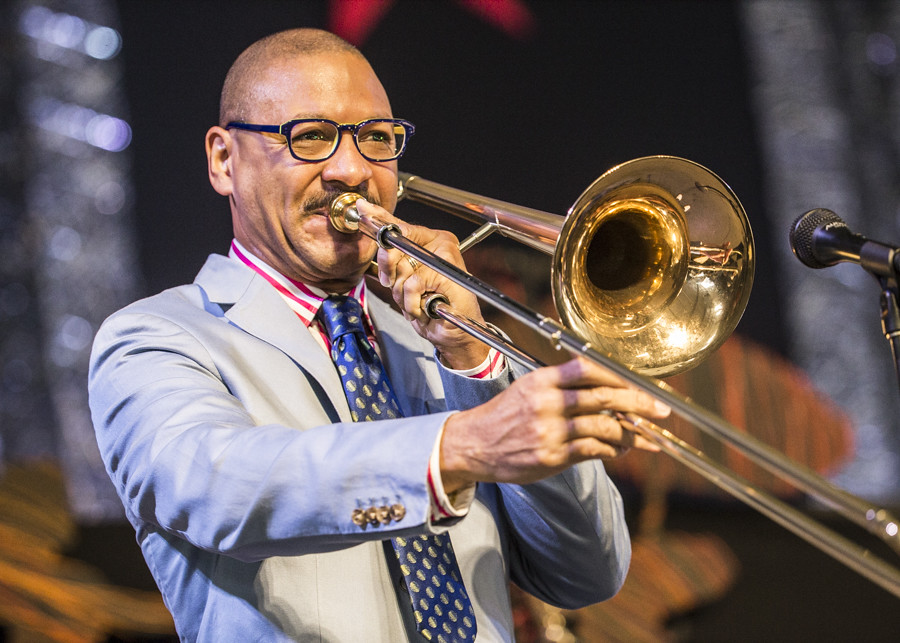
Sunday evening at 8 p.m., Jan and Ken present Delfeayo Marsalis & the 2nd Line Quintet for 2 sets of music that comes from or is inspired by New Orleans. Trombonist Marsalis, the 3rd of the Brothers who are the musicians/sons of pianist Ellis Marsalis, is best known for his production work but he's also been a touring musician and has released five Cds under his own name since 1992 (three in the last 9 years).
For his gig in Old Lyme, he's bringing the rhythm section of Reginald Veal (bass), the great Marvin "Smitty" Smith (drums) plus Roderick Paulin (saxophone) and special guest Cyrus Chestnut (piano). If that lineup doesn't make you want to get up and dance, best you check your pulse. The trombonist/leader also knows how to play sweet ballads, music from Eliington and Strayhorn and other masters of jazz.
For tickets, go to thesidedoorjazz.com or call 860-434-0886. At the website, you can check out the upcoming shows through the middle of June and make your reservations accordingly.
Here's a taste of Poppa Marsalis and his sons swinging and "Struttin'":
Firehouse 12 in New Haven continues its Spring 2016 Concert Series with a visit from bassist and composer Chris Lightcap's Bigmouth. Lightcap, who is currently in the rhythm section of both the Matt Wilson Quartet and Regina Carter's group, has had quite the busy career recording and touring with the likes of vocalist Nicki Parrott, guitarist Joe Morris, Professor Anthony Braxton, and so many others. The bassist named his quintet Bigmouth after releasing an album with that name in 2005. The personnel has remained fairly stable over the past decade with Tony Malaby and Chris Cheek (tenor saxophones), Craig Taborn (piano, organ, electric piano) and Gerald Cleaver (drums). The group's latest Clean Feed album, "Epicenter", was issued in 2015 and made many "Best Of" lists; deservedly so, as the music combines jazz and modern rock influences into a stew that blends the mesmerizing sounds of the saxes with a powerful rhythmic surge and the many keyboard colors that Taborn produces.
Bigmouth will play 2 sets - 8:30 and 10 p.m. - with separate admission to both. For reservations, go to firehouse12.com or call 203-785-0468.
Give a listen to the opening track of "Epicenter" here:
Also, I recommend you check out Jason Crane's interview with Mr. Lightcap on The Jazz Session. Click on the link up on the right of this column.
********************************************
In 1921, with World War I and the Great Influenza Pandemic of 1918-19 beginning to recede from the national memory, the musical "Shuffle Along" debuted on Broadway. With an all-Black cast, music and lyrics by Eubie Blake and Noble Sissle, relegated to a distant theater on the edge of The Great White Way, the musical soon captured the hearts of Big Apple audiences with its exuberant and wonderful melodies. Despite the fact that the show was built on racist stereotypes seen in the various Minstrel shows that been produced in the U.S. since the 1840s, the production brought Black audiences into the theater district, an area where they rarely ventured. After its 15-month run on Broadway, the show took to the road and was quite successful through 1924. The show has been revived several times and is now back on Broadway - The New York Times magazine ran a fascinating multi-media article on the show in March of this year - read it here.
Ehud Asherie has his own take on the music, producing a new solo piano CD. Appropriately titled "Shuffle Along" (Blue Heron Music), the young pianist, born in Israel but raised in Italy, explores the Blake tunes with joy and sensitivity. Several of the tunes - in particular, "I'm Just Wild About Harry" and "Love Will Find a Way" - have long been part of the jazz standard repertoire. Listening to Asherie's performances, it's easy to understand why. The melodies are so well-developed (and hummable), moving with a lilt and grace plus a joie de vivre that belies the African American situation post Reconstruction.
My suggestion is to not only see the musical on Broadway (if you can) but also listen to this delightful recording from Ehud Asherie. He's such an accomplished musician, it's obvious to hear as he dances, sways, struts, and strolls through the melodies of Eubie Blake. While a Broadway musical is often "blown up" to fill the stage, on a recording, one can revel in the rhythms, harmonies and melodies without having to watch a spectacle. What a treat!

 Posts