Over his career, now well into its 3rd decade, Ben Goldberg (clarinets) has created music has taken listeners many places, from the experimental side of klezmer to evocations of Steve Lacy. His work with Tin Hat has explored and expanded upon modern chamber music as well as the poetry of e.e. cummings. He has worked with guitarist Nels Cline exploring the music of Andrew Hill and is a member of Myra Melford's Be Bread.
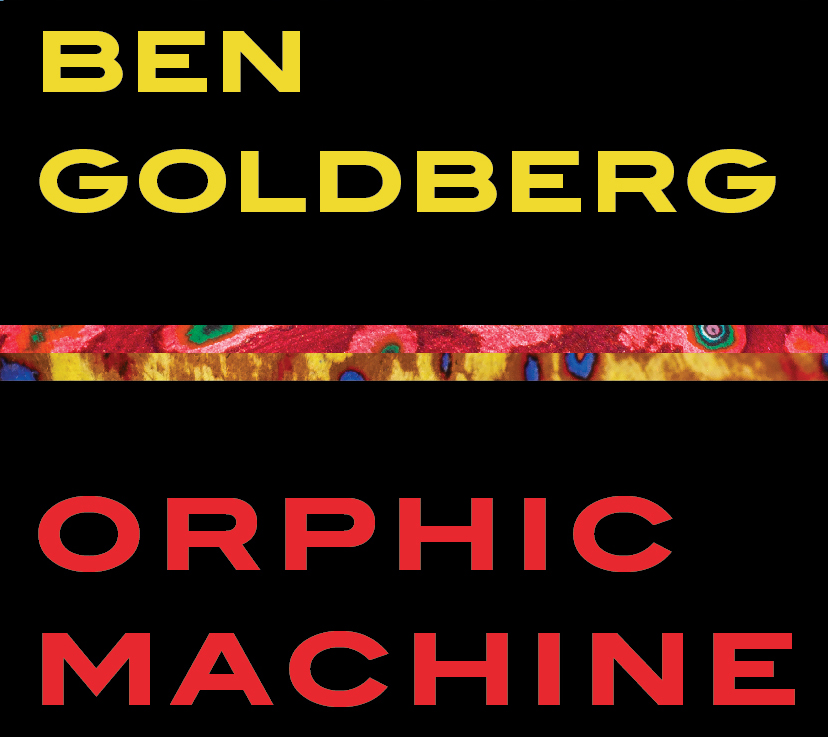
All of his associations and influences are in evidence on "Orphic Machine" (BAG), a multi-layered program of original music built upon the words of the late poet Allen Grossman (1932-2014). The poet's "lyrics" do not come from a poem but from a treatise/reflection on poetry, "Summa Lyrica" from the 1991 book "The Sighted Singer." The project, commissioned by Chamber Music America/New Jazz Works, features a nonet composed of Goldberg's associates past and present including Ms. Melford (piano), Mr. Cline, Carla Kihlstedt (violin, voice), Ron Miles (trumpet), Rob Sudduth (tenor saxophone), Kenny Wollesen (vibraphone, chimes, drums on "Bongoloid Lens"), Ches Smith (drums, vibraphone on "Bongoloid Lens"), and Greg Cohen (acoustic bass). The music has influences, ranging from The Beatles to Kurt Weill to the blues to swing to several sections that remind this listener of the music that Dick Connette created for his Last Forever projects.
What stands out from this program is how Goldberg utilizes the different voices at his disposal. This music rarely sounds cluttered (although the final track, the title cut, does "roar" for the final few minutes), each voice stands out. Ms. Kihlstedt has a soft voice and, rarely, if ever, is she lost in the mix. Most of the time, the words set the tone of the music for the piece. "Care", for instance, and the repetition of the line "I find myself in the act of care" (an ear worm of the highest order) helps to open the music, leading the nonet to a great guitar solo that really kicks hard.
There are several strictly instrumental pieces including the "cool jazz"-inspired "What Was That", the short and sweet "How To Do Things With Tears" (great muted trumpet interaction with piano, clarinet and bass) and the Kansas City blues of "Bongoloid Lens" (sounds like a Frank Zappa title). These pieces do not act as after-thoughts or interludes but serve to illustrate the poet and the composer's approach to how they create. Poetry and music can certainly be impressionistic but can also cut to the quick, exposing emotions in a visceral manner (think Allen Ginsberg's "Howl" or John Coltrane's "Birmingham"). Yes, there is a "cool" feel at times in the music found on "Orphic Machine" (check out the vibes solo on "Immortality" and the funky work beneath it by Cline, Cohen and Smith but then listen to how the band kicks into high gear as the clarinet wails and the guitar bellows) but the solos often are the fire that illuminate the heart of the artist's intent.
"Orphic Machine" is a lot to take in one sitting (nearly 76 minutes) yet if you approach it slowly (perhaps 2 or 3 cuts at a time), chances are good you'll fall under its spell. Time will allow for the words to take hold, helping you understand the intent of the poet as well as how the composer illustrates the vocal lines. Ben Goldberg has created a project that ranks among his best work, music that will resonate for years to come.
For more information, go to www.bengoldberg.net. To learn more about this project, click on the following link: youtu.be/WFbFioqojxs.
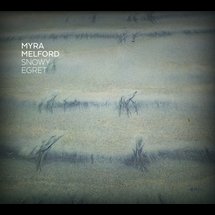
The intelligence of Myra Melford's music is found in the details, such as the way she combines disparate voices into coherent yet far-ranging musical statements. "Snowy Egret" is both the title of her new ENJA album and the quintet that plays its brilliant program. Blending the laconic yet piercing tones of Ron Miles (trumpet), the often gentle phrases of Liberty Ellman (guitar), the thick active lines of Stomu Takeishi (bass guitar) and the multi-faceted attack of Tyshawn Sorey (drums), this music looks forward yet has its antecedents in her earlier work. In the mid-to late 1990s, Ms. Melford recorded 2 albums ("The Same River Twice" and "Almost Twice") with the quintet of Dave Douglas, Erik Friedlander, Chris Speed and Michael Sarin, music as contemporary now as it was then. The lineup also refers back to Be Bread, an ensemble also with guitar, trumpet, piano, bass and drums with the addition of the clarinet of Ben Goldberg.
In the liner notes, Ms. Melford writes that "the music on this recording composed for the "new" quintet is inspired by Eduardo Galeano's "Memory of Fire" trilogy, his history of the Americas." Throughout the program, the composer stitches musical phrases from South America with blues and jazz strains of the United States. There are moments that explode with furious abandon and others that are so quiet one has to lean into the speakers. "The Kitchen" open on a fiery drum solo, moving into a short riff, then quick duo or trio interactions until a slinky melody line ignites the band, now powered by Takeishi's percussive bass lines and Sorey's propulsive approach into Ms. Melford's expansive solo. The interplay between the piano, bass and drums reaches a thunderous conclusion. The rhythmic drive of "Promised Land" is built upon a short piano figure that is turned every which way by the quintet then listen to the interplay of bass and guitar as well as the drums and piano beneath Miles's fascinating solo (there is a very short quote from "The Girl From Ipanema" right near the end). The blend of Ms.Melford's melodica and Miles's muted trumpet at the onset of "Ching Ching/For Love of Fruit" reminds me of the Gil Evans's arranged interactions between Miles Davis and the orchestra on "Sketches of Spain" but soon moves into a funky rhythm that both Sorey and Takeishi continue to stoke through Ellman's exciting solo. When you go back to listen to this track (and others), notice how much music is packed into under 6 minutes. The longest song (8:34), "The Virgin of Guadalupe", opens with solo trumpet, a deliberate and emotional melody is repeated with the addition of the piano and repeated again when the rest of the musicians enter. Slowly, the piece begins to move out, like a flower opening in summer sunlight, the trumpet darting atop the martial drumming, giving way but not totally disappearing as the guitar solo unfolds. The rhythm section begin to interact with the guitar, taking their cues from the rippling phrases. When the piano re-enters, the gentle circular melody brings the piece to a soft landing.
Ms. Melford's blues-drenched two-handed solo piano opening to "The Strawberry", the final track, seems to bring the music home to Chicago. However, when the band enters, the rhythm takes on a Brazilian feel during the trumpet solo but soon becomes "second-line"; so, perhaps, this is a reminder how New Orleans was the port-of-entry for slaves from Africa and "free" people from South America, how blues and jazz is a true fusion of all the streams flowing in and out of it and how modernity is often a fresh coat of paint on a classic structure. Therein lies the brilliance of what Myra Melford has created with Snowy Egret, music that can go in so many directions and still make you feel at home. Like the 2 recordings cited in the opening paragraph, the avid listener can find new sounds each time he or she returns to the program. And, one imagines, the journey is even sweeter heard live in concert.
For more information, go to www.myramelford.com.
Sunday, March 29, 2015
Wednesday, March 25, 2015
Yes, You Must Believe In Spring
Most people I know who are as fanatic about music as I am turn to it at times of sorrow, joy, frustration and, more often than not, to take one out of the often-mechanical routine of daily life. The following 2 CDs do just that and, delightfully so, in different manners.
Israeli-born and raised tenor saxophonist Benny Sharoni moved to the United States nearly 3 decades ago. The music he creates is steeped in the traditions of the 1950s and 60s, especially the sounds created by Art Blakey's Jazz Messengers. Yet, he is no slave to that sound as attested by the 8 tracks on his new CD, "Slant Signature" (Papaya Records). What one notices on initial listening is the sense of joy that exudes from this music. The swing starts in the rhythm section of Todd Baker (bass) and Steve Langone (drums), is bolstered by the strong piano work of Joe Barbato and abetted by the hardy guitar playing of Mike Mele. 4 of the cuts feature the bright and bluesy tones of trumpeter Jim Rotondi. The album bursts out of the gate with the sextet firing on all cylinders on the Sharoni original "Minor City." The rapid-fire melody section and solos rise and fall on the strength of Baker and Langone; solos are short but each player makes the most of their opportunity. Rotondi and Sharoni show their love of blues on Freddie Hubbard's "Down Under" and Ray Bryant's "Tonk", the latter with a most sprightly beat pushed by the excellent piano support and dancing brushes work. Surprisingly, the trumpeter does not appear on Lee Morgan's sweet ballad "Ceora" - the leader's smooth tones reflect the sound of Stan Getz, he doesn't rush his solo, opting to caress the melody and create a solo that flows easily over the gentle rhythms.
Other highlights include the title track which takes its name from a particular hard rubber mouthpiece created for saxophonists by Otto Link. The song itself celebrates the fluidity of Sharoni's playing and also features a smoking solo from guitarist Mele. The funky "Bitter Drops" has a groove out of New Orleans (hard to miss in the snappy drumming of Langone and the dancing piano work of Barbato) and one has to dig the slippery melody line played by guitar and sax.
Hard to miss the exuberance in the music of Benny Sharoni as it jumps out of the speakers into your brain (and feet as well). His passion for jazz (and, if you have ever met him, for life) is poured into the sounds he creates and leaves no place for anger or frustration - even the blues he plays will make you smile. This is not music about technique or modern fashions but "Slant Signature" has a boatload of soul. Give it a whirl. For more information about Mr. Sharoni and his music, go to www.bennysharoni.com.
Here's the effervescent "Bodega" featuring Jim Rotondi:
Alto saxophonist Angela Davis moved to the United States from her native Australia in 2008 and has steadily been building a career as a musician and educator. Her 2013 debut recording, the aptly-titled "The Art of The Melody", displayed a honey-like tone, a softer style akin to Lee Konitz and found her happily ensconced in a quartet setting. Ms. Davis's second CD, "Lady Luck" Nicholas Records) actually features 2 quartets. There's Dan Tepfer (piano), Richie Barshay (drums) and bassist Linda Oh (who also played on the first disk) plus a string quartet composed of violinists Sara Caswell and Joyce Hammann, violist Lois Martin and cellist Noah Hoffield playing arrangements by fellow Australian transplant Steve Newcomb (the album is produced by the fine Australian trumpeter Mat Jodrell). To record this album, Ms. Davis won the Empire Theatres Foundation Brian Boak Outstanding Performer Bursary, an award given to performers and artists from south-east Queensland, Australia.
"Lady Luck", which takes its name from a Thad Jones composition, is an album of ballads. Opening with the gentle swing of Jules Styne's "Make Someone Happy", it's plain to hear this is not an ordinary jazz-with-strings date. First and foremost, the rhythm section is extremely active (without being intrusive) behind the soloist and second, the strings are there for more than color, actually supplying counterpoint on the melody section. The dark colors created by the strings set the tone of the lovely version of Michel Legrand's "You Must Believe In Spring", providing a cushion for the sweet, clear, tones of the alto saxophone. Brashay's subtle brush work, Ms. Oh's foundational bass lines, and Tepfer's glorious piano solo, all fuse to make this track a highlight of the recording.
3 of the 8 tracks are original works. There's an intensity to the bop rhythms of "A Thousand Feet From Bergen Street" (getting its name from an incident in which the composer was stuck underground in a New York City subway train) - the strings are truly incidental as this cut allows Tepfer, Ms.Oh, Barshay and Ms. Davis to stretch out. Swing they do, moving through the jaunty melody with great ease and joy (must come from the relief of the train finally moving). "Nola's Waltz", dedicated to the saxophonist's grandmother, also swings but gently this time. Newcomb's string arrangement does a splendid job of introducing and then ushering out the bass solo, also moving in and out of Ms. Davis's sweet solo. There is a tenderness as well to "Hymn To The Lonely", quite noticeable in Tepfer's fine solo plus a wistful quality to the alto solo.
The program closes with 2 pieces that have a deep spiritual feel. Producer Jodrell's "Till We Meet Again" skillfully blends its handsome melody with a string arrangement that lingers throughout the piece, like clouds moving across a late afternoon sky. Go back and listen to how Barshay and Ms.Oh move the music, how the alto solo has such a positive, joyous, feel and how Tepfer's sparkling solo builds off those feelings. The final track, "Abide With Me", is a hymn by William Henry Monk from the 19th Century. The duo of Ms. Davis and Tepfer play through the melody and then create variations as the song moves forward (the gentle quality of the alto phrases is a fine counterpoint to the flowing lines of the piano) and the closing minute is simply lovely.
As I intimated at the top of the post, music can and often does takes out of the mundane. That music need not be complicated nor thunderous to achieve the goal the listener desires (although, for some people, the sheer volume of a hard rock song can be a day-changer). "Lady Luck" illustrates how saxophonist/composer Angela Davis can, with the help of gifted collaborators, create a musical environment that exudes great emotion and, especially, joy.
For more information, go to www.angeladavismsic.com.
Meet the Musicians + More Live Music
That's Noah Baerman in that "serious" pose on the left. That makes sense as he is serious about his music, about his teaching, and about the ability to reach people through music and have them lead positive lives. To that end, Mr. Baerman has started a program at Russell Library in Middletown he calls "Jazz Up Close" - it's a concert but the musicians talk to and with the audience, explaining what they are attempting to do with their music, why they do what they do and more. Playing jazz is more than playing the notes; it's about teamwork, about communication, and about creativity (and much more).
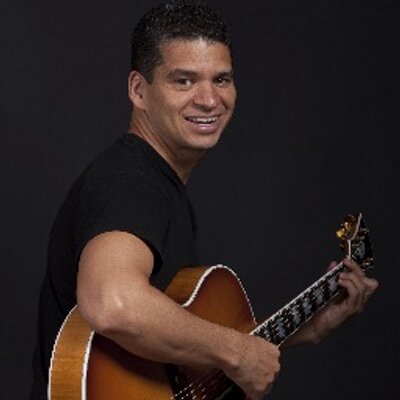
This Saturday at 2 p.m. (March 28), the 2015 season of "Jazz Up Close" commences with Mr. B (piano) leading at quartet with with bassist Henry Lugo, drummer Willard Dyson and special guest, guitarist Freddie Bryant (pictured left). Besides his busy solo career, Mr. Bryant has worked with the great vocalist Salif Keita, trumpeter Tom Harrell and the Mingus Big Band. He and drummer Dyson have worked together on a number of occasions as well as recording together on 2 of his 7 CDs. His latest, "Dreamscapes: Solo, Duo & Trio" (self-released), was issued in 2014 and features saxophonist Chris Potter and bassist Scott Colley.
To find out more about the series, go to www.russelllibrary.org. To find out more about Freddie Bryant, go to www.freddiebryant.com. Check out all the good work of Noah B at www.noahjazz.com.
Bassist/composer Kyle Eastwood and his "American Quintet" - pianist Richard Germanson, trumpeter Alex Norris, saxophonist Jason Rigby and drummer Joe Strasser - are spending the coming weekend in Old Lyme. They will be the guests of Jan and Ken down at The Side Door Jazz Club. They'll also play 2 sets on Friday and Saturday, probably featuring the majority of pieces from Mr. Eastwood's 7th release as a leader, "Timepieces", released earlier this month on the Jazz Village?Harmonia Mundi label. He's an accomplished musician, composer and arranger, having scored films for both his father Clint and his sister Alison. He's got a crackerjack band of musicians and they play jazz with roots in the 1950s and 60s as well as more contemporary music. To find out more, go to www.kyleeastwood.com.
Doors open on both nights at 7:30 p.m. with the musicians "hitting" at 8:30. For tickets and more information about upcoming shows, call 860-434-0886 or go to thesidedoorjazz.com.
For its second presentation of the 2015 Spring Concert Series, Firehouse 12, 45 Crown Street in New Haven, welcomes the electrifying trio of Paul Flaherty (alto saxophone), Chris Corsano (drums) and Steve Baczkowski (soprano, alto, baritone saxophones, miscellaneous reeds) for an evening of improvisations. Mr. Flaherty, a native of Hartford, has been in the forefront of high-energy "free improvisation" since the late 1970s while drummer Corsano, who has played in numerous ensembles plus did 2 tours with Bjork, began his association with the saxophonist in 1998. Baczkowski, who resides in Buffalo, NY, is a new addition to the ensemble.
The trio will play 2 sets - 8:30 and 10 p.m. Go to firehouse12.com for tickets and information about the series or call 203-785-0468.
The Uncertainty Music Series presents its 2nd concert in 5 days, this time featuring the Mario Pavone Quintet plus a solo set by trombonist Dan Blacksberg. It's the first show at a new location, G Cafe, 14 Orange Street in New Haven. Blacksberg, who is active in the worlds improvisational jazz, modern classical music and klezmer music, has worked with guitarist/bassist Joe Morris, pianist Danilo Perez and Professor Anthony Braxton's Tri-Centric Orchestra. He has an amazing range, an exciting sound and a great sense of creativity in his playing.
Mario Pavone needs no introduction to readers of this blog. The bassist has been an important member of the creative music scene for over 4 decades, continuing to grow as a musician and composer. For this show, he brings a group that includes Peter McEachern (trombone), Gary Buttery (tuba), Adam Matlock (accordion) and series curator/bassist Carl Testa. Chances are good the Quintet will play music from Mr. Pavone's latest Playscape release, "Street Songs", a collection of songs that relate back to the bassist's youth in Waterbury, CT (both Matlock and Testa are on that recording).
The music starts at 3 p.m. For more information, go to uncertaintymusic.com.
This Saturday at 2 p.m. (March 28), the 2015 season of "Jazz Up Close" commences with Mr. B (piano) leading at quartet with with bassist Henry Lugo, drummer Willard Dyson and special guest, guitarist Freddie Bryant (pictured left). Besides his busy solo career, Mr. Bryant has worked with the great vocalist Salif Keita, trumpeter Tom Harrell and the Mingus Big Band. He and drummer Dyson have worked together on a number of occasions as well as recording together on 2 of his 7 CDs. His latest, "Dreamscapes: Solo, Duo & Trio" (self-released), was issued in 2014 and features saxophonist Chris Potter and bassist Scott Colley.
To find out more about the series, go to www.russelllibrary.org. To find out more about Freddie Bryant, go to www.freddiebryant.com. Check out all the good work of Noah B at www.noahjazz.com.
Bassist/composer Kyle Eastwood and his "American Quintet" - pianist Richard Germanson, trumpeter Alex Norris, saxophonist Jason Rigby and drummer Joe Strasser - are spending the coming weekend in Old Lyme. They will be the guests of Jan and Ken down at The Side Door Jazz Club. They'll also play 2 sets on Friday and Saturday, probably featuring the majority of pieces from Mr. Eastwood's 7th release as a leader, "Timepieces", released earlier this month on the Jazz Village?Harmonia Mundi label. He's an accomplished musician, composer and arranger, having scored films for both his father Clint and his sister Alison. He's got a crackerjack band of musicians and they play jazz with roots in the 1950s and 60s as well as more contemporary music. To find out more, go to www.kyleeastwood.com.
Doors open on both nights at 7:30 p.m. with the musicians "hitting" at 8:30. For tickets and more information about upcoming shows, call 860-434-0886 or go to thesidedoorjazz.com.
![]() |
| photo by Emily Bingham |
The trio will play 2 sets - 8:30 and 10 p.m. Go to firehouse12.com for tickets and information about the series or call 203-785-0468.
The Uncertainty Music Series presents its 2nd concert in 5 days, this time featuring the Mario Pavone Quintet plus a solo set by trombonist Dan Blacksberg. It's the first show at a new location, G Cafe, 14 Orange Street in New Haven. Blacksberg, who is active in the worlds improvisational jazz, modern classical music and klezmer music, has worked with guitarist/bassist Joe Morris, pianist Danilo Perez and Professor Anthony Braxton's Tri-Centric Orchestra. He has an amazing range, an exciting sound and a great sense of creativity in his playing.
Mario Pavone needs no introduction to readers of this blog. The bassist has been an important member of the creative music scene for over 4 decades, continuing to grow as a musician and composer. For this show, he brings a group that includes Peter McEachern (trombone), Gary Buttery (tuba), Adam Matlock (accordion) and series curator/bassist Carl Testa. Chances are good the Quintet will play music from Mr. Pavone's latest Playscape release, "Street Songs", a collection of songs that relate back to the bassist's youth in Waterbury, CT (both Matlock and Testa are on that recording).
The music starts at 3 p.m. For more information, go to uncertaintymusic.com.
Tuesday, March 17, 2015
Gig Talk 3/20-23
The snow is melting, the daffodils are pushing up through the puddles alongside the house, and the Spring 2015 Concert Series at Firehouse 12, 45 Crown Street in New Haven, begins this Friday March 20. Bassist/composer Ben Wolfe brings his Quartet to the performance venue; his new Posi-Tone recording "The Whisperer" features 3 of the 4 musicians on the CD including Wolfe, saxophonist Stacy Dillard and drummer Donald Edwards. Pianist Orrin Evans, who is celebrating his 40th birthday playing in Philadelphia, can't make the show but Anthony Wonsey, an equally talented person at the keys, will join the proceedings. The music on the CD is absorbing, with Dillard's soprano sax work exhilarating at times.
The Ben Wolfe Quartet plays 2 sets - 8:30 and 10 p.m. - for ticket information, go to firehouse12.com or call 203-785-0468.
On Friday night, the Hartford Jazz Society presents the duo of Ethan Iverson (piano) and Ron Carter (bass) for an evening of standards, jazz classics and originals from the bassist. Many people know Iverson from his work with The Bad Plus and his informative blog Do The Math but he is also a student of the music he plays with such gusto. The pianist also enjoys working with musicians who have left their mark on contemporary African American as one can hear in the trio he co-leads with drummer Alfred "Tootie" Heath and bassist Ben Street plus his work with drummer Billy Hart. As for Ron Carter, he has been playing for for over 50 years, working with trumpeter Miles Davis's mid-1960s Quintet and appearing on nearly 2,500 recordings! He leads with a Trio and a Big Band and is great demand for workshops and seminars.
The concert takes place at the Polish National Home, 60 Charter Oak Avenue in Hartford. Opening the show at 7 p.m. will be the Greater Hartford Academy of the Arts Jazz Ensemble. Messrs. Carter and Iverson should begin at 8 p.m. For more information, go to www.hartfordjazzsociety.com/2015-iverson-carter.html.
To call Thana Alexa a singer-songwriter is to diminish her talents. She's also a vocal instrumentalist, a poet, and an arranger. Her debut recording "Ode To Heroes" (Jazz Village/Harmonia Mundi) is out now (nearly 3 years after the tracks were recorded) and she will celebrating the release this Friday (3/20) at The Side Door Jazz Club in Old Lyme. 3 of the musicians on the recording will be supporting her, including drummer/producer Antonio Sanchez, bassist Jorge Roeder and pianist Sergio Salvatore; also appearing will be saxophonist Ben Flocks.
Ms. Alexa is a native of New York City yet was raised in Croatia. She earned a Bachelor's Degree in Psychology as well as a Bachelor's Degree in Jazz and Contemporary Music from the New School in New York City. She has recorded with Sanchez on his critically-acclaimed "New Life" CD and with guitarist Gene Ess on his "Fractal Attraction" album. Ms. Alexa has also worked with guitarist Julian Lage, pianist Junior Mance, and drummer Brnard "Pretty" Purdie among many others. Her new CD is a delightful blend of original pieces, recognizable instrumental tunes that Ms. Alexa had written lyrics for ("The Wanderer" uses the melody of Charles Mingus's "Goodbye Pork-Pie Hat" while "Trace Back Your Footprints" uses Wayne Shorter's "Footprints") and fine arrangement of Paul Desmond's "Take Five" with lyrics by Dave & Iola Brubeck. Several of the songs are so rhythmically exciting, led by the the drummer's super drumming. Her vocals, at times, remind this listener of the work of Gretchen Parlato. One of the best parts of this music is how Ms. Alexa interacts with the band, especially with Sanchez.
That interaction should be on display at The Side Door. The doors open at 7:30 and the first set begins at 8:30 p.m. For more information, call 860-434-0886 or go to thesidedoorjazz.com.
On Saturday, The Side Door welcomes bassist and Hartford native Dezron Douglas (pictured left - no, it's not Red Sox slugger David Ortiz) and his talented quartet. Douglas, who has appeared on numerous recordings the past several years and is a member of the Cyrus Chestnut Trio, is joined by pianist David Bryant, alto saxophonist Lummie Spann and drummer Jeremy "Bean" Clemons. One should expect this music to be swinging and fun as Mr. Douglas has a big, thick, tone, the saxophonist a lively sound and Bryant is an exciting young pianist.
As above, the first set commences at 8:30. As I have stated before, The Side Door is an intimate space and allows a great view into the creative process. And, you should take the time to meet the musicians.
Saxophonist Wayne Escoffery, who spent his formative years in New Haven, returns home this Saturday night (3/21) to perform at the 9th Note, 56 Orange Street. Mr. Escoffery, who is a member of the Mingus Big Band and has been a member of trumpeter Tom Harrell's Quintet, has been celebrating his 40th birthday with a series of gigs throughout Europe. Not sure who's in the group (he usually plays with a quartet) but the music begins at 8 p.m. He's both a lyrical and muscular player plus he writes very involving music. To find out more about the 9th Note, go to www.the9thnote.com. To learn more about Wayne Escoffery, go to www.escofferymusic.com.
On Monday March 23, the Uncertainty Music Series welcomes the trio of Jack Wright (saxophone), Zachary Darrup (guitar) and Michael Evans (percussion) to Never Ending Books, 810 State Street in New Haven. Mr. Wright has been involved in improvised music for over 4 decades (with time out for a lengthy sabbatical during which he painted and wrote) while Mr. Evans leads the Swirling Lotus Blossom Bandits Band, a sextet dedicated to playing Kwela music from South Africa as well as the music of Sun Ra and Howlin' Wolf. Zack Darrup has been working with the saxophonist for several years, blending his amplified guitar sounds with the visceral playing of his mentor.
Opening the show at 8 p.m. will be a solo set featuring clarinetist Matt Ingalls. Not only is he a fine improvising musician (having worked with Anthony Braxton, Meredith Monk and a host of San Fransisco Bay Area improvisers, Mr. Ingalls is a noted software designer. To find out more about him, go to mattingalls.com.
For more information about the Uncertainty Music Series, go to uncertaintymusic.com.
The Ben Wolfe Quartet plays 2 sets - 8:30 and 10 p.m. - for ticket information, go to firehouse12.com or call 203-785-0468.
On Friday night, the Hartford Jazz Society presents the duo of Ethan Iverson (piano) and Ron Carter (bass) for an evening of standards, jazz classics and originals from the bassist. Many people know Iverson from his work with The Bad Plus and his informative blog Do The Math but he is also a student of the music he plays with such gusto. The pianist also enjoys working with musicians who have left their mark on contemporary African American as one can hear in the trio he co-leads with drummer Alfred "Tootie" Heath and bassist Ben Street plus his work with drummer Billy Hart. As for Ron Carter, he has been playing for for over 50 years, working with trumpeter Miles Davis's mid-1960s Quintet and appearing on nearly 2,500 recordings! He leads with a Trio and a Big Band and is great demand for workshops and seminars.
The concert takes place at the Polish National Home, 60 Charter Oak Avenue in Hartford. Opening the show at 7 p.m. will be the Greater Hartford Academy of the Arts Jazz Ensemble. Messrs. Carter and Iverson should begin at 8 p.m. For more information, go to www.hartfordjazzsociety.com/2015-iverson-carter.html.
To call Thana Alexa a singer-songwriter is to diminish her talents. She's also a vocal instrumentalist, a poet, and an arranger. Her debut recording "Ode To Heroes" (Jazz Village/Harmonia Mundi) is out now (nearly 3 years after the tracks were recorded) and she will celebrating the release this Friday (3/20) at The Side Door Jazz Club in Old Lyme. 3 of the musicians on the recording will be supporting her, including drummer/producer Antonio Sanchez, bassist Jorge Roeder and pianist Sergio Salvatore; also appearing will be saxophonist Ben Flocks.
Ms. Alexa is a native of New York City yet was raised in Croatia. She earned a Bachelor's Degree in Psychology as well as a Bachelor's Degree in Jazz and Contemporary Music from the New School in New York City. She has recorded with Sanchez on his critically-acclaimed "New Life" CD and with guitarist Gene Ess on his "Fractal Attraction" album. Ms. Alexa has also worked with guitarist Julian Lage, pianist Junior Mance, and drummer Brnard "Pretty" Purdie among many others. Her new CD is a delightful blend of original pieces, recognizable instrumental tunes that Ms. Alexa had written lyrics for ("The Wanderer" uses the melody of Charles Mingus's "Goodbye Pork-Pie Hat" while "Trace Back Your Footprints" uses Wayne Shorter's "Footprints") and fine arrangement of Paul Desmond's "Take Five" with lyrics by Dave & Iola Brubeck. Several of the songs are so rhythmically exciting, led by the the drummer's super drumming. Her vocals, at times, remind this listener of the work of Gretchen Parlato. One of the best parts of this music is how Ms. Alexa interacts with the band, especially with Sanchez.
That interaction should be on display at The Side Door. The doors open at 7:30 and the first set begins at 8:30 p.m. For more information, call 860-434-0886 or go to thesidedoorjazz.com.
On Saturday, The Side Door welcomes bassist and Hartford native Dezron Douglas (pictured left - no, it's not Red Sox slugger David Ortiz) and his talented quartet. Douglas, who has appeared on numerous recordings the past several years and is a member of the Cyrus Chestnut Trio, is joined by pianist David Bryant, alto saxophonist Lummie Spann and drummer Jeremy "Bean" Clemons. One should expect this music to be swinging and fun as Mr. Douglas has a big, thick, tone, the saxophonist a lively sound and Bryant is an exciting young pianist.
As above, the first set commences at 8:30. As I have stated before, The Side Door is an intimate space and allows a great view into the creative process. And, you should take the time to meet the musicians.
| photo by Eric LaCour |
On Monday March 23, the Uncertainty Music Series welcomes the trio of Jack Wright (saxophone), Zachary Darrup (guitar) and Michael Evans (percussion) to Never Ending Books, 810 State Street in New Haven. Mr. Wright has been involved in improvised music for over 4 decades (with time out for a lengthy sabbatical during which he painted and wrote) while Mr. Evans leads the Swirling Lotus Blossom Bandits Band, a sextet dedicated to playing Kwela music from South Africa as well as the music of Sun Ra and Howlin' Wolf. Zack Darrup has been working with the saxophonist for several years, blending his amplified guitar sounds with the visceral playing of his mentor.
Opening the show at 8 p.m. will be a solo set featuring clarinetist Matt Ingalls. Not only is he a fine improvising musician (having worked with Anthony Braxton, Meredith Monk and a host of San Fransisco Bay Area improvisers, Mr. Ingalls is a noted software designer. To find out more about him, go to mattingalls.com.
For more information about the Uncertainty Music Series, go to uncertaintymusic.com.
Sunday, March 15, 2015
Saxes Up Front
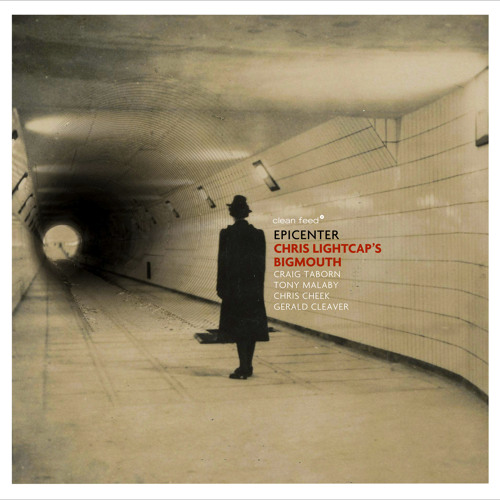
Bassist/composer Chris Lightcap is a busy musician, currently working in the groups of violinist Regina Carter, guitarist Joe Morris, drummer Matt Wilson, saxophonist Chris Cheek and pianist Craig Taborn. The last 2 mentioned are also members, along with tenor saxophonist Tony Malaby and drummer Gerald Cleaver of the bassist's quintet, Bigmouth. He named the group after the title of his 2003 Fresh Sound New Talent recording which featured a song of the same name. "Epicenter" (Clean Feed Records) is the ensemble's new recording, Lightcap's 4th as a leader since 2000, all of which feature a 2-saxophone lineup (the 3rd CD added alto saxophonist Andrew D'Angelo for several tracks). Malaby and Cleaver have been in the group since its inception with Taborn joining as the 5th member in 2005 and Cheek replacing Bill McHenry before 2010's "Deluxe" recording (also on Clean Feed).
The majority of the music on the new recording is the result of a commission (and grant) from Chamber Music America. The composer created a suite titled "Lost and Found New York" - it's a musical documentary of his move to New York and his experiences over the past 15+ years. The 8-song program (interesting how all 4 of the bassist's recordings have 8 tracks) opens with the forceful "Nine East", its insistent electric piano figures dancing beneath the whirling saxophones. As the soloists step up, Lightcap keeps that musical figure alive while Cleaver pushes forward. The bassist then overdubs several acoustic guitars for "White Horse", the horns and organ moaning in the background while the melody moves around them. The title track opens to reveal a melody influenced by Ornette Coleman then into a muscular bass solo, an exciting piano solo and then both Malaby and Cheek solo. There's is only a short ensemble before the piece reaches its conclusion. The evocative "Arthur Avenue" speaks of warm summer nights strolling the streets while "Down East" (and its 1950's style 2-handed piano chords) has the saxophonists wailing like r'n'b players "walking the bar". The rhythm section lays down a seductive rhythm for "Stillwell"; after the electric piano introduces the chordal structure, the saxes plays a melody that sounds inspired by Adulah Ibrahim's soulful South African music. Slowly, the intensity picks up through the various solos until the drums bring the listener down to silence. There's tenderness in the quiet figures played by the saxophonists behind the rhythm section on "Stone By Stone", like a persistent gentle breeze. The music steadily opens up but never loses that tender quality.
The program closes with a raucous reading of Lou Reed's "All Tomorrow's Parties", a nod to the halcyon days of the late 1960s and a city that does not exist anymore. Taborn pounds the keys of the acoustic piano, the saxophones play the plaintive melody, the bass throbs next to the pounding of the drums. The music fades on the insistent piano chords, jangling like the composer's guitar often sounded but nodding to the trance-like figures of the early music of Terry Riley.
The music on "Epicenter" is built on the strength of the elemental drum patterns (which open up and settle down so organically), the strong melodic bass lines, the incredible motion of the keyboards and the praying, braying and soothsaying nature of the 2 tenor saxophones. Chris Lightcap's Bigmouth opens wide, pulling at the listener to pay attention and enjoy how his songs describe his adopted home. For more information, go to chrislightcap.com.
Here's the title track:
The new CD from tenor saxophonist Doug Webb, "Tripl3 Play" (Posi-Tone Records, is a treat from the handsome opening notes to the hair-raising riffs that bring the program to a close. In between, Webb and fellow tenor men Walt Weisskopf and Joel Frahm swing, bluster and carouse their way through a set that literally roars out of the speakers. A good portion of the excitement can be attributed to how the trio interact and push each other into a fiendish yet friendly competition. Also, one must give a lot of credit to the rhythm section of Brian Charette (organ) and force-of-nature that is drummer Rudy Royston for how they make sure the fires are always stoked.
There's nary a ballad to be found in the 60-minute run. In fact, the music goes from swinging to burning and beyond. Tunes such as "Avalon", "Giant Steps" and the title track hit the ground running and never let up. There's also a heady dollop of blues on tracks such as Randy Aldcroft's "Your Place or Mine" and Lou Donaldson's "Alligator Boogaloo." Try to sit still listening to Lanny Morgan's "Pail Blues" or Weiskopf's "Three's a Crowd" - impossible! Webb makes sure everybody gets heard therefore the solos are often short. Yet, the results are not inconsequential. Sure, this is a "blowing session" yet there is great respect for the music, for the tradition and for keeping the listener satisfied. To find out more about the saxophonist, go to www.dougwebb.us.
Here's the opening track:
California native John O'Gallagher (alto saxophone) is a busy musician, working and recording with drummers Owen Howard and Jeff Williams, trumpeter Ralph Alessi, pianist Frank Carlsberg and a host of big bands. "The Honeycomb" (Fresh Sound New Talent) is his 9th as a leader and a return to the trio format, the 4th CD he has released with just bass and drums. These 8 tracks feature the magnificent voices of Johannes Weidenmuller (bass) and Mark Ferber (drums); they are equal partners in this venture, often engaging in conversations as he moves through a solo. The opening cut, "Uroboros" (named for the mythical serpent that eats its own tail) is one of several pieces that may remind you of the work that another brilliant alto saxophone, Henry Threadgill, produced with Steve McCall (drums) and Fred Hopkins (bass) in Trio Air. The music twists and turns, with both the saxophonist and drummer using the bouncing bass lines as a springboard for their inventions. "Petulant Snoot" comes in on quiet bass lines and splashing cymbals with a melody that suggest blues. After several times through that melody, the energy picks up and O'Gallagher rides the fiery drums and the foundational yet freewheeling bass lines. Yet, this is no ordinary "blowing session" in that every track has both a well-constructed melody and a well-defined foundation. The fun of the listening experience is hearing how the musicians work within and outside of the structure. "Kerberos" (named for a computer authentication protocol) has an incredibly funky beat, spilling forward on the power of the drums and alto sax. Even the excellent bass solo picks up on that energy.
"Go Where You Are Watching" is a quiet piece, with fine brush work throughout, plus a saxophone solo section where Weidenmuller not only sets the pace but also plays counterpoint. O'Gallagher's lines are longer here, tones are sustained and there are delightful moments (just a few) when the sax and bass play the same notes. The title track has a slippery rhythm, starts slowly and then takes off like a race car, the saxophone solo a blizzard of rapid-fire lines that fly over the propulsive rhythm section (Ferber matches the leader's energy!)
By the time one reaches the final track, the powerful "Turducken", the seduction is complete. Those people who love creative music, enjoy how musicians create a group sound while maintaining their own "voice", how pieces can have structure and "freedom" built into its performance, should really enjoy "The Honeycomb." The music created by the John O'Gallagher Trio absolutely shines and is a powerful reminder that the best recordings are the ones where you hear the musicians "play" and not work. To find out more, go to www.johnogallagher.com.
![]() |
| photo by Nada Zgank |
The program closes with a raucous reading of Lou Reed's "All Tomorrow's Parties", a nod to the halcyon days of the late 1960s and a city that does not exist anymore. Taborn pounds the keys of the acoustic piano, the saxophones play the plaintive melody, the bass throbs next to the pounding of the drums. The music fades on the insistent piano chords, jangling like the composer's guitar often sounded but nodding to the trance-like figures of the early music of Terry Riley.
The music on "Epicenter" is built on the strength of the elemental drum patterns (which open up and settle down so organically), the strong melodic bass lines, the incredible motion of the keyboards and the praying, braying and soothsaying nature of the 2 tenor saxophones. Chris Lightcap's Bigmouth opens wide, pulling at the listener to pay attention and enjoy how his songs describe his adopted home. For more information, go to chrislightcap.com.
Here's the title track:
The new CD from tenor saxophonist Doug Webb, "Tripl3 Play" (Posi-Tone Records, is a treat from the handsome opening notes to the hair-raising riffs that bring the program to a close. In between, Webb and fellow tenor men Walt Weisskopf and Joel Frahm swing, bluster and carouse their way through a set that literally roars out of the speakers. A good portion of the excitement can be attributed to how the trio interact and push each other into a fiendish yet friendly competition. Also, one must give a lot of credit to the rhythm section of Brian Charette (organ) and force-of-nature that is drummer Rudy Royston for how they make sure the fires are always stoked.
There's nary a ballad to be found in the 60-minute run. In fact, the music goes from swinging to burning and beyond. Tunes such as "Avalon", "Giant Steps" and the title track hit the ground running and never let up. There's also a heady dollop of blues on tracks such as Randy Aldcroft's "Your Place or Mine" and Lou Donaldson's "Alligator Boogaloo." Try to sit still listening to Lanny Morgan's "Pail Blues" or Weiskopf's "Three's a Crowd" - impossible! Webb makes sure everybody gets heard therefore the solos are often short. Yet, the results are not inconsequential. Sure, this is a "blowing session" yet there is great respect for the music, for the tradition and for keeping the listener satisfied. To find out more about the saxophonist, go to www.dougwebb.us.
Here's the opening track:
California native John O'Gallagher (alto saxophone) is a busy musician, working and recording with drummers Owen Howard and Jeff Williams, trumpeter Ralph Alessi, pianist Frank Carlsberg and a host of big bands. "The Honeycomb" (Fresh Sound New Talent) is his 9th as a leader and a return to the trio format, the 4th CD he has released with just bass and drums. These 8 tracks feature the magnificent voices of Johannes Weidenmuller (bass) and Mark Ferber (drums); they are equal partners in this venture, often engaging in conversations as he moves through a solo. The opening cut, "Uroboros" (named for the mythical serpent that eats its own tail) is one of several pieces that may remind you of the work that another brilliant alto saxophone, Henry Threadgill, produced with Steve McCall (drums) and Fred Hopkins (bass) in Trio Air. The music twists and turns, with both the saxophonist and drummer using the bouncing bass lines as a springboard for their inventions. "Petulant Snoot" comes in on quiet bass lines and splashing cymbals with a melody that suggest blues. After several times through that melody, the energy picks up and O'Gallagher rides the fiery drums and the foundational yet freewheeling bass lines. Yet, this is no ordinary "blowing session" in that every track has both a well-constructed melody and a well-defined foundation. The fun of the listening experience is hearing how the musicians work within and outside of the structure. "Kerberos" (named for a computer authentication protocol) has an incredibly funky beat, spilling forward on the power of the drums and alto sax. Even the excellent bass solo picks up on that energy.
"Go Where You Are Watching" is a quiet piece, with fine brush work throughout, plus a saxophone solo section where Weidenmuller not only sets the pace but also plays counterpoint. O'Gallagher's lines are longer here, tones are sustained and there are delightful moments (just a few) when the sax and bass play the same notes. The title track has a slippery rhythm, starts slowly and then takes off like a race car, the saxophone solo a blizzard of rapid-fire lines that fly over the propulsive rhythm section (Ferber matches the leader's energy!)
By the time one reaches the final track, the powerful "Turducken", the seduction is complete. Those people who love creative music, enjoy how musicians create a group sound while maintaining their own "voice", how pieces can have structure and "freedom" built into its performance, should really enjoy "The Honeycomb." The music created by the John O'Gallagher Trio absolutely shines and is a powerful reminder that the best recordings are the ones where you hear the musicians "play" and not work. To find out more, go to www.johnogallagher.com.
Wednesday, March 11, 2015
Soul and Searching
Composer, arranger and pianist Ted Howe is a native of Boston, Massachusetts, a graduate of the Berklee School of Music (where he also taught) and has recorded 3 small group CDs for Summit Records. "Pinnacle" (Hot Shoe Records) is the recorded debut of the Ted Howe Jazz Orchestra. The 16-piece ensemble mainly features musicians from the Atlanta with the exception of bassist John Patitucci (who has worked with Howe in the past) and LA-based trombonist Andy Martin. The program is divided into 4 pieces written between 2011-12 and the 3-part "Suite #1 for Jazz Orchestra", a work that Howe began working on in 1980 within former teacher Herb Pomeroy. The 18-minute "Suite.." takes up over 1/3rd of the album and is an exercise in multiple tempos, sound manipulation and a variety of textures from the majority of the musicians (for instance, alto saxophonist Sam Skelton also doubles soprano sax, flute and clarinet while Geoff Haydon plays both acoustic piano and Rhodes). What stands about this work (and, for that fact, the rest of the recording) is how Howe concentrates on melody, harmony and the blending of textures and not so much on spotlighting soloists. There is a "pop" sensibility to sections of the melody in all 3 parts as well as how drummer Marlon Patton not only drives the band but also frames the pieces. Having Patitucci and his thick electric bass tones securing the "bottom" is another plus.
While all the songs have names usually reserved for classical pieces, there is no doubt this is a jazz album. After a solemn rubato opening to "Presto for Two Trombones", the rhythm section kicks into high gear and the reeds share the melody with trombonists Martin and Francisco Torres. "Impromptu for Trumpet" opens with the composer on piano then moves into a dialogue with the trumpet of Lester Walker. Soon, the rest of the Orchestra enters and the ballad moves in a Brazilian direction. As the trumpeter's solo builds in intensity, his cohorts move with him. Howe takes the lead again on "Adagio For Piano"; while he is the only soloist (and he shines in this spotlight) on the track, the writing for the various sections is colorful, used to move the piece forward. Kudos to the excellent work on acoustic guitar by Dan Baraszu. The program closes with the funky and forceful "Etude for Three Clarinets". Patitucci and Patton really ignite the piece and the clarinet work of Skelton, Don Erdman and and Seth Kuehn (on bass clarinet) is engaging.
"Pinnacle" is dedicated to Herb Pomeroy and inspired by the multi-faceted career of Duke Ellington. The music is lively and smart, the musicians engaged and focussed; what the project is not is an imitation of the Ellington oeuvre. Ted Howe waited a long time to document this music and the results are charming. For more information, go to www.hotshoesrecords.com.
For "The Left Side of the Moon" (self-released), her 3rd CD as a leader, pianist/composer Chantale Gagné not only returns to the tried-and-true rhythm section of her previous releases - Peter Washington (drums) and Lewis Nash (drums) - but also adds the evocative sounds of Steve Wilson (soprano and alto saxophones, flute).
It's been 4 years since her sparkling "Wisdom Of The Water" CD; listening to the new disk alongside the older one shows that, if anything, Ms. Gagné has matured even more as a composer and as a musician. She has such a lovely touch on ballads such as the title song (which features the lovely soprano sax work of Wilson) yet is not afraid to let the music go in unexpected directions. Halfway through the piece, the tempo doubles, the intensity increase and the rhythm section drives the piece forward. There is a stateliness to the melody of "A la claire Fontaine" (a duo for soprano and piano) but, once into her solo, the pianist takes a rhythmic approach to her playing, setting the stage for a saxophone solo that soars over her powerful chords. Wilson's flute adds another sonic dimension to "Up Again", a touch of blues and longing. The piano solo is deliberate over the counterpoint of the bass and dancing brush work.
The uptempo pieces have a power in both the rhythm and the melody lines. "Mystère" opens the program and is the only trio piece yet it still sets the scene for what follows. Dramatic piano chords are all one hears until Washington and Nash come in setting a driving beat. But Ms. Gagné soon changes the intensity and song ebbs and flows forward. "Your Blues is My Blues" is just that, a joyful blues romp with delightful drums and walking bass laying the foundation for the pianist and alto saxophonist to swing their souls. Another "danceable" work is "Just a Dream", this time a seductive tango, with Nash leading the band through its paces. There is also a Latin feel to "Moon Gazing" (plus a glorious moment of "swing" now and then) with Wilson's soprano swooping and diving over the responsive rhythm section. One hears traces of earlier jazz styles (50s and 60s) on "Echoes", another vehicle for the vivid soprano sounds plus an expansive piano solo.
"The Left Side of the Moon" comes to a close with the short (95 seconds) unaccompanied piano piece, "Roach Rag." It's a light-hearted sendoff to an album that is the most emotionally rich recording that Chantale Gagné has made thus far in her relatively short career. She has built such a strong musical relationship with Peter Washington and Lewis Nash; there are several moments when it seems the 3 breathe together. Adding Steve Wilson to the mix provided the composer several new sounds to work with and the results are splendid indeed. For more information, go to www.chantalgagne.com.
Here's "After You":
Here's a delightful idea. Conceived in living rooms and small performance spaces, the Susan Krebs Chamber Band makes intimate jazz that swings, sways, soars but never roars. "Simple Gifts" (GreenGig Music) finds Ms. Krebs voice in collaboration with piano (Rich Eames), violin/viola (Paul Cartwright), percussion (Scott Breadman) and the many reeds of Rob Lockart (tenor and soprano saxophones, bass clarinet, flute).
The program starts with the easy loping beat of "Let's Call a Heart a Heart"; the rich vocal gets great support from the bluesy piano, swooping violin, the tenor and bass clarinet and the percussion. Breadman makes the most of his small trap set (cajon, hand percussion and cymbals), propelling the band forward with ease and pizazz. The melody and arrangement of Jimmy Rowles' "Looking Back" may remind some of the sound Sting created for his song "Russians" (but without the angst of Brecht/Weill that one hears in the later piece.) Cartwright strums his violin to set the rhythm on Sergio Mendes's "So Many Stars", working in tandem with the piano and percussion while the soprano dances around the voice. A gypsy feel permeates the band's interpretation of Abbey Lincoln's "Throw It Away", with Cartwright's rich violin lines flying above the growling bass clarinet and dancing rhythms of percussion and piano. Eames take a dazzling solo on "For All We Know" while Ms. Krebs delivers a dramatic vocal. At times, there is a theatrical nature to her approach to the lyrics; that works very well on pieces like "For All We Know" and "Once Upon A Summertime." The violin also has that quality on the pieces so the sounds match well.
The CD close with the title track, the Shaker traditional that Aaron Copland used to such great effect in "Appalachian Spring." This version has the feel of a Bruce Hornsby song, most noticeable in the saxophone and piano. Lockart's vibrant solo reverberates in a similar fashion to what Jan Garbarek created in "Witchi-Tai-To" in 1970. Again, Breadman's work is exemplary as he not only sets the pace but knows how to push the soloist.
"Simple Gifts" is intimate yet expansive, playful yet emotionally strong, music to lift your spirits. Through this music, one can hear how much fun The Susan Krebs Chamber Band has when they work together. And it's contagious. For more information, go to www.susankrebsmusic.com.
Labels:
Big Band,
CD reviews,
chamber jazz,
piano quartet
Monday, March 9, 2015
3 Trios Live This Weekend
Bill Charlap, son of vocalist Sandy Stewart and composer Mark "Moose" Charlap (best known for writing the music for the Broadway production of "Peter Pan"), is one of the most articulate pianists on the contemporary jazz scene. In 1997, he formed a Trio with Kenny Washington (bass) and Peter Washington (drums) and has recorded 6 albums with them, everything from the songs of Leonard Bernstein to George Gershwin and many standards. (It should be noted that the pianist records for Japan's Venus Records with bassist Jay Leonhart and drummer Bill Stewart with a similar repertoire.) He has also released 2 CDs with his Mother plus 1 with his wife, fellow pianist Renee Rosnes. He has such a lovely touch, his ballad work second-to-none, plus he can swing with the best of them.
Bill Charlap and the Washingtons (they are not related by blood but by their mastery) come to The Side Door Jazz Club in Old Lyme this Friday (3/13). If you love piano trios, do not miss the opportunity to see and hear this ensemble in action. Doors open at 7:30 p.m. with the first set at 8:30.
For more information, go to thesidedoorjazz.com or call 860-434-0886.
On Saturday, The Side Door welcomes the Bobby Broom Trio. Broom, a native of New York City, has performed with saxophonists Sonny Rollins and Stanley Turpentine as well as with Dr. John but has been touring with his own group for several decades. He's recorded for Criss Cross and Premonition Records but, since 2007's "Song and Dance", he has been on Seattle's Origin Records (he also created the Deep Blue Organ Trio, an ensemble with 2 recordings on Origin, but they disbanded 2 years ago).
His Trio includes long-time associate Dennis Carroll on bass and new member Greg Artry on drums. Their material covers lots of musical territory; lately, the group has been focussing on the work of great guitarists such as Kenny Burrell. Call the number above for ticket reservations.
Keyboard artist Brian Charette, who hails from Meriden, CT, will be close to home this Saturday night (3/14) when he brings his Mighty Grinders trio to the 9th Note Jazz Supper Club, 56 Orange Street in New Haven. Charette is a wonderful organist who started out as a pianist but, upon moving to New York City, discovered he could get more gigs as an organist. So, he bought a Hammond and locked himself in his apartment until he had figured out the instrument; now, he is one of the most in-demand players on the scene. Besides the Grinders - guitarist Will Bernard and drummer Eric Kalb - Charette leads his Organ Sextette, an ensemble with organ, drums and 4 reed players. His most recent CDs are on Posi-Tone Records (2014's "Square One" is highly recommended) and on Steeplechase (there are 2 CDs by the Sextette plus a solo date and a Trio CD).
To find out more about the organist and his music, go to www.briancharette.com. For reservations to the gig, call the 9th Note at 203-691-9918. You can also check them out at www.the9thnote.com.
Subscribe to:
Posts (Atom)


byJohnSpiral.jpg)