Tuesday, July 2, 2013

LIKEMIND Collective, Part 1 - Music by Orrin Evans and Tarbaby

The first Orrin Evans CD I purchased - "Captain Black" -  was, actually, his second as a leader for Gerry Teekens' Criss Cross Records.  Ed Krech, owner of Integrity 'N' Music in Wethersfield, CT, turned my attention to the label and this artist in particular.  Evans was 23 at the time of the release (early 1999) but played with the authority of a seasoned veteran (which, I soon discovered, he was.)

"...It Was Beauty" is Evans's 20th (!) CD as a leader and first for the Criss Cross label since February 2005.  Featuring his partner from Tarbaby, bassist Eric Revis, and drummer Donald Edwards, who is featured on Evans' last CD for PosiTone Records, "Flip The Script", Evans opens up the concept for this program by featuring guest bassists on 4 of the 10 tracks.  Ben Wolfe, who also is featured on the PosiTone release, joins the trio for 2 tracks ("African Song" and "Commitment") while Hartford, CT. native Luques Curtis and Alex Claffy appear on one each ("Dorm Life" and "My Tribute" respectively.)  Anyone who follows Orrin Evans knows he has a far-ranging mind and no fear as well as an eclectic taste in material - that's why his recordings are so interesting.  Bill McHenry's "African Song" has the feel of a John Coltrane piece, open-ended with the 2 bassists moving independently of each other. Wolfe also enlivens "Commitment", a song that has several changes in tempo and direction - when both bassists start "walking", the drummer steps right in to keep the pace fluid.  Edwards' dancing "second-line" drums sets the funky pace for a Trio joyful "jump blues" reading of Ornette Coleman's "Blues Connotation."  This is the 4th time Evans has recorded "Dorm Life" for a Criss Cross release and, of course, the 4th different reading.  Curtis's bass locks in with Revis's, allowing Edwards to really drive the piece.  The various changes of pace are, on first listen, are as much fun for the listener as they must have been for the musicians.  Wolfe composed (but does not appear on) "Hats Off To Rebay", a bluesy meditation dedicated to Revis but featuring splendid brush work from Edwards.

This is one pianist who knows how to do "slow" as one hears on the Trio reading of Hoagy Carmichael's "Rockin' Chair", a tune which Evans as a solo piece in 1998.  The deliberate pace of the song allows the melody to emerge easily - Revis plays few notes while Edwards caresses the drum kit with his brushes.  The CD closes with Evans in duo with the young Philadelphia bassist Alex Claffy on a slow and heartfelt reading of Andre Crouch's "My Tribute."   The ballads rarely stray from the melody yet never sound hackneyed or trite. Make sure to pay attention to the work of the rhythm section - they shy away from convention but neither sound superfluous nor radical.

"...It Was Beauty" is good music from beginning to end; creative, interactive, urgent, un-rushed and highly original, Orrin Evans illustrates how he has matured without surrendering his sense of adventure.  For more information, go to www.orrinevansmusic.com.


Add Nasheet Waits (drums) to Orrin Evans and Eric Revis - you've got quite a sound.The trio first recorded together for Evans' 2001 Criss Cross release titled "Blessed Ones" and came together in 2008 to record under their first CD as Tarbaby.   Their self-titled debut CD, released on Evans' Imani label, featured saxophonist Stacey Dillard as part of the group plus guests JD Allen (tenor saxophone) and vocalist T.C. III. What was noticeable from the start is that the band had no fear, blurring the lines of modern genres to get at a greater truth.  Their second CD, "The End Of Fear" (PosiTone), kept Allen and added the musical voices of Nicolas Payton (trumpet) and Oliver Lake (alto saxophone). The music and presentation had more of a political edge, more "in-your-face" than laid-back and compliant.

The Trio signed with Hipnotic Records and their initial release for the label is "The Ballad of Sam Langford." Langford (1883-1956), a Black boxer who hailed from Nova Scotia and settled in Massachusetts, was known as "the Boston Tar Baby" - he fought at a time when few Black boxers were allowed in the ring to fight Caucasian pugilists and was not well known outside of boxing circles. (If you are curious, do go to coxscorner.tripod.com/langford.html for more information.) The CD opens with "Title Bout (Opening Round") and closes with "Title Bout (Final Round"), both group improvisations, the only references to boxing.  Oliver Lake is back, appearing on 6 tracks and young trumpet star Ambrose Akinmusire appears on 7 cuts. The blend of saxophone and trumpet spar on the opening track over a rubato background, Waits' rampaging drums pushing the other musicians forward.  Lake, now 70 years old, is in fine fettle throughout. His combination of short phrases and long tones on his composition "Aztec" leads the band into a freer interaction (but not chaos.) Evans "When" is a slow ballad in which the melody is introduced by the alto sax and trumpet. As the piece unfolds, the short solos (Evans and Lake) display an emotional gravitas that turns the title into a question that one may feel is resolved in the gentle fade.

3 tracks into the program and you know this is music that respects the traditions of Black American Music, those of experimentation, of social commentary, of gathering disparate voices and giving them their say.  The insistent "swing" of Revis and Waits is at the core of Evans' "MBBS", giving Evans, Lake and Akinmusire the foundation to explore and interact.  "Rolling Vamp" is a funky piece from Lake built off a repeating bass line and propulsive drums - the melody line hearkens back to the work of the mid-1960s "classic" Miles Davis Quintet.  The soloists respond to the drummer's egging them on which only adds to the intensity level.  The piece slowly comes back down until it's just the wonderful bass line.

Akinmusire shines on Waits' "Korean Bounce", engaging in a lively give-and-take with the drummer while Evans and Revis provide support and counterpoint. The trumpeter contributes the lovely ballad "Asiam", a piece for trumpet and piano. One is drawn in to his breathy sounds, to the gospel inflections of the piano accompaniment and to how time seems to stand still as you listen.

The pianist's son Matthew joins the trio on finger piano (kalimba) for Revis's atmospheric "August" - Waits plays recorder as he keeps the beat on bass drum, high-hat and occasional cymbal splashes.  The bassist quietly yet insistently supplies both the structure and rhythm for the song.

Over the course of 3 CDs, Tarbaby has shown that their music has few, if any, boundaries; one would imagine this music is even more explosive, more interactive and far-ranging in a concert or club setting. Even as the final notes fade, one is drawn back to this inventive and enlightening music. "The Ballad of Sam Langford" makes you think, makes you sweat and, if you love creative Black Music, makes you smile. You can discover more about the Trio by going to any and all of the band-member's individual websites at www.ericrevis.com, www.nasheetwaits.com or www.orrinevansmusic.com.  Like minds, indeed!

Soon to follow is the group's "Fanon", a musical tribute to the French-Algerian psychiatrist/revolutionary writer Frantz Fanon, whose best-known work "The Wretched of the Earth" was published the year he passed away (1961).  Tarbaby's project features the Trio with Oliver Lake and guitarist Marc Ducret - you can see and hear excerpts by going to www.youtube.com/watch?v=fP3nstudK6E.


Friday, June 28, 2013

3-2-1 Piano

In jazz, when friends get together to play, the results are often quite relaxed yet fun for the avid listener.  "River Edge, New Jersey" (Azica Records) is the work...well, play, of the Bill Cunliffe Trio featuring pianist/composer Cunliffe with bassist Martin Wind and drummer Tim Horner. The pianist has known and worked with the rhythm section on numerous occasion in different settings since the 1990s.  One listen to this CD, recorded in 2011 in Manfred Knoop's studio, located in the city that lends its name to the recording's title, and you can hear friends having great fun.

Cunliffe, who first came to notice as a pianist and arranger with the Buddy Rich Band before going on to play with Frank Sinatra, Freddie Hubbard and James Moody, is a facile pianist with an unerring penchant for melodies as well as being a rhythmical soloist.  The program opens in a funky mood, with Horner and Wind leading the pianist into "Sweet Andy" - the result is an infectious jaunty romp. There are moments throughout the CD where Cunliffe rides atop the forward motion of the rhythm section.  Harry Nilsson's "One (Is The Loneliest Number" is another powerful tune, taking its cue from the Three Dog Night version.  The pianist's two-handed attack is quite appealing. "All Is Full of Love", composed by Bjork for her 1999 "Homogenic" album, is a sweet ballad while Cunliffe's "For Wanda" has a more emotional feel, starting slowly and picking up in intensity (the melody is played by both bass and piano).

The 2 Brazilian numbers, the well-known "..Girl From Ipanema" and the pianist's own work, "Choro"(from "Nostalgia in Corcovado"), show the versatility of the Trio.  The former moves away from the (expected) bossa nova rhythm into a more "open" feel in both the piano work and how the drummer controls the song.  The latter is reprised from a 2009 recording that bears the name of the suite and was recorded with a sextet Cunliffe dubbed "Trimotif."  It has a dizzying melody line and sprightly rhythms.

On the surface, "River Edge, New Jersey" may look like a typical piano trio recording but the spirited play of Bill Cunliffe, Martin Wind and Tim Horner lift this music far above the mundane.  If I have one criticism, it's that there is a bass solo in just about every tune.  The upside of that comment is Wind is such a melodic player, he acquits himself admirably throughout.   Pour a glass of rose or pink lemonade, sit back and enjoy the ride.  For more information, go to www.billcunliffe.com.

George Shearing (1919-2011) had a long and illustrious career, culminating in a Knighthood in 2007.  The native of the Battersea area of London, England, moved to the United States in 1947 and went to record dozens of Lps and CDs, performing for Presidents, receiving numerous awards and honorariums,  and winning several GRAMMYs.

In 1982, the pianist joined forces Canadian-born bassist Don Thompson and they worked together for nearly 6 years. In January of the following year, the duo had a 6-week residency in a New York City club.  Shearing lived in the City and his apartment had a lovely grand piano;  he and Thompson would play in the afternoons before gigs.  The bassist suggested they record their sessions - the result, 30+ years in the making, is "George Shearing At Home" (Proper Note/Jazzknight Records).  Shearing always had wonderful technical skills but was also known for the intimacy of his ballad work.  In the comfort of his own living room, the pianist had no reason to hurry, no one to please but himself, making this CD a welcome addition to his large discography.

The bulk of the material is standards but there are also an abundance of surprises.  The bassist contributed "Ghoti", an uptempo blues that Shearing frolics through as he does on the duo reading of Charlie Parker's "Confirmation." They are also in complete sync on "Subconscious Lee" and take a pleasant jaunt through the traditional Scottish tune, "The Skye Boat Song." But, it is the ballads that takes one's breath away. The solo reading of "I Cover The Waterfront", the Johnny Green composition from 1933, is stunning, emotional, with bows to DeBussy and "Over The Rainbow." Shearing also goes it alone on "Laura", a song he probably performed dozens of times.  Here, he caresses the melody, taking his time to both enjoy its lyrical nature and the colors he spontaneously contributes.  The CD closes with "Beautiful Love", a song from 1931 that Thompson says in the liner notes, "I never heard him play it before and he never played it again."  The performance is, in a word, stunning.

"George Shearing At Home" is not just for completists; in fact, this lovely disk can serve to introduce the pianist to a whole new generation.  George Shearing and Don Thompson, in the privacy of the pianist's living room, struck gold - 30 years later, we are the lucky beneficiaries.  No website to send you to for more information but you can check out the tracks at www.amazon.com/music/dp/B00B5NXBC0.


When one stops to think about solo piano music, especially as it relates to Black American Music and its international off-shoots, there are recordings you can listen to with a crowd of people (think Art Tatum, Meade Lux Lewis and Art Hodes) and others made for late at night by yourself.  In the 1970s, Keith Jarrett began a series of solo piano recordings that set the standard (so to speak) for the late night crowd, introspective music that often included rolling rhythms but mostly stuck to slower tempi.

Born in Finland (where he still resides), Esa Helasvuo first studied classical music; it was his older brother who turned his attention to American music.  By the age of 10, he has his own jazz trio and, by the early 1960s, he was playing interpretations of works by Thelonious Monk and Art Tatum. After high school, he did his compulsory military service and, at the end of that decade, was working as a dramaturg for the theatrical department of the Finnish Broadcasting Company, a gig that came him the opportunity to write and arrange music for productions. His influences changed, shifting to the afore-mentioned Jarrett and, surprise, Frank Zappa. In 1975, he joined the faculty of the Sibelius Academy in Helsinki where he stayed until his retirement in 2008. Along the way, he composed and performed music in a variety of ensembles, from small-group to chamber orchestra to arranging music for vocalists. Hevasulo also made numerous recordings, especially solo piano CDs but few, if any, are available in the United States (none on iTunes or in the eMusic.com catalog.)

"Stella Nova" (TUM Records) leans more to the Keith Jarrett style of solo piano.  The majority of the 10 tracks are improvisations, several of which include themes that Hevasvuo has used in other pieces plus one composition by Finnish guitarist and composer of tangos, Unto Mononen (1930-1968). The program commences with the lovely "To Feel You Us To Love You"; to his credit (and our interest), this work is really a long melodic line. Thee is a darker shade can be heard to the title track, a long (9:14) improvisation that, in its opening few minutes, uses plenty of silence to set off the dramatic melody.  When Hevasvuo drops into a rhythm, the music has the feel of an Indian raga as well as one of Jarrett's pieces that emphasizes the trance-like left hand.  He follows that forceful work with the dream-like "Intimacy", its soft melodic lines suggesting a ballad sung by Sarah Vaughan or Billie Holiday yet also displays a classical side. The Mononen work, "Satumaa", has a handsome melody that Hevasuvo improvises upon without losing the emotional quality of the opening theme.  The final track, "Blues Addiction", a lovely and loving coda to the program, a wistful recollection of the pianist's many years of listening, composing and playing.

TUM Records is doing a fine job of exposing Finnish improvising musicians to the international scene (not to forget the great releases by Billy Bang, Wadada Leo Smith, the splendid new CD by Barry Altschul and others).  Listeners who enjoy internal monologues translated to piano should take the time to investigate "Stella Nova" and Esa Hevasvuo.  For more information, go to www.tumrecords.com.


Wednesday, June 26, 2013

Questions for JP Schlegelmilch

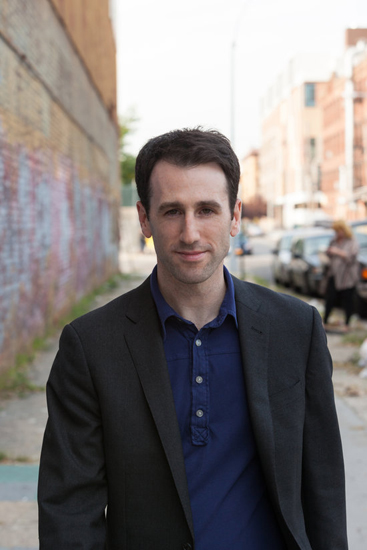
Several months ago, I had the joy to review "Throughout", the new solo piano recording from J.P. Schlegelmlch (pictured left).  The pianist arranged 10 pieces composed by Bill Frisell, helping listeners realize several aspects of the guitarist's music, i.e. 1) - his piece have a bit more complexity than meets the ear and 2) - one can hear numerous influences in the music.

As for the interpreter, Schlegelmilch is a busy musician, working with several ensembles including Old Time Musketry, Two of Anything, Minerva, and NOOK.

JP took the time to answer questions that I posited and those answers are what follow. My thanks to him.


Personal musical history: I started playing classical piano at age six and began exploring jazz, rock, and improvisation in high school. Since then I've been trying to connect the dots between these formative musical experiences, working towards an aesthetic that embraces all of them. I would say that "Throughout" is more of a "jazz" album than my other recent projects. 

Accordion in your arsenal: When I moved to Brooklyn I started hearing the accordion in all kinds of contexts from experimental improvisors like Andrea Parkins and Ted Reichman to traditional virtuosos like Slavic Soul Party's Peter Stan. There is also a big interest in Balkan folk music among the Brooklyn jazz community which can be heard in the work of musicians like Chris Speed.  I used to play saxophone and sometimes I miss playing a wind instrument, so in some ways the accordion helps me get closer to that. I think the accordion has so many possibilities and I'm just starting to scratch the surface in my approach to the instrument. 

Discovering Bill Frisell: The first Frisell music I heard was the "Live" album of his trio with Joey Baron and Kermit Driscoll. I had just started school at Berklee and had very little knowledge of modern jazz, my listening was still focused on the 50's and 60's. Hearing the total freedom that Frisell's trio had in terms of moving between different musical styles blew my mind. It had the energy of rock music, great melodies, exciting group interplay, and weird electronic sounds. All of this spoke to me on a deep level. Later, as I discovered more of Frisell's work, particularly the studio album "This Land", I gained even more respect and admiration for him as a composer, his unique voice as a guitarist, and his choices in putting together ensembles. 

The new CD: I recorded the music on "Throughout" in two sessions during December 2011 and March 2012. Before that I played a handful of solo piano shows focusing on this material, which were the first solo performances I had ever done. 

Live "Throughout": I played a CD release concert in March at Cornelia St Cafe in New York where I performed most of the music on the album. I think I will continue to keep some of these pieces in my repertoire when playing solo while also branching out into new material. 

(Link to video of "Hangdog" from Cornelia St concert)


More of this type of exploration: I don't have any other repertoire projects planned at the moment, I'm going to be focusing more on my own compositions. My next solo project will involve combining acoustic piano with electronic sounds using a keyboard, effects, and a sampler. 

To find out more and hear selections from the CD , go to jpschlegelmilch.com.

Tuesday, June 25, 2013

Some Like It Hot

In 2011, drummer/composer Jeff Williams introduced the world to his new Quartet - John O'Gallagher (alto saxophone), Duane Eubanks (trumpet) and John Hébert - via his first recording as a leader in 16 years.  The CD, "Another Time" (Whirlwind Recordings), displayed an ensemble comfortable with each other, willing to stretch and take chances with the music. The instrumentation suggests the classic Ornette Coleman lineup from his Atlantic Records days; several of the pieces have that pleasing blend of blues, folk and post-bop influences that made Coleman's music so attractive.

Following the release of the CD, Williams did a short tour of the UK, recording the second show of the tour at The Vortex in London.  "The Listener" (Whirlwind Recordings) features a sharp package with the cover photos by the drummer and the same lineup as the previous album. The live format gives the band the opportunity to expand upon several the pieces from its debut CD, add some new tunes and throw in a standard.  The musicians are in fine form, especially Hébert, whose nimble fingers enliven every track. His long introduction to "Lament" is slow yet rhythmical, trance-like yet continually moving forward.  The bassist them plays the melody with the saxophone.  He supplies the bottom on "The Fez" so that Williams can dance along beneath O'Gallagher's lively solo. His sprightly "walking" lines are an excellent counterpoint to Eubank's fine solo on "Beer and Water", the track that opens the program. The trumpeter, a member of the musical Eubanks of Philadelphia (his brothers Robin and Kevin), does not get as much press as his siblings yet makes his presence felt throughout this CD with his razor-sharp phrases and clear tones.  His unaccompanied introduction to the Sammy Cahn/Hy Zaret/Sal Chaplin chestnut "Dedicated to You" is tender and emotionally rich, one of the high points of the CD.  He continues as the bass and drums enter quietly.  The feel of the piece gets quite "bluesy" staying that way as O'Gallagher enters 2/3rds of the way through. His fleet phrases push the rhythm section to drive a bit harder.  The alto player plays a "sweet' duet with Williams in the midst of "She Can't Be A Spy", moving on to joust with Hébert when he joins in.  

Get the idea?  "The Listener" is filled with long stretches of rewarding moments, from the interplay of a snappy rhythm to heartfelt ballads. Jeff Williams supplies the majority of the tunes and the heartbeat that makes this program shine.  The band, plus guitarist Phil Robson, plays a "CD Release Party" on Saturday July 6 at Smalls Jazz Club, 183 West 10th Street in New York City - for more information, go to smallsjazzclub.com.  To find out more about Jeff Williams and his lengthy career, go to www.willfulmusic.com.  


Tenor saxophonist/composer Matt Parker moved to New York City in 1999 from his native Florida to attend the New School for Jazz and Contemporary Music; he's been there ever since.  He's worked and recorded with the late Maynard Ferguson, plays with the Candy Shop Boys, co-leads the 2s & 4s, and appeared on drummer/composer Reggie Quinerly's delightful debut recording, "Music Inspired by Freedmantown."

"Worlds Put Together" (BYNK Records) is his debut as a leader.  Quinerly and bassist/co-producer Alan Hampton make up the rhythm section joined by guitarist Josh Mease (on 7 of the 11 cuts), pianist Jesse Elder (8 of the 11 cuts) and alto saxophonist Julio Monterrey (also 8 of the 11 tracks). The CD opens with the edgy "Eye of Rico" - first the saxes blurt out the opening lines and then it goes directly into Elder's quiet solo piano reverie.  The saxophonists return atop a churning rhythm stepping aside once again, this time for Mease's electric guitar.  Surprisingly, there are no saxophone solos.  Parker takes center stage for the short ballad (1:31) "I Can't Help It." Hampton's mournful arco bass leads the saxophonists into "Lists", another ballad that, this time, suggests the influence of Duke Ellington's "Black and Tan Fantasy."  "WPT" opens with a  funky sax line accompanying the tap dancing of Jimmy "Taps" Sutherland.  When the band returns, the piece moves into a faster tempo and goes on in raucous until the end.

4 tracks, 4 different approaches and that carries on for the remainder of the program.  Parker has a "big" sound, somewhat like Lenny Pickett of Tower of Power and SNL fame. He does not embrace a ballad as much as steamroll his way through (with the exception of "Darn That Dream", a piece for 2 saxophones though even that track has its fiery sections).  He and Monterrey blend their voices in "free" fashion on "Alien Baby", both rearing back and letting the notes fly.  Elder is the voice of sweetness in the midst of the storm, serving to cool off the steaming saxes.  The longest track (10:32) "Full Sun" starts slowly but soon picks up in intensity. The counterpoint of the trilling piano lines, circular guitar phrases and the quavering saxophone sections open to a short melody line but the piece does not really let loose until the half-way point when Monterrey steps out for an impressive solo.  Parker follows, lowering then raising the intensity bar as he prods the rhythm section to hit hard.

By the time the CD reaches the children-and-adults choir that "hams it up" through the simple, Nino Rota-like melody of "Zeynep's Piano", the listener is either laughing with glee or staring at the speakers puzzled by this eclectic program.  I say "Roll With It" - Matt Parker put his heart and soul into this project, revealing an original voice and surprising even himself with the ferocity of his playing. "Worlds Put Together" is an introduction that deserves your attention.  For more information, go to mattparkermusic.com.  

Sunday, June 23, 2013

"..the furious infinite"

Over the course of 2+ decades, alto saxophonist/composer David Binney has issued 18 CDs as a leader or co-leader. 5 of them have been released by the Dutch Criss Cross label.  Those of you familiar with label head Gerry Teekens and his methods (basically, "here's the studio, you've got one day" - other than that, hands-off) know that he has eclectic taste. For Binney, who is a most "prepared" musician, the producer's attitude gives him a lot of freedom.  Yet, compared to other recordings on the label, Binney rarely, if ever, makes a pure "blowing" session - his Criss Cross CDs sound as smartly constructed as the ones released on his own Mythology label (or, for that fact, any label he has released albums on.)

"Lifted Land", Binney's 19th CD and 6th for Criss Cross as a leader), takes its name from the book "Bury My Heart at Wounded Knee" and several of the song titles refer back to the book.  Featuring pianist Craig Taborn, bassist Eivind Opsvik and drummer Tyshawn Sorey (his first "date" with Binney as leader - they recorded together on pianist John Escreet's PosiTone release), the music stretches in many directions, an often stunning combination of composition and improvisation.  Sorey brings a different feel to the rhythm section than Dan Weiss, Binney's most "regular" drummer over the past 6 years - he can swing with great intensity yet uses space and silence in very creative ways.  On "As Snow Before a Summer Sun" (at 18:34, the longest work Binney has even put on record), Sorey's solo is a minimal masterpiece, built from tolling gongs, quiet cymbal splashes, and hand percussion.  The piece moves from short statements of the theme to unaccompanied solos to reveal one of Binney's most moving melodies and on to a striking alto sax improvisation over a slowly rising intensity from the rhythm section.

The other long track (11:54) is "The Blue Whale" - built off an unaccompanied bass solo, the music features a long and luxurious melody section that opens to a long, fiery, alto solo (Binney can really move from flowing phrases to incendiary "blowing" in a heartbeat) with Taborn and Sorey providing the kindling as Opsvik holds the piece together.  Taborn's solo has an intensity akin to one of the late Don Pullen's incredible two-fisted piano journeys. Late in the piece, he and Sorey lock into a groove that gives way to the drummer's propulsive solo beneath the alto-piano reiteration of the theme.

It is tempting to write about all 8 pieces but, just as David Binney's vision for the recording was a journey of discovery, it should be the same for the avid listener. The song titles, such as "Curious About Texas" and "Losing The Central Valley", speak to the composer's inquisitive nature about the world (the latter song referring to environmental issues in the state where Florida-native Binney grew up.)  Listen to the splendid melodies, to how the musicians interact as the music allows the room to "converse", to the power of the improvisations as well as to the power of the "quiet."  Every piece, from the joyous minimalism of "Fanfare For Basu" that opens the program to "Red Cloud", Craig Taborn's unaccompanied solo composition at the close of the CD, has its rewards that reverberate in one's mind for hours.  David Binney continues to create music that is mature, riveting, and generous. Simply put, "Lifted Land" is excellent music, worthy of your attention. For more information, go to www.davidbinney.com.

First came across alto saxophonist/composer John O'Gallagher when he released 3 CDs for the CIMP label between 2003-06.  He had been featured on several recordings before the first CIMP ("Axiom", featuring Tony Malaby, John Hebert and Jeff William) but this was his initial attempts as a leader.  Since then, recordings have appeared on Fresh Sounds New Talent and Red Piano Records.   He continues to work with bassist Hebert and drummer Williams in the latter's quartet as well as working with bandleader/composer Asuka Kakitani, pianist Frank Carlberg and drummer Owen Howard.

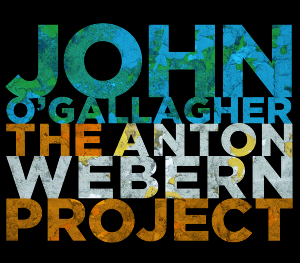
His new CD, "The Anton Webern Project" appears on bassist Michael Janisch's Whirlwind Records.  O'Gallagher has been attracted to Webern's music since his undergraduate days at The Berklee School. The Austrian composer (1883-1945) was a student of Arnold Schoenberg in the early years of the 20th Century and is considered the "Father of Serialism."  O'Gallagher takes a different view of the music.  With his exceptional company of musicians - Matt Moran (vibraphone), Pete McCann (electric guitar), Russ Lossing (Hammond Organ, Fender Rhodes, piano), Johannes Weidenmuller (bass), Tyshawn Sorey (drums) and Margret Grebowicz (voice) -  the saxophonist/arranges these 8 pieces as if Webern was composing today and working in the creative music idiom.  Pieces such as "Quartet (after Op. 22)" and "Schnell (after Op.27)" are sonically akin to the music Ornette Coleman has created with his "Dancing In Your Head" projects and beyond.   Throughout the program, Sorey lays down quite a beat while Weidenmuller creates a thick bottom. A "ragged" swing enlivens "Ways Going Over (after Op. 31)" during Moran's solo (pleasing chunky rhythm guitar and bubbly organ in support) before moving in to a straight-ahead groove for O'Gallagher's romp.  The interweaving of saxophone, guitar, vibes, organ and drums create a hypnotic opening to "The Secret Code (After Op. 28)" before Weidenmuller brings it all together with his authoritative bass lines.  Still, the stop-start rhythms behind the solos give the piece a choppy, funk, feel.  The lively interaction of the rhythm guitar and organ behind Moran shines as does McCann's high-volume romp (he can really let loose).

Ms. Grebowicz (who released a CD on Sunnyside in 2010 under her first name only) appears on 2 tracks.  Her voice blends neatly into the ensemble on "Three Songs (after Op. 25)", her airy voice supplying the lyrics written by Webern's friend, the German poet Hildegard Jone (1891-1963). She returns for the final track, "All This World (after Op. 31)", adding a wordless vocal to the opening and closing theme.

Kudos to the excellent keyboard work of Lossing; not only is his accompaniment fascinating, but his solos have a fire that feeds the imagination of the other musicians.  His overlaying of keyboards also catches one's attention, often doubling lines on Rhodes and organ while often adding acoustic piano to the track.

People unfamiliar with the music of Anton Webern may be curious to hear pieces such as "Opus 22 (for tenor saxophone, violin, clarinet and piano)" or guitarist Bruce Arnold's Spooky Action quartet that blended woodwinds, electric guitar, bass and drums into a sonic exploration of the composer's "5 Canons, op. 16" and 5 Movements for String Quartet, op. 5" (check that out here).  John O'Gallagher, like many creative musicians, uses Webern's music as the foundation for music that appeals on many different levels, i.e. group interactions, spiky and funky rhythms, fiery solos and much more.  "The Anton Webern Project" will appeal to fans of the Claudia Quintet (yes, Matt Moran is in that group as well) but also to listeners who enjoy creative challenges, music that hits hard with excellent arrangements and feisty musicianship .  For more information, go to www.johnogallagher.com.

Thursday, June 20, 2013

Large Ensemble, Big Band (Part 2)

When you stop to think about the composers who came out of the Great Black Music movement of the 1960s-70s, many are still active today.  Muhal Richard Abrams (82 years old), Anthony Braxton (68), Roscoe Mitchell (72), Joseph Jarman (75) and Wadada Leo Smith (71) all came to the attention of the critics and public in the post-John Coltrane era.  All are fairly active and all continue to make music that cannot be categorized.

In 2012, Wadada Leo Smith released "10 Freedom Summers", a work that combined his Golden Quartet/Quintet with a large Chamber ensemble. The music was a journey through historic moments in the Black Liberation Movement that started with the Emancipation Proclamation in 1863, came to the first of many "heads" in the 1950s and 60s and is ongoing in the 21st Century.  Not one to rest on any of his laurels, Mr. Smith has now created "Occupy the World", a 2-CD, 5-song set featuring the 18-member Todella Uuden Musikin Orkesteri (TUMO) plus double-bassist John Lindberg issued on the Finnish TUM label.  TUMO is composed of 4 brass players, 3 multi-reed players, piano, harp, 2 electric guitars, quarter-tone accordion, 2 violins, viola, cello, bass and 3 drummer/percussionists.  The program is inspired by the "Occupy Wall Street" movement of 2011-12 but also contains a piece dedicated to and featuring Lindberg ("Mount Kilimanjaro") and a work inspired by the poetry of Sterling Allen Brown (1901-1989) titled "Crossing On A Southern Road (A Memorial For Marion Brown)".  Lindberg, who has worked with Smith on numerous projects, is in fine fettle, his brilliant arco work standing out in its clarity and richness of tone.  "...Southern Road" is quiet then furious, foreboding, with sectional work that stands out, a "dream work" with the leader's clarion calls rising above the fray.  As the music moves forward, the muted trumpet stands apart from the siren calls of the strings.  Marion Brown, who passed in 2010, was good friends with Smith, working and recording together in the early 1970s.  This work captures the poetry of Brown's music without imitating it.

"Occupy The World For Life, Liberty And Justice" is the longest piece of the set at 33:29; the opening melody, played by the strings, is stunning in its richness. When the ensemble enters, the piece turns darker, with the low brass, marimba and electric guitars standing above the strings.  There is a "white noise" section that gives way to the strings.  Whereas on "Ten Freedom Summers", the strings were not always integrated with the Quintet, here they are an integral part of the presentation.  Smith's trumpet work is stellar throughout as is the work of TUMO. This is music that asks a lot of the musicians and, like Anthony Braxton's large ensembles, the players give 100% every step of the way.

As with "Ten Freedom Summers", one has to give him- or herself over totally to the music. "Occupy The World" is not background music nor does it sound good as you are speeding down the highway with the windows open and top down.  This is musical story-telling of the highest order, with complex themes that weave intricate patterns.  Wadada Leo Smith continues his life-long search for truth, perhaps with the knowledge that beauty can exist in the harsh reality of the human condition.  His music, like that of his contemporaries, does not pander nor coddle, does not set up false expectations and asks that one be open and non-judgemental.  Occupy indeed!  For more information, go to www.tumrecords.com.

In a career that has spanned nearly 2 decades. guitarist/composer Joel Harrison has created music for all sizes of ensembles, from duos to quartets to septets to a effort for string quartet plus 2 guitars.  With the release of "Infinite Possibility", he has now created a work for a large ensemble.  Credited to the Joel Harrison 19 (JC Sanford, conductor) and issued on Sunnyside Records), this is a collection that lives up to its name and to the ambitious goals of the leader.

Harrison assembled quite a lineup for this project.  The rhythm section features Rob Garcia (drums), James Shipp (vibes, marimba, hand percussion), Kermit Driscoll (acoustic + electric bass) and Daniel Kelly (piano, keyboards).  The stunning reed section includes Michel Gentile (flutes), Ned Rothenberg (alto sax, bass clarinet, clarinet, flute), Ben Kono ( alto sax, soprano sax, oboe, english horn, flute), Donny McCaslin (tenor sax on 2 cuts, flute on 1), Ben Wendel (tenor sax on 4 tracks), Rob Scheps (tenor sax, clarinet and flute) and Andy Laster (baritone sax).  The trumpet section includes Seneca Black, Taylor Haskins, Dave Smith and Justin Mullens while Alan Ferber, Jacob Garchik and Curtis Fowlkes fill the trombone chairs. Ben Stapp plays tuba on 2 tracks while Joe Daley adds his tuba and euphonium on 4.  Anyone who pays attention to the ensembles of Maria Schneider, Darcy James Argue and Ryan Truesdell's Gil Evans Project will recognize these names and many are leaders on their own.

Gospel and blues sounds infuse the opening 2 tracks.  "As We Gather All Around Her" opens quietly with Everett Bradley singing the lyrics of an Appalachian hymn while shadowed by Kono's oboe.  The vibes sound like falling water in the background as the melody lines is shared by the flutes. The piece builds slowly then moves into a medium-tempo section for the solos of Haskins, McCaslin (tenor) and Kelly.  As Kelly moves through his unaccompanied spotlight, Bradley returns and delivers a verse over the piano's cascading notes.  "Dockery Farm" has a harder, darker, edge.  In the liner notes, Harrison writes that the piece "is inspired the Mississippi plantation where Charlie Patton, Howlin' Wolf and others picked cotton and learned the Blues."  The arrangement makes a slight reference to Patton's mixed heritage (it is believed that he had Native American relatives) but is blues all the way through, the highlight being Harrison's roaring solo followed the unaccompanied trombones and tuba 4-way conversation.

Vocalist Liala Baili makes an arresting appearance on "Remember", an impressionistic work that blends the different colors of the ensemble as well as numerous shifts in the dynamics.  Ms. Baili has only the title word to sing throughout the 5:49 but her haunting delivery and the swirling sounds around her create a meditative feel.

One could go on about how strong Joel Harrison's writing is, how intelligent the arrangements and just how enjoyable the program.  Plus the soloists really shine.  Still, the curious listener should complete this journey on his or her own. Get a taste by going to sunnysidezone.com/album/infinite-possibility or joelharrison.com.

"Infinite Possibility", like "Occupy The World" above, should be seen and heard in a concert hall. Both are efforts that deserve wide audiences, both display mature composer/arranger/performers in full bloom and both leave one wanting more of this challenging and rewarding music.

The Joel Harrison Big Band will play a "CD Release Party" July 16 and 17 in Dizzy's Club Coca Cola, part of the Jazz at Lincoln Center complex.  Click on jalc.org/dizzys/events/event/av-135126#.UcL8GXDze0s for more information.

Tuesday, June 18, 2013

Live This, the First Week of Summer (Part 2)

The more I dig, the more I find going on in the state of Connecticut this week.  Saxophonist/composer Jimmy Greene and his Quartet will perform this Thursday (6/21) as part of the 2013 UMOJA Music Series, held in the Pump House Gallery in Bushnell Park in Hartford. UMOJA is the brainchild of saxophonist Yunie Mojica and trombonist Raynel Frazier, 2 young musicians from the Hartford area who began collaborating in 2007 at the Jackie McLean Institute/ Artists Collective.  This series, now in its second year, brings in musicians from throughout the area and the country.  TFor now, the UMOJA website (www.umojamusic.com) is listing 4 shows between June 20 and July 18. This Thursday's show opens at 8 p.m. with the Yunie Mojica Quintet featuring tenor saxophonist Camille Thurman.  Click on website link above for more information.


One of the better events that Connecticut hosts is the Hot Steamed Jazz Festival. The 2013 edition takes place this weekend Friday night through Sunday evening) on the grounds of the Essex Steam Train station (hence the name), 1 Railroad Avenue in Essex. The lineup is a pleasing blend of Traditional jazz, Dixieland, blues, boogie-woogie with perennial favorites such as the Dan Levinson
New Millennium All-Stars, CT's own Galvanized Jazz Band, the Riverboat Ramblers and the great pianist Jeff Barnhart.  There is also a youth jazz ensemble that is a knock-out and lots more.  The website - www.hotsteamedjazz.com - lists the lineup but not the times.  Nevertheless, it'a a fun way to spend a day or weekend. Even better, the money raised from these shows goes to benefit the Hole in the Wall Gang Camp, a no-fee summer camp experience for seriously ill children and their families.  Founded 25 years ago by Paul Newman, the Camp is truly a wondrous thing.

The Afro-Semitic Experience, who spent many an evening in The Buttonwood Tree in its early days (early in the New Millennium) working out its material, returns to the Middletown venue at 605 Main Street this Friday to help raise money for The Buttonwood's piano fund.  A new (new-ish) keyboard has been purchased but needs to be refurbished so the proceeds from the ticket sales will go to help defray the costs.  Co-founded by pianist Warren Byrd and bassist David Chevan, the Afro-Semitic Experience plays a heady blend of African American and Jewish liturgical music as well as a number of original works that mine the Black Music continuum.  The gig will feature music from the band's new project, "Jazz Souls on Fire." For more information, go to www.buttonwood.org - to find out more about the band, go to afrosemiticexperience.net.

Real Art Ways, 56 Arbor Street in Hartford, presents Wicked Knee in special outdoor concert at 7 p.m. this Saturday evening (6/22). Wicked Knee is a funky band featuring drummer Billy Martin (yes, he of Martin, Medeski & Wood) with Stephen Bernstein (trumpet), Curtis Fowlkes (trombone) and Marcus Rojas (tuba); the drummer/ leader describes the quartet as a "juke joint band" that plays "ragtime funk."  Got your attention? This is a free concert so be prepared to dance the evening away. You best call RAW at 860-232-1006 to find out how and where you can get in on this musical treat.  To find out more about the ensemble and its origins, go to www.wickedknee.com.